The geopolitical situation is abruptly shaking the global stage, having an impact on the daily policies of nations. The actions and decisions of the Donald Trump Administration have put all countries on high alert. Ready. Alert.
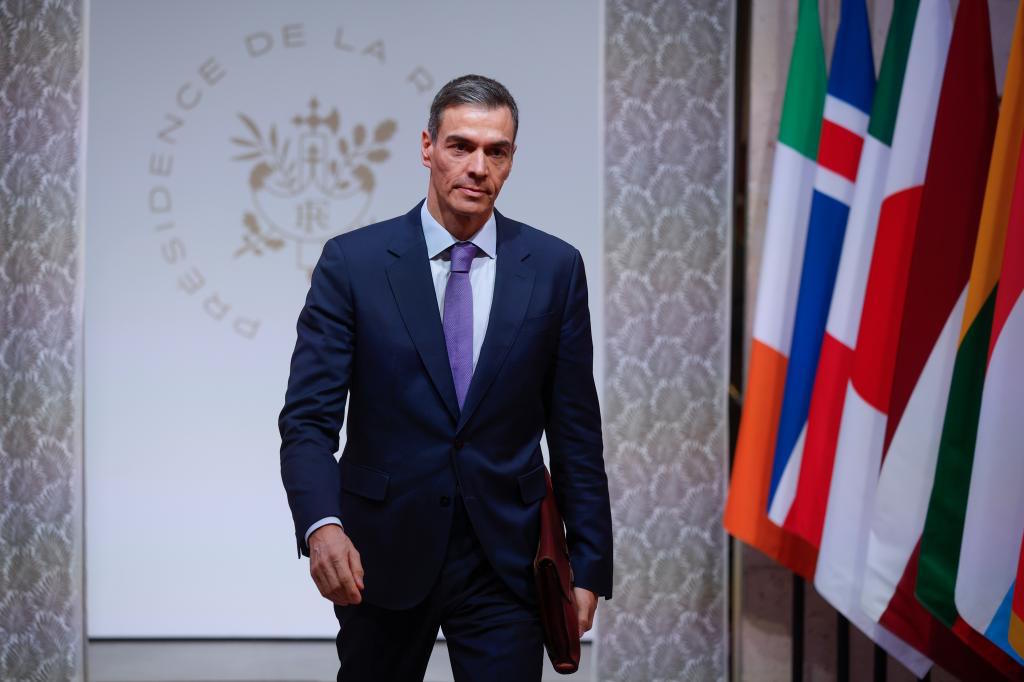
In this uncertain scenario, Pedro Sánchez has outlined the general guidelines of Spain's foreign policy during the inauguration of the Conference of Ambassadors. Among the proposals he has outlined is requesting permission from the Congress to send Spanish troops to Palestine, as well as to Ukraine. Additionally, he has demanded firmness from Europe and not to fall into a relationship of "vassalage" to US, amidst tensions over the US aspirations regarding Greenland.
In a context marked by tensions and armed conflicts, Sánchez is making his move and stirring up social debate in Spain with proposals aimed at giving our country a leading role in areas where others are taking the lead. International politics allow him to shift the focus from more thorny issues - corruption, harassment allegations, concessions to separatists to prolong his mandate - and propose measures that dominate social conversation and debate, sidelining other topics. If a couple of days ago, Sánchez was willing to have Spanish troops participate in a peace mission in Ukraine, he now also opens that door in Palestine.
The President of the Government has announced that he will propose to the Congress "when the opportunity arises, that we can deploy peace troops in Palestine." Like in the case of Ukraine, this is a decision that requires the approval of the Lower House, as they are new missions. When would be the right time? "When we can see progress towards peace," he explained.
Therefore, Sánchez will lead a round of talks with parliamentary groups in the coming days, excluding Vox, to address this issue and seek support. However, this initiative creates divisions within the governing bloc. For instance, Podemos has already expressed its opposition to any deployment of Spanish soldiers, leaving the Government in the hands of the PP.
Even within the minority partner of the Government coalition, Sumar, there are voices like that of the deputy and spokesperson of IU in Congress, Enrique Santiago, who argues that sending Spanish troops to Ukraine "is only possible" after a peace agreement and a mandate from the United Nations.
The deployment of Spanish troops, as in the case of Ukraine, would be for a peacekeeping mission. Last October, after attending in Egypt the signing of the Gaza peace plan promoted by Trump, the head of the Government expressed readiness for Spanish soldiers to ensure peace in Palestine, stating that if there were a troop deployment to guarantee peace, Spain should have an active presence. Now, he reaffirms this determination by initiating a debate in Congress. Sánchez mentions Palestine given that Spain recognized the Palestinian State in May 2024.
Another issue shaking the political landscape is the recent moves by US: the operation in Venezuela and its aspirations over Greenland. Regarding the former, Sánchez has once again "strongly condemned" that military intervention in a country "with which we share strong ties". Without mentioning any country, leader, or institution, he stated that in the face of what happened, "there is no room for half measures or lukewarmness" in a context where the response from organizations and some European leaders has not been as strong against Trump as desired in La Moncloa. "The response to illegitimacy cannot be committing illegality," he argued, emphasizing that Spain did not recognize the results of the last elections in Venezuela.
The President, in contrast to those who have applauded the US military intervention to remove Nicolás Maduro from power, believes that "violating international law is always a defeat for democracies, even where there is no democracy. It sets a bad precedent for peace and security." In his address to the ambassadors, he stated that the Government "will do everything necessary in defense of the Venezuelan people" so that they can decide their future "without external interference," subtly referring to Washington's intention to oversee the Venezuelan country.
Sánchez, describing the situation caused by US decisions as "serious," has called on Europe, amidst escalating tensions with the Donald Trump Administration, due to its intention to take control of Greenland, an autonomous territory under the administration of Denmark, an EU member and NATO ally. "Threats we thought were relegated have resurfaced," observed Sánchez. His message to European colleagues is unity to confront the US on an "equal footing and not in a vassalage relationship."
Sánchez believes that the EU should show more firmness and determination towards the US, as well as open the door to new trade alliances with countries like India, China, Indonesia, or regions like Latin America. The head of the Government, for example, has already expressed disagreement with the trade agreement reached in July by the President of the European Commission, Ursula Von der Leyen, with Trump. He believes that a stronger stance is needed. And that is what he is calling for now, amidst the escalation over Greenland. "We are Europeans, transatlantic. Spain and this administration are pro-Atlantic, but that does not mean vassalage, but rather having a cooperation on an equal footing."