The tanker war in the Caribbean has only just begun. At least 15 tankers besieged by the US Navy are trying to evade the Caribbean blockade since last weekend, doing so in a coordinated manner in two different groups. One of them seems to be heading towards the West African coast, and the other is traveling further north towards Europe. All of them have turned off their transponders to avoid emitting signals and being detected.
The US has already detained the first of them. A US warship moved to capture the Olina tanker, originally flagged as Timor Leste and now changed to Russian and belonging to the so-called "shadow fleet," as it attempted to escape the US blockade off the coast of Venezuela, very close to the island of Trinidad. The United States imposed sanctions on the tanker in January of last year when it was named Minerva.
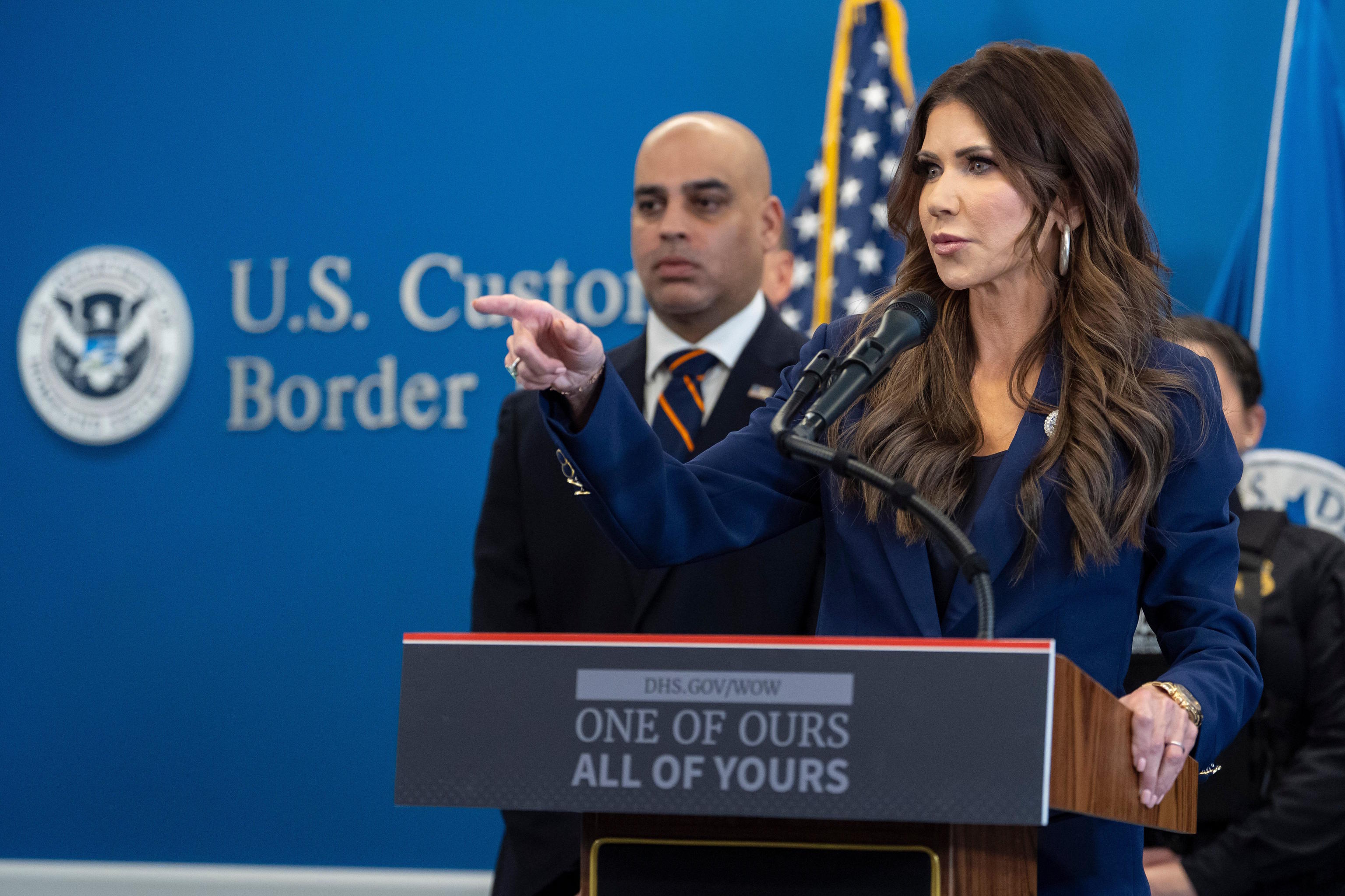
"There is no safe haven for criminals," said X Kristi Noem, US Secretary of Homeland Security. "The ghost fleets will not evade justice. They will not hide under false claims of nationality. The Coast Guard will seize the sanctioned tankers, enforce US and international laws, and eliminate these sources of funding for illicit activities, including narco-terrorism," he commented. Sailing alongside are the Volans, Nayara, Lira, and Min Hang.
The Southern Command, responsible for the deployment in the Caribbean, has released details of the operation: "In a predawn action, marines and sailors from the Southern Spear Joint Task Force, in support of the Department of Homeland Security, launched from the USS Gerald R. Ford and peacefully detained the tanker Olina in the Caribbean Sea. Fears like this are backed by the full power of the US Navy's Ready Amphibious Group, including the ready and lethal platforms of the USS Iwo Jima, USS San Antonio, and USS Fort Lauderdale."
According to satellite images and a US military official who spoke to The New York Times, four ships were spotted heading east in the Atlantic Ocean, at least 640 kilometers off the South American coast, while a second group of five ships was detected sailing northeast through the Caribbean. A US Navy guided-missile destroyer of the Arleigh Burke class is sailing towards these same tankers.
In that group, the Veronica (now renamed Galileo), Malak (now Sintez), Diane hi (now Expander), and another tanker that has not been identified are also traveling. They flew flags of various countries, and all of them have changed to the Russian flag in recent days and on the high seas. These ships have also changed their registration to Russian cities and ports.
From a legal standpoint, the tankers being seized by the US are in a "below standard" condition (in poor condition to enter ports or load crude oil), according to a document published by The Washington Post. The Coast Guard is enhancing the deployment of specialized teams to board them at sea and address the main risks.
This operation could further escalate tensions with Moscow, following the capture of four similar vessels over the past month: Skipper (December 10), Centuries (December 20), Bella1, and M Sophia (January 7), all linked to the shadow fleet.
The shadow fleet is a collection of tankers and merchant ships that operate outside international controls to transport oil—and other products—from countries subject to sanctions, such as Russia, Iran, or Venezuela.
These ships frequently change names and flags, use front companies, turn off or manipulate the transponder (AIS), conduct cargo transfers at sea, and avoid Western ports and insurers to conceal the origin of the oil and evade sanctions. It is not an official fleet or united under a single command but rather an opaque and flexible network, crucial for maintaining energy flows that the legal system seeks to block.
The Kremlin's response to the capture or seizure of tankers by the United States has followed a very consistent pattern: formal denial, political denunciation, and practical normalization. The US has already released two Russian crew members from the Marinera, seized this week in the North Atlantic.
Publicly, Moscow has accused Washington of "piracy", violation of international law, and extraterritorial use of sanctions, rejecting that the ships are "Russian" when they operate under flags of convenience or through front companies. The Kremlin insists that the US acts for political reasons and seeks to artificially disrupt global energy trade. Moscow avoids direct military escalation and treats incidents as assumed risks of the economic war with the West.