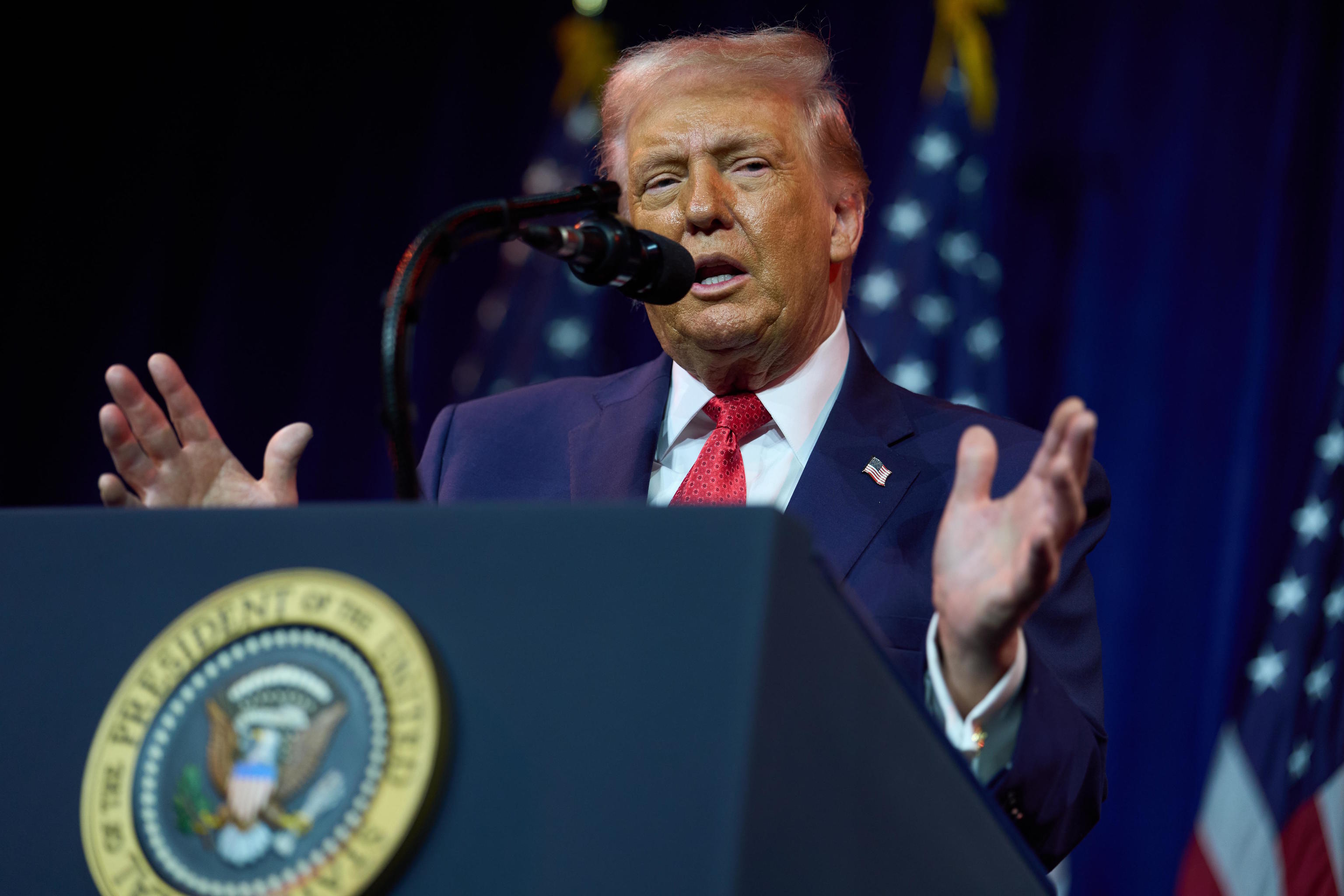
Oil, oil, oil, and stability. That was the focus of the intervention of the President of the United States, Donald Trump, in his first media appearance regarding the military operation of US special forces to capture Nicolás Maduro and block the country's fuel output. Hours before the summit with oil giants to be held this Friday at the White House, as announced by Trump himself, the US Senate has opened a major investigation against major oil companies to clarify their role in the US military offensive in the Latin American country.
High-ranking Democratic senators have sent letters, obtained by EL MUNDO, to the executive leaders of Chevron, Citgo, ConocoPhillips, Continental Resources, ExxonMobil, Halliburton, SLB, and Weatherford. They have also requested information from the European companies BP and Shell. The Senate is focusing on communications between the main oil and oilfield service companies operating in the United States and the Trump Administration regarding last week's military action in Venezuela and efforts to exploit the country's oil resources, which hold one-fifth of the world's proven oil reserves.
The senators are requesting "documents and information on the companies' knowledge of the attacks, discussions with Trump Administration officials before and after the operation," as well as on these companies' plans to invest in Venezuela. The upper chamber has given the oil companies until January 21 to respond to these requests.
"The Trump administration has explicitly linked its military efforts in Venezuela to the economic interests of the US fossil fuel industry. While members of Congress were not notified in advance of the military action, Trump confirmed that administration officials had dialogues with 'all' major US oil companies about Venezuela policy, both 'before and after' the operation last week," reported from the Senate, citing "public reports" showing that the Trump administration "informed the oil companies 10 days before the US ground attacks and one day after."
Today, Trump has confirmed the Friday summit with oil giants on his social media, in a message where he estimated at 100 trillion dollars (about 92,000 million euros) the investments of these major companies in Venezuela. The nature of the oil extracted in the Latin American country, very heavy, makes its processing complex and very expensive. Additionally, the Venezuelan oil infrastructure is outdated, requiring a huge investment that, at present, given the region's instability and in a scenario of global oil oversupply, the private sector has shown no interest in undertaking.
In this scenario, the meeting on Friday will take place, to which the Spanish company Repsol has also been invited. Everything indicates that Trump will use this meeting to present to the top executives of these multinational companies the political and economic conditions for the future exploitation of Venezuelan energy resources. This has raised concerns in the Senate. "To help companies cover the costs of rebuilding the Venezuelan oil infrastructure, Trump has said that the federal government could provide reimbursements. This would cost American taxpayers billions more in subsidies for the fossil fuel industry, which already benefits from over 700 billion dollars annually in subsidies, according to the International Monetary Fund," they warned.
"President Trump's own statements, justifying the operation in terms of access to foreign energy resources and benefits for the US oil industry, the alleged repeated interaction between the industry and the government, and the suggestion that taxpayers could bear the cost of rebuilding the Venezuelan oil infrastructure, raise serious concerns about how the Trump Administration interacted with oil companies before its decision to use military force in Venezuela," wrote the senators. "We would like to know to what extent US oil and gas companies, like yours, were aware in advance or had the ability to influence US foreign policy decisions, especially since Congress was kept in the dark about the use of force until after the attacks."