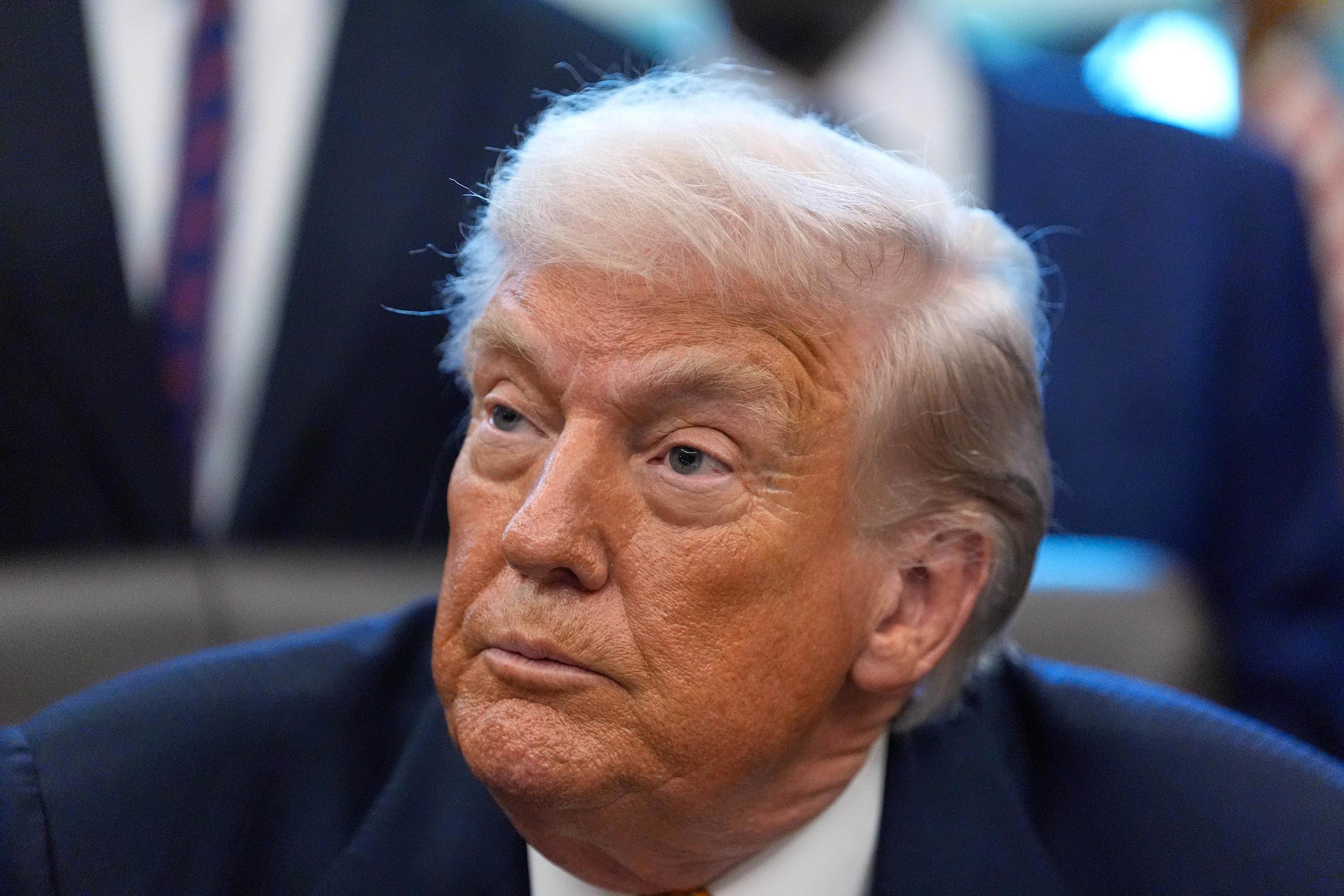
The US withdrawal from 66 international organizations - including the Framework Convention on Climate Change, the IPCC climate scientists group, the intergovernmental biodiversity platform, and the International Union for Conservation of Nature (IUCN) - has been interpreted as an attempt by the Trump Administration to sabotage the climate action of the past 30 years and all progress made since the Rio Earth Summit in 1992.
One year after taking office, with the announced withdrawal from the Paris Agreement set to be finalized on January 20, the US President has launched an anathema against "redundant, mismanaged, unnecessary, costly, ineffective institutions instrumentalized by actors pursuing goals contrary to ours or threatening the sovereignty, freedoms, and prosperity of our nation."
In the wake of his notorious announcement, overshadowed by headlines on Venezuela and Greenland, Trump gathered major oil companies in Miami to urge them to "benefit from unprecedented investment opportunities." Simultaneously, he ordered the removal of references to "fossil fuels" on the Environmental Agency's website and reignited his personal war against offshore wind farms. Meanwhile, his Secretary of State Marco Rubio reignited the war against "climate orthodoxy," without needing to remind that the White House tenant considers climate change "the greatest scam of the century."
Everything done and decreed in just 10 days by the Trump Administration will have a serious impact not only in 2026 but throughout a decade considered "critical" by experts to prevent a global temperature increase above 1.5 degrees. The historical largest CO2 emitter (currently surpassed by China) has definitively decided to turn its back on the international community and is willing to sabotage any progress from the outside, as seen at the Brazil Climate Summit (COP30).
"We are facing a colossal own goal that will leave the United States less secure and less prosperous," was the reaction of the UN's chief climate official, Simon Stiell. "This decision will mean less energy, food, and security for American households, while extreme weather disasters affect crops, businesses, and infrastructure."
"In an increasingly insecure world, countries and industries will seek independence from fossil fuels and the great volatility they entail," said Nicholas Stern, author of the climate change economics report. "In the midst of a stagnant economy, countries will seek new opportunities, and these will come with 21st-century technologies, not 20th or 19th-century technologies."
According to Rachel Cleetus from the Union of Concerned Scientists, "the fact that the historical largest emitter is completely withdrawing from climate agreements is like completely abdicating its responsibilities." To put into context what it means to withdraw from the Framework Convention on Climate Change, it is enough to remember that it was endorsed by 198 countries in 1992 and ratified by 90 votes in favor and 0 against in the US Senate. Its approval led to the Kyoto Protocol, the Paris Agreement, and the 30 climate COPs held to date.
As Wopke Hoekstra, European Commissioner for Climate, pointed out, "the Framework Convention underpins global climate action." "Countries converge in it to reduce emissions, adapt to climate change, and monitor progress. The decision to withdraw by the world's largest economy and second-largest emitter is regrettable and unfortunate."
The US withdrawal from the IPCC (Intergovernmental Panel on Climate Change) has also raised great concerns about the future of the primary global scientific reference. The participation of American experts in the upcoming IPCC reports scheduled for 2028 and 2029 is not initially threatened because the links are established directly through universities and institutions. In the face of possible lack of funding (the US contributes 22%), billionaire Michael Bloomberg has pledged to cover the gap.
Trump's environmental withdrawal also includes the IPBES (Intergovernmental Science-Policy Platform on Biodiversity and Ecosystem Services), of which the US has been the main contributor. "It is a disappointing decision, although we have not yet received official communication," warned David Obura, the organization's president, in a statement. "Our reports show that biodiversity loss continues, and the main cause is economic pressures. Losing one of the main players in the world economy leaves a significant void."
Among the 66 organizations on Trump's "blacklist," most directly or indirectly linked to the UN, is the International Union for Conservation of Nature (IUCN), with 170 countries and 1,400 NGOs as members, whose work is essential for compiling the "red list" of endangered species. "We will keep all communication channels open with the US Administration in any case," said UICN President Scott Hajost to Le Monde. "Fortunately, the US has millions of citizens and scientists who disapprove of these decisions and will fight with all means at their disposal."