Inmaculada had just spent the weekend in Madrid. She was returning home to Huelva on the Renfe Alvia train that on Sunday, around 7:40 p.m., collided with another train, the Iryo traveling from Málaga's María Zambrano station to Puerta de Atocha in the Spanish capital.
By midnight, not only had she not reached her destination, but she was dragging her carry-on suitcase through the dark night of Adamuz, the Cordovan town near where, probably, the worst train accident since the one in Angrois, Santiago de Compostela, in 2013, had occurred.
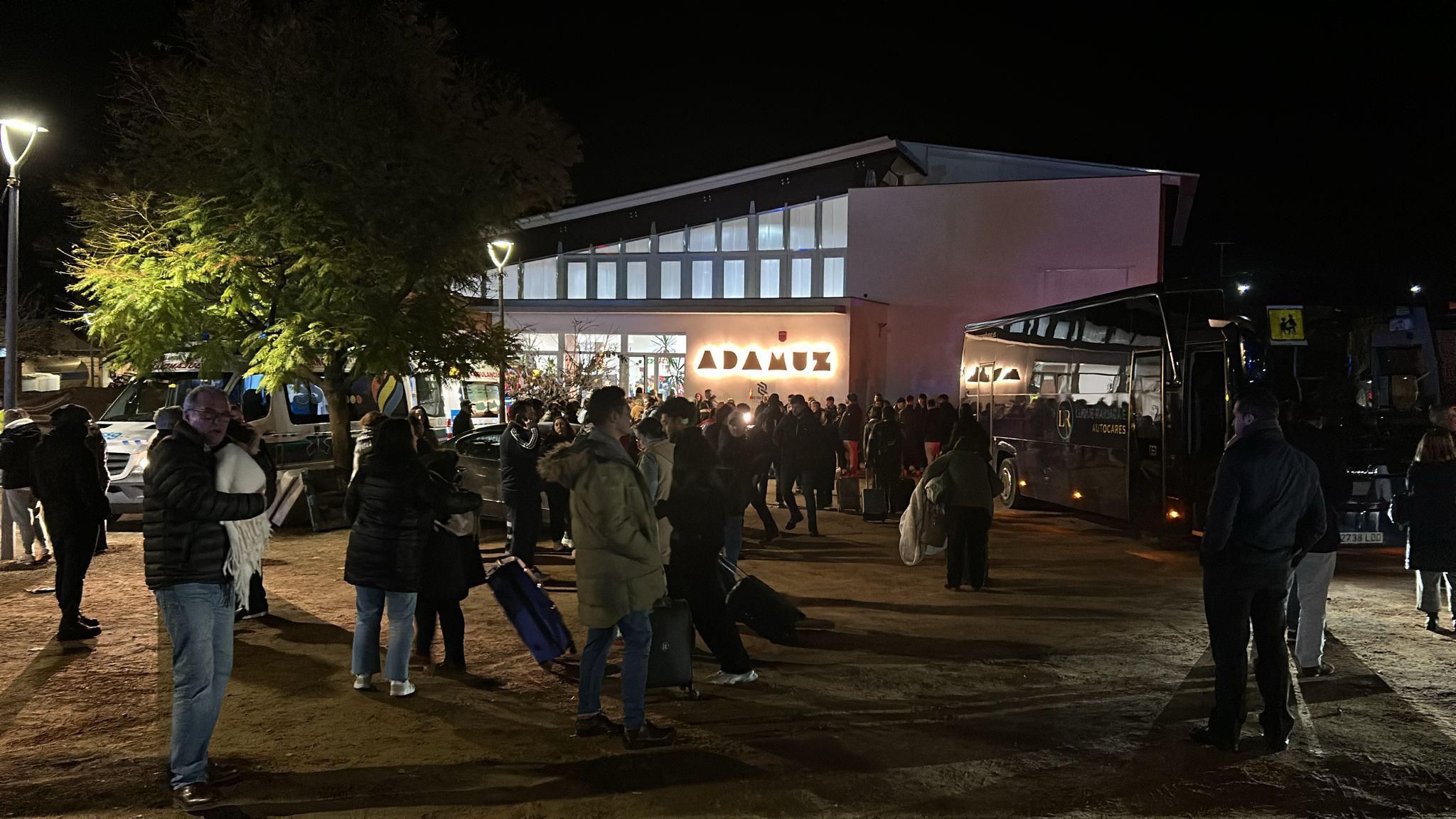
Like her, dozens of passengers who had not been injured disembarked in the small Cordovan town - just fifteen minutes from the capital - after being evacuated from the accident site.
The road connecting the station - where the crash occurred - and the urban center of Adamuz was, for most of the night, a constant flow of ambulances and Civil Guard patrols.
With shocked faces, the rescued passengers descended from the buses and either headed to the vehicles of family members who had come to pick them up or to the Municipal Pavilion of Adamuz, turned into an improvised shelter and a point of medical attention from where the injured are transferred to hospitals.
Inmaculada was in carriage 4 of the Alvia train and witnessed how from the next carriage on, the damages were much worse. "I thought I was going to die," she says.
"Suddenly, the train started braking, it was very strong, and some seats were ejected, it was crazy," recounts this passenger with fear in her body who was evacuated from the crashed train "through the tracks, trying not to look to the left, there were many injured," she tells EL MUNDO.
In other carriages, she explains, people "exited through the roof," and all the uninjured walked, she says, along the road, "in a line," towards the town of Adamuz until they boarded the buses.
"It will take me a while to board a train again," sighs this Alvia passenger, which was "completely full," she notes, and describes the accident scene as "horrific."
In the other train, the Iryo that derailed and, after invading the opposite track, collided with the Alvia, was Francina Martínez, a Costa Rican citizen who is in Spain these days as part of her country's delegation at Fitur. She had decided, she says, to spend the weekend in Malaga and on Sunday took the train from María Zambrano station to return to the tourism fair and continue working.
At the doors of the Municipal Pavilion of Adamuz, with tears in her eyes, she assures that "I have been reborn." She was in one of the seats in carriage 7, which, due to the impact, ended up partially overturned on the track.
"We exited through the windows," she details, three windows that a group of passengers broke with emergency hammers, and they exited to the track.
Francina, like everyone arriving at the headquarters set up in the town of Adamuz, arrived with her luggage and the first thing she did, like Inmaculada, was to call her family to reassure them.
Crowded in front of the Municipal Pavilion, waiting to see their relatives descend, dozens of people have traveled to this municipality. While some sigh with relief upon finding their relatives, some tremble because they still have no news of them.
"We can't talk," says a young woman, in tears, who has seen some of her relatives who were traveling on the trains but cannot find one of them.
The crash, as explained by the Andalusian Minister of Health, Presidency, and Emergencies, Antonio Sanz, has been extremely serious, and the numbers of dead and injured are only provisional. Shortly after midnight, it was estimated that at least 39 people had died and there were around 80 injured in healthcare centers. But, Sanz warned, everything indicates that these numbers will increase.
Especially because three carriages from one of the trains involved have fallen down a four-meter embankment and the worst is feared there. Four hours after the crash, emergency services were still working to extract passengers, injured, and deceased.
The situation, the Andalusian minister said, "is very complex," and access to the location where the carriages fell is very difficult.
Firefighters and healthcare services mobilized from different points in Córdoba have responded to the scene. The director of the Cordovan Firefighters Consortium, Francisco Carmona, explained to the press that to access the injured, they had to remove deceased passengers, illustrating the difficulties encountered during the rescue.
Most of the injured, Antonio Sanz explained, have been transferred to the Reina Sofía Hospital in Córdoba, although nearly a dozen healthcare centers have been activated, including the Virgen del Rocío Hospital in Seville, the main healthcare complex in the region, in anticipation of the increasing number and severity of injuries.