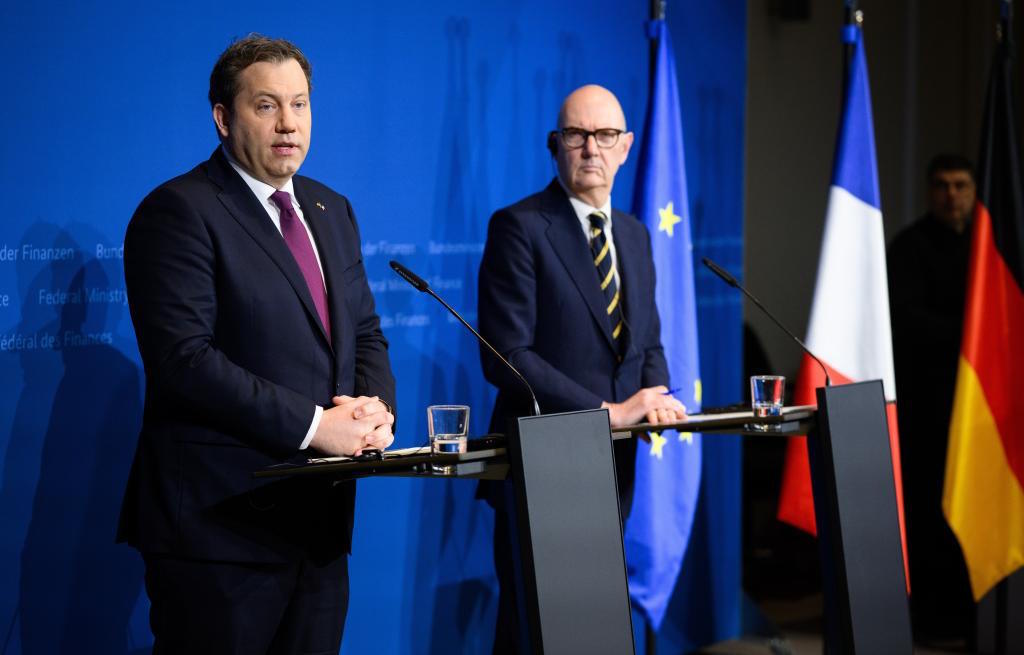
Threats of tariffs and Donald Trump's "blackmail" to acquire Greenland are starting to wear on European capitals. The two most relevant, Berlin and Paris, have been very clear on how to respond to the US President's words and what the consequences will be. "Germany and France are united and we will not be blackmailed, there will be a firm response from Europe," stated German Finance Minister Lars Klingbeil before meeting with his French counterpart.
"I also say, blackmail between allies for 250 years, between friends, is not acceptable," added Roland Lescure, who also expressed a desire for "frank discussions" with the United States within the framework of the G7.
Lescure's firm stance adds to the recent strong statements made by French President Emmanuel Macron, who has already stated that Brussels should activate its anti-coercion measures. This tool was created just over two years ago when the EU devised an instrument to primarily address China, including "a wide range of trade, investment, and financing-related restrictions."
Yesterday, Chancellor Friedrich Merz also spoke, and although he was more cautious than his Finance Minister, who belongs to the Social Democratic Party, he also made it clear that Europe is ready to respond firmly. "We do not want a trade war, but if faced with tariffs that we deem disproportionate, we are prepared to react," he stated.
Merz also made an important point: that Trump "always threatens with tariffs" and "often imposes them, but also frequently negotiates and dialogues in a way that distances himself from them." However, in Brussels and across EU capitals, it is clear that the Franco-German axis will work closely on this issue, and the path they indicate will likely be followed by Europe.
From the EU institutions themselves, particularly from the Commission, the official stance is that ideally, a negotiated solution would be reached. However, if the 10% tariffs for eight member states, as well as Norway and the UK, are activated on February 1, the EU has tools at its disposal. This includes the 93 billion euros in tariffs that were frozen last summer to prevent a trade escalation and will automatically come into effect on February 7 if the suspension is not extended. In other words, Brussels simply needs to take no action for them to be implemented.
All of this will be addressed at the extraordinary summit of presidents taking place this Thursday, following Trump's visit to Davos and his geopolitical vision presentation. The meeting will not lead to conclusions, but it will be highly relevant.