A battered trolley suitcase, a black pair of jeans escaped from some burst luggage, a pink blanket, or a book on art history. The twisted carriages of the wrecked trains have spat out onto the tracks dozens of personal items that probably no one will claim. But in the light of day this Tuesday, when not even 48 hours had passed since the accident, they continued to bear witness to the interrupted lives (some definitively) of the 527 passengers who were traveling last Sunday bound for Huelva or Madrid on two trains that collided near Adamuz (Córdoba).
Throughout the day, the extrication work inside the trains allowed the recovery of five bodies, bringing the death toll to 42. At the time of this edition, it could not be ruled out that another body might appear, as the carriages of the Alvia that fell into a four-meter embankment had not yet been lifted. The two large cranes (400 and 300 tons respectively) that arrived from Granada on Monday morning were still waiting yesterday on a road about 500 meters from the tracks because the terrain did not meet the conditions to ensure the safe anchoring of the machinery to the ground. The high-speed track at this point of the route rises precisely to avoid the unevenness of the surroundings. That is why the track runs several meters above ground level. Given the complications, it was finally decided to dismantle the train to remove it definitively in parts and transport the pieces by trucks.
On Tuesday, the Iryo carriages were also removed from the invaded track, making it clear to facilitate the access of Adif machinery and the reconstruction of the catenary. The recovery of traffic on this section of the track is still pending.
Early in the morning, news came of the discovery during the night of a body in the Iryo train. During the day, the rescue of the three bodies located in the Alvia and a fourth body that was not initially counted was also confirmed.
By mid-morning, the Civil Guard allowed for the first time journalists to access the station platform, where they could see up close the extent of the damage suffered by the Iryo train, whose rear carriages, 6, 7, and 8, derailed and invaded the parallel track while traveling at about 200 kilometers per hour. 20 seconds later, an Alvia train traveling in the opposite direction collided with the rear of the Iryo, and as a result of the impact, two carriages ended up at the bottom of the embankment. It was this tangle of iron that complicated the rescue of the bodies and plunged the definitive death toll into uncertainty (still unresolved).
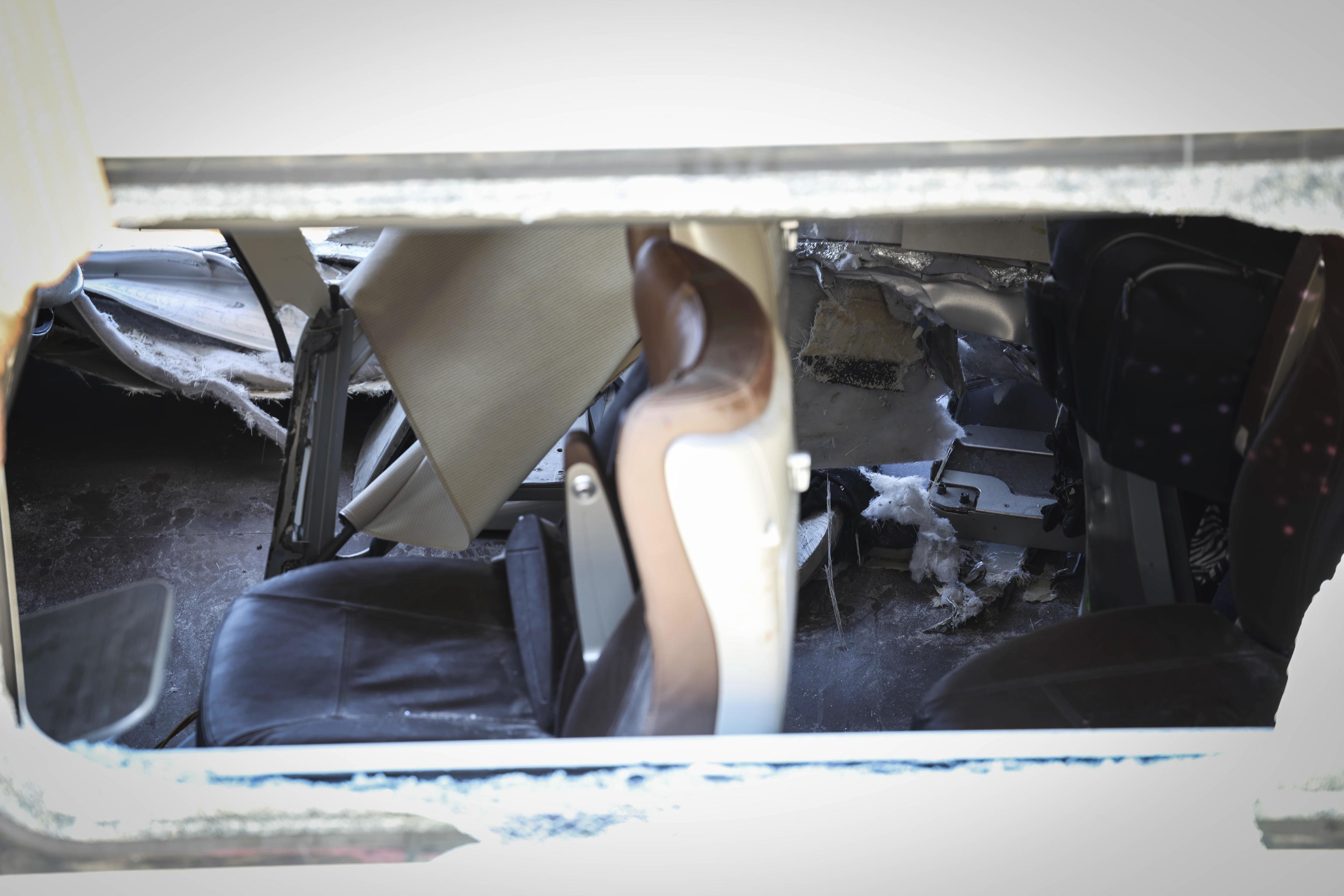
In the eyes of journalists (and the Royals who visited the disaster area and the Advanced Command Center at noon), the Iryo carriages showed the impressive scars of the collision. Car number 8 (completely overturned to the right in the direction of travel) dragged a catenary post and all the overhead wiring with it. Car number 7, also leaning towards the platform, is supported by steel cables placed to prevent its collapse and ensure safety during the inspection of the train. The window glass is shattered, either due to the impact or the intervention of passengers, who used hammers to break the windows and escape since the doors were blocked. And car number 6 remains standing, although off the rails. Crosses drawn with phosphorescent pink spray paint mark the spot where firefighters, in the early hours of the operation, indicated the presence of people awaiting rescue.
Inside the train, torn armchairs and trays ripped off can be seen. A Civil Guard dog was once again searching the carriages from top to bottom before the arrival of the Royals, who were scheduled to meet there with emergency services and workers still at the scene of the accident. Also with some neighbors who helped in the evacuation of passengers.
Meanwhile, the Civil Guard and the Legal Medicine Institute of Córdoba were working on the identification of the deceased. Along with the rescue of the last victims, the task of the forensic experts was the most pressing, given the uncertainty in which many families still live today, not knowing the fate of their loved ones.
Late in the afternoon, the Integrated Data Center took stock of this work, confirming that 25 of the deceased had already been identified through fingerprints. All autopsies were also completed yesterday, including those of the last five bodies found in the trains.
Of the total deceased, 27 were in the Alvia train, which was traveling between Madrid and Huelva; six were on the Alvia tracks, while another six were inside the Iryo. In addition, three bodies were found between both wrecked trains. The distance separating the two wrecked trains is about 800 meters.
Regarding the injured, the Ministry of Health reported that there are nine patients still in the ICU, while 86 injured have been discharged from the hospital. However, 37 people remain hospitalized, of which 33 are adults and four are children. In total, 123 people have been treated in hospitals.