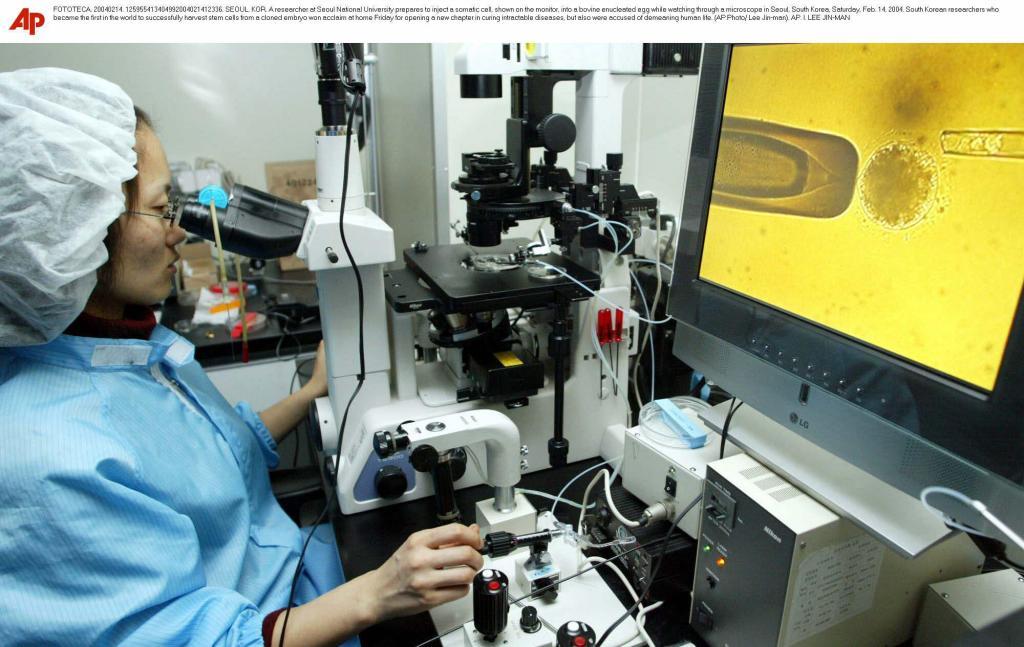
A routine biopsy of IVF embryos for clinical genetic testing provided the large-scale genetic data analyzed in this study.Thom LeachAmoeba Studios
Around 15% of recognized pregnancies end in miscarriage, with nearly half of conceptions being lost in early stages without individuals realizing. Now, a team of researchers from the United States and Denmark has analyzed data from over 139,000 embryos from in vitro fertilization (IVF) from around 23,000 couples and found various genetic variants associated with an increased risk of miscarriage.
Many of these variants are associated with meiosis, a key cell division process in sex cells. The research aims to provide insight into why meiotic errors and aneuploidies occur, which are responsible for 50-60% of pregnancy losses. Among the conclusions of the study are maternal genetic factors that go beyond age.
The team led by Sara A. Carioscia and Arjun Biddanda from Johns Hopkins University and the University of Copenhagen, respectively, conducted a massive retrospective analysis of Preimplantation Genetic Testing (PGT) data from embryos obtained through IVF. The findings, published in Nature, provide a more comprehensive understanding of the genetic factors underlying the risk of aneuploidy (the main cause of pregnancy loss), although further research is needed to assess the potential applications of this knowledge.
A woman's fertility depends not only on the number of eggs: ovarian tissue and its brain connections are also key
They record for the first time the process of human embryo implantation in real time
"This work provides the clearest evidence to date of the molecular pathways through which variable risk of chromosomal errors arises in humans," says lead author Rajiv McCoy, a computational biologist at Johns Hopkins University specializing in human reproduction genetics, in a statement. "This knowledge deepens our understanding of early human development and opens the door to future advances in reproductive genetics and fertility care."
The authors, however, acknowledge that the new data will not allow for precise estimation of individual risk, as the most important factors remain age and environmental elements, according to McCoy. This is because individual common genetic variants tend to have a smaller impact on the risk of aneuploidy compared to maternal age and environmental factors. Nevertheless, these genes are promising targets for future drug development.
Judith Reina, genetic counselor at IVI RMA Global, points out that "we often think that fertility problems depend almost exclusively on maternal age, but this work suggests that genetics also play a significant role; it is closely linked to the reproductive field and particularly to assisted human reproduction."
Why are small genetic changes important?
Chromosomal abnormalities resulting from aneuploidy are often the result of incorrect chromosome segregation during female meiosis. Previous research already suggested that errors in DNA exchange during gamete formation —a process called recombination or crossing over— could confer a risk of aneuploidy. However, common genetic variants in humans associated simultaneously with recombination and meiotic origin aneuploidy had not been identified until now.
Regarding this process, Reina explains "all individuals inherit common variants in genes that control how chromosomes are distributed during egg formation (meiosis). Genetic variants can increase the risk of aneuploidies but also decrease it (if that woman has a protective variant)."
Embryologist analyses revealed that the number of crossovers was lower in aneuploid embryos than in typical embryos, highlighting the role of these events in proper chromosomal segregation.
Additionally, they identified a variant of SMC1B (a gene encoding a protein that helps keep chromosomes together during meiosis) that was associated with both a reduction in crossover count and an increase in maternal meiotic aneuploidy. Subsequent analyses also implicated variants of several other genes involved in the recombination process, namely, C14orf39, CCNB1IP1, and RNF212.
"This finding is particularly compelling," McCoy asserts, "because the genes that emerged from our human study are exactly the same as those experimental biologists have detailed for decades as fundamental for recombination and chromosomal cohesion in model organisms like mice and worms."
Therefore, the IVI RMA embryologist suggests that these findings pave the way for, regardless of age, "we have variants that can either protect or make women more likely to produce aneuploid embryos. Over time, these differences can make some women at higher risk of chromosomal errors (aneuploidies) than others, even at the same age."
For Cristina Trilla Solà, director of the Prenatal Screening Unit and assistant physician in the Obstetrics service at the Hospital de la Santa Creu i Sant Pau (Barcelona), these are "consistent results that would allow establishing a link between advanced genetics and human embryology" beyond the classic concepts of aneuploidy and maternal age. In statements to SMC Spain, this embryologist urges caution regarding the progress, because "conclusions such as 'a gene predisposing to miscarriage has been discovered,' 'miscarriage is hereditary,' or that miscarriage could be prevented with a genetic test" should be avoided.
Reina emphasizes that "age matters, but it does not act alone". From her perspective, "this study invites us to think of fertility as a biological continuum rather than a fixed threshold associated with age," which "opens the door to more personalized approaches in the world of assisted reproduction, where reproductive risk could be assessed beyond simple chronological criteria."