The past seven days seem to have changed something in the European Union. "The threats of invasion and tariffs" by Donald Trump, as described by French President Emmanuel Macron, have not only "united" European leaders. They have gone further. So much so that "relationships have taken a hard hit," as stated by the High Representative of the Union for Foreign Affairs, Kaja Kallas.
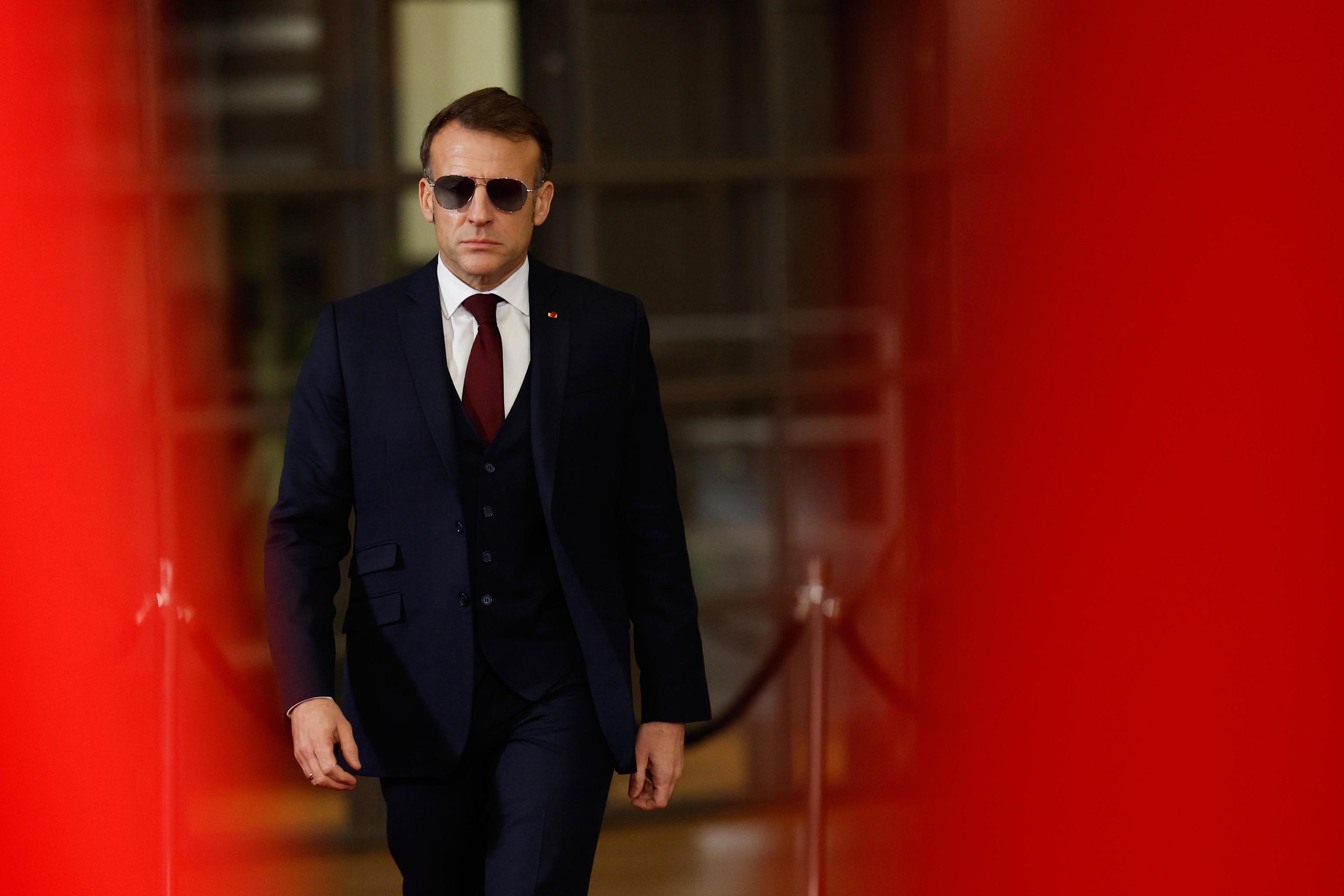
The head of diplomacy is often accused in the EU capital of being somewhat lukewarm. This was not the case this Thursday, before participating in the extraordinary summit taking place in Brussels, convened by the President of the Council, Antonio Costa, after Trump threatened to impose tariffs on countries that sent troops to Greenland. "We started the week with a form of escalation, and we have returned to a situation that seems much more acceptable," continued Macron, wearing the blue aviator glasses that have accompanied him in recent days.
"It is the policy that France and the Europeans want to apply: we are in favor of peace and stability so that the international order remains calm, and when we are threatened, when any of us is under pressure, it is normal to show solidarity, to make ourselves respected using our instruments. We will remain extremely vigilant and ready to use our instruments if we are threatened again," concluded the French President.
Furthermore, Danish Prime Minister Mette Frederiksen has also highlighted the "unity" and joint response of the EU. It may seem insignificant compared to Trump's harsh words. But in Brussels, they are convinced that this is the way to deal with the magnate. The U.S. President always tries to push every situation to the limit, they emphasize in the EU capital, and if he senses weakness in the opponent, he strikes hard. But if not, he ends up backing down. And that is what they claim has happened in the EU capital. Although the U.S. response has also been influenced by the "agreement" reportedly reached with NATO to explore the Cyprus model in Greenland: allowing its bases on the island to become its own sovereign territory.
"I would like to express how grateful we are in the Kingdom of Denmark, including Greenland, for all the support we have received from all of Europe. It has been extremely important in this very difficult situation we have found ourselves in," emphasized the Danish Prime Minister, who also denied on Thursday that the Cypriot-style option was on the table. "NATO absolutely knows the position of the Kingdom of Denmark. We can negotiate on everything political: security, investments, economy. But we cannot negotiate on our sovereignty. I have been informed that this has not been the case either," Frederiksen stated in a press release in the hours leading up to the meeting.
Polish Prime Minister Donald Tusk has also been firm with Trump. Always starting from the premise that relations with the United States are a priority, something all European leaders share, but making it clear that there must be respect and boundaries. "We always accept U.S. leadership. That is why it is so important for everyone, including our partners in Washington, to understand the difference between domination and leadership," he emphasized.
Similarly, German Chancellor Friedrich Merz highlighted the joint response of the EU. "It has been shown that European unity and determination can indeed have an effect," he stated. But at the same time, the German leader expressed "gratitude" because "Trump has distanced himself from his initial plans to take Greenland and from imposing additional tariffs on February 1." Despite stating that he was willing to confront the U.S. if necessary, he was likely the leader least desiring a tariff escalation.
After the meeting, the President of the European Council, Antonio Costa, emphasized the idea of continuing to work with the United States, yes, but always with mutual respect. Or rather, respect from Trump. "We believe that relations between partners and allies should be managed in a cordial and respectful manner. Europe and the United States share an interest in the security of the Arctic region, particularly through work within NATO. The European Union will also play a stronger role in this region," he noted.
"In this context, I want to be very clear that the Kingdom of Denmark and Greenland have the full support of the European Union. Only the Kingdom of Denmark and Greenland can decide on matters concerning Denmark and Greenland," he stressed regarding the situation of the mentioned island.