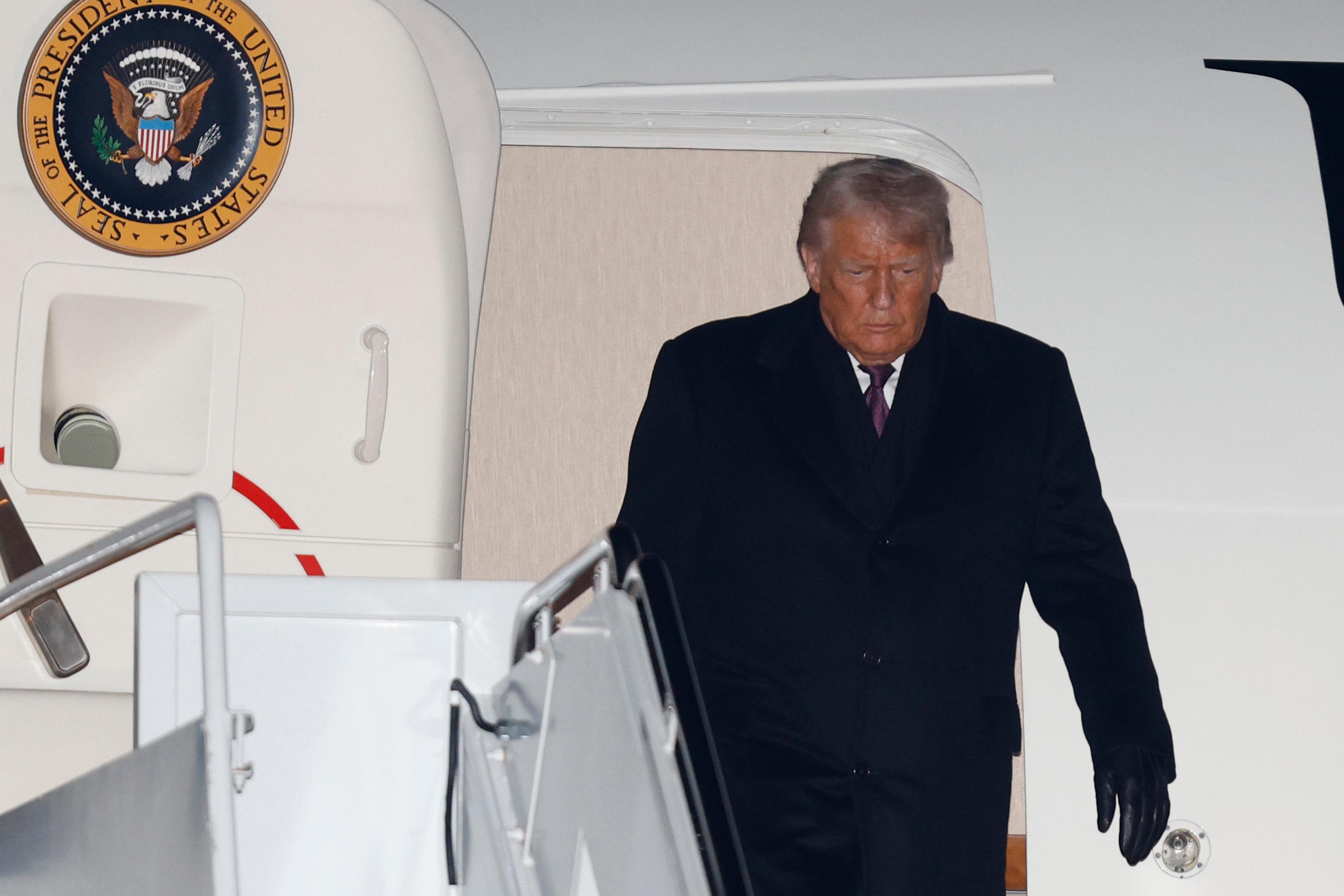
On January 20, 2025, Donald Trump was sworn in for the second time as President of the United States. That same day, he began the bulldozer that has marked the past year, not only in his country but worldwide. He arrived after winning the elections with great clarity. With much less margin than he believes, or at least boasts, but with an undeniable sense of power and the conviction of having received an almost total mandate to do, undo, and transform the nation and society. 12 months later, after dismissing hundreds of thousands of officials, wielding the chainsaw, bombing seven countries, the Epstein case, or threats to historic allies, the president's popularity is at minimum levels and the prospects for success in the midterm, the midterm elections in November, are very low.
According to Gallup, Trump's approval rating has dropped 11 points in just one year, from 47% to 36%. According to data from CNN in a large survey published this week, a majority of Americans, 58%, rate Trump's first year in office as a failure. The average of polls stands at around 42% approval (45% according to the latest The Wall Street Journal survey, 41% according to Reuters/Ipsos, with a 55% disapproval of his management), similar to his first term, to Joe Biden's at this same point in his term, and slightly lower than that of other recent presidencies. A week after Trump took office, 37% of Americans thought the country was heading in the right direction, compared to 50% who believed it was on the wrong track. Today, those figures are 31% and 61%, respectively.
But even though that figure remains stable, the majority states that the Republican leader is focusing on the wrong priorities and doing very little to address the main problem facing the United States: the cost of living. Although the country is shaken by interventionist and annexationist foreign policy, by the deployment of ICE and pitched battles in cities like Minneapolis, by an embryo of a constitutional crisis and endless open fronts, there is little doubt that the November midterm elections will revolve around the economy, around affordability, a term that the president insists is a fake invention of the opposition.
At the same time, polls reveal that while Trump is seen as a threat to democracy, stability, and the economy by Democratic voters, and is rapidly losing independents and groups like Hispanics, he still has the support of Republicans. Regardless of what he has or has not done. Thus, according to the latest CBS poll, published these days, 59% of citizens disapprove of Trump's Presidency and 41% support it. 97% of Democrats and almost 70% of independents and unaffiliated individuals are in that line. However, 90% of Republican voters approve of Trump.
Similarly, approximately 87% approve, in general terms, of his foreign policy and 83% believe that it has helped strengthen the position of the United States in the world. Although the vast majority of Americans oppose forced annexation, military intervention, and even the purchase of Greenland, the president seems indifferent. According to YouGov data this week, only 9% support the use of military force by the United States to take control of Greenland, and 72% oppose it entirely. The vast majority of Democrats (92%) and independents (73%) oppose the use of military force by the United States. A similar situation occurs among Republicans: 52% oppose it, compared to 22% who would approve. 86% of voters surveyed nationally in a Quinnipiac University poll - the one used by Fox News in its reports - would oppose a military action. This includes 95% of Democrats, 94% of independents, and even more than two-thirds (68%) of Republicans surveyed.
The numbers should worry the White House, especially after the poor results in the state and municipal elections last November, but as around 80% of House Republicans and 90% of the Senate were elected in districts or states where Trump won by 10 points or more, the fear of bleeding undecided or independent voters is still moderate. The loyal ones matter. And they don't care about foreign policy; they are mainly concerned about their wallets. "Trump is the party's secret weapon for November," Republican officials repeat.
Americans believe that the economy is currently the most important issue, by a margin of almost two to one over any other topic. Polls have remained fairly stable over the past two years, and less than three out of 10 people view the economic situation positively. What has changed in the latest polls is the growing pessimism, as only four out of 10 expect the economy to be good in a year, compared to 56% just before Trump took office. A majority of 55% states that Trump's policies have worsened the country's economic situation, while only 32% believe they have improved it. The majority, 64%, argues that he has not done enough to try to reduce the price of daily consumer goods. Even among Republican voters, this is the prevailing sentiment, with approximately half believing he should be doing more, as well as 42% among Republicans who align with the Make America Great Again movement.
The data align with the latest AP poll, showing how only 37% of adults approve of Trump's economic management, slightly better than the 31% who said the same in December. Approximately six out of 10 American adults claim that Trump has contributed more to increasing the cost of living in his second term, while only two out of 10 believe he has contributed to improving the situation.
But it's not just about money, inflation, rent, employment. Only 36% of citizens, according to CNN, believe the president is prioritizing correctly, compared to 45% at the beginning of his term. Only a third of Americans now claim to believe that Trump cares about people like them, a figure lower than the 40% from last March, the worst rating of his political career. And only 37% state that Trump puts the country's well-being before his personal benefit. Even approval of his immigration policy, Trump's great asset, has dropped by 12 points in CBS polls.