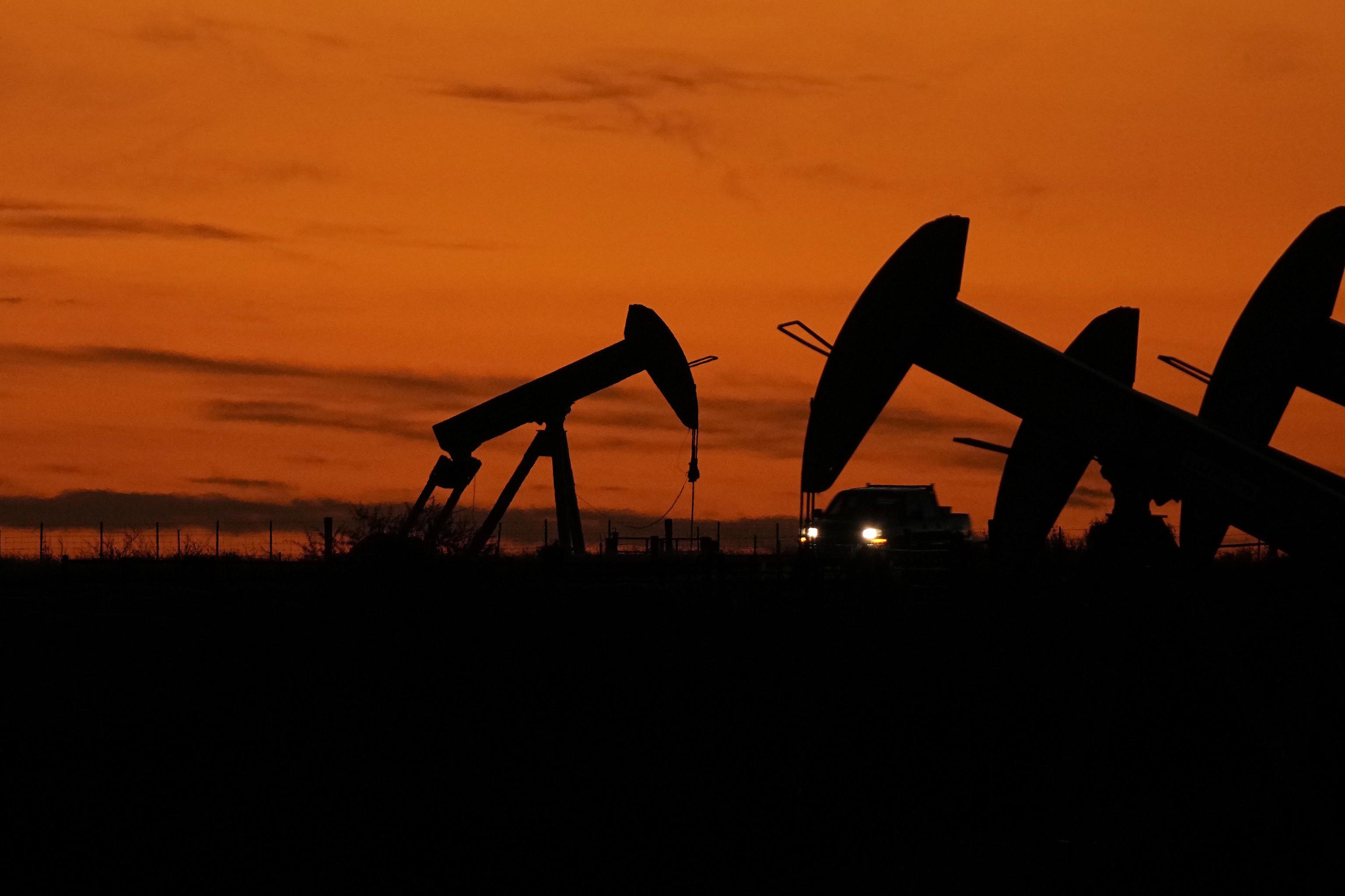
To the beat of La gasolina by Daddy Yankee, Donald Trump recently celebrated the drop in fuel prices in the United States. The price decrease is proof that his unwavering loyalty to the major oil companies is paying off. But what lies beneath is a reality stronger than the White House's energy policy: the world is flooded with crude oil.
This oversupply is not temporary, nor is it solely the result of the Trump Administration's strong support for the fossil fuel industry. It is the consequence of a historical increase in refining capacity, both within and outside the US, driven by the operation of mega-refineries in the Middle East, Asia, and Africa, and by the modernization of the US refining sector.
In addition to the boost in refining (downstream), another equally decisive phenomenon has emerged: a rebound in investment in oil and gas exploration and production (upstream). Especially since 2022, many oil companies have allocated more capital to extract from the subsurface. In 2024, global investment in upstream surpassed 600 billion dollars for the first time in a decade; and although it decreased by 4% in 2025, hovering around 570 billion, according to the International Energy Agency (IEA), it remains well above the levels of 2021 and 2022.
All this despite the IEA's anticipation of one of the largest oversupplies in history for 2026: an excess of nearly 4 million barrels per day. The paradox is evident: why does the world continue to invest hundreds of billions in oil... when there is already too much?
To understand this, it is worth momentarily setting aside the avalanche of figures and focusing on the news. Following a lightning military operation to stop Nicolás Maduro, Trump summoned the world's largest oil companies to the White House and asked them to mobilize a whopping 100 billion dollars to revive and extract from the struggling oil industry in Venezuela.
Some reacted cautiously, like ExxonMobil or Conoco, which had assets worth tens of billions confiscated by Caracas in the past. Others responded enthusiastically, like Chevron or the Spanish company Repsol, whose CEO, Josu Jon Imaz, expressed willingness to "invest strongly" in the Latin American country to the extent of tripling its production in a few years. The summit in Washington is perhaps the most recent evidence that, with or without excess oil, it still plays a central role in the geopolitical chessboard.
"Oil remains a tool of power, international influence, and energy security," says Elena Marabini, an energy transition analyst at Alantra. "Cases like Venezuela show that upstream is not just a matter of prices, but also of flow control, sanctions, payment currencies, and strategic alignments." Therefore, "the apparent oil surplus does not invalidate the logic of continuing to invest in upstream, which is a long-term business." And she justifies it with data: developing a new field can take between 10 and 20 years, from the first licenses to commercial production; in addition, existing fields experience a natural decline of 5% to 6% annually in oil, and even higher in gas.
"A significant part of current investment is not seeking to add extra capacity, but to compensate for structural production declines. Ceasing to invest today, even with a surplus, could become a bottleneck tomorrow," she emphasizes.
Homayoun Falakshahi, Crude Analysis Director at Kpler, a leading platform in commodity market intelligence, agrees. "It is estimated that if the world stopped investing, we would lose 40% of oil production each year," he warns. There is another additional reason: "Demand continues to grow, albeit at a slow pace." Even the European Union, a global champion of ecological transition, is postponing the ban on combustion engine vehicles until 2035, "which will also drive long-term demand."
"Oil production is structurally depleting," points out Manuel Maleki, Deputy Chief Economist at Edmond de Rothschild. This, he assures, forces the oil industry to replace between 4 and 5 million barrels per day each year just to maintain production levels. "A large part of current investment is defensive, aimed at preserving production capacity rather than expanding supply," he describes.
Falakshahi emphasizes that price evolution is essential. "Although they are relatively low now, they may not remain so in the long term, especially as OPEC+'s available capacity decreases. According to Kpler's forecasts, the oil surplus will not last. "Production will peak and then decline in many countries. For example, we believe that the United States is about to reach its peak: we forecast a drop from 13.8 to 13.6 million barrels per day by the end of the year."
If the pace slows on the other side of the Atlantic, the surplus could dissipate relatively quickly. Especially because, according to a 2024 report from the International Energy Forum (IEF) and S&P Global, the primary driver of capital expenditure growth in upstream until 2030 will be North America.
The future of consumption is also not set in stone. "Global demand is not homogeneous," emphasizes Marabini. "While it tends to stagnate in advanced economies, marginal growth is shifting to emerging economies like India or much of Southeast Asia. In these regions, income, urbanization, and industrialization continue to drive the use of liquid fuels."
Lower gasoline prices are also a double-edged sword. "An oversupply scenario puts downward pressure on prices, yes, but that environment can paradoxically stimulate consumption, especially if the energy transition does not progress rapidly enough to offer competitive alternatives," assumes the analyst from Alantra.
Barrel prices - near $64 in the near futures - have a second interpretation. "When they fall below certain thresholds, higher-cost production becomes unprofitable," explains Maleki. He uses the example of US shale, whose breakeven range fluctuates between $50 and $60 per barrel.
Shale is the fuel (oil or gas) that, instead of being in conventional reservoirs, is trapped in shale rocks. To extract it, they must be fractured through fracking, an expensive process that has become the key that has allowed the US to transition from a net importer to the world's leading exporter. When Brent plummets, this model begins to falter.
The analyst defines it as the "breakeven effect," a self-correcting mechanism of the market. If prices drop, companies reduce investment; but today's capital cuts are reflected in the oil that will reach the market in a few years, eventually pushing prices back up. "Climate policies, geopolitics, and technological change could still reshape the market," warns Maleki.
Banking and oil, neither with you nor without you
In 2020, Larry Fink, founder and CEO of BlackRock, the world's largest asset manager, made a U-turn in the capital's relationship with fossil fuels. He announced a "fundamental restructuring of finance" to address climate change. Soon, the money moguls joined his passionate call, embracing ESG criteria (environmental, social, and governance) as a new finance Bible. Six years later, many of the largest banking institutions have backtracked, renouncing commitments and abandoning alliances that promised to use capitalism to save the environment.
The political and judicial pressure from conservative forces in the US and concerns about losing more industrial competitiveness in Europe have triggered this silent stampede. In 2024, Fink himself indicated that he would no longer use the term ESG because it had become politicized. Instead, he adopted concepts like climate or sustainable investment, much more abstract. In his 2025 investor letter, he didn't even mention them: "We need energy pragmatism".
But, from a pure profitability standpoint, does it make sense to invest hundreds of billions a year in crude oil? "Definitely, yes. The oil companies that continued to invest during the Covid period now show higher returns and growth than their competitors," says Michele Della Vigna, Managing Director and Co-Head of Natural Resources in EMEA at Global Investment Research at Goldman Sachs. Remember that the oil and gas industry has offered double-digit returns for decades.
"It makes perfect sense to continue investing in high-quality fields, especially when there is a technological angle, such as the globalization of shale production," he emphasizes. The recommendation extends even to uncertain markets like Venezuela: "It has some of the most attractive oil reserves in the world. In the right regulatory environment and with manageable political risk, the industry will reinvest, although I believe there will be some reluctance at first given the poor historical track record of foreign investors in this country."
The figures show the renewed appetite for capital. In 2024, the warmest year ever recorded, the world's 65 largest banks committed $869 billion to companies operating in the fossil fuel sector. The amount represents a significant increase of $162 billion compared to 2023. This was the main conclusion of the latest edition of the Banking on Climate Chaos 2025 report, prepared by a coalition of leading organizations in climate and financial research.
A considerable portion of that money ($429 billion) went to companies dedicated to expanding fossil fuel production and infrastructure. In total, 48 of those banks mobilized more resources to this type of companies. The global ranking was led by the Americans JPMorgan, Bank of America, and Citi. In Europe, the British Barclays was the largest financier and the only European entity in the global top 12. It was followed by the Spanish Banco Santander, the British HSBC, the German Deutsche Bank, and the French BNP Paribas, each with between $14 billion and $17.3 billion.
According to Joeri de Wilde, an investment strategist at Triodos Investment Management, the shift in banking priorities cannot be understood without the change in priorities of the new geopolitical era: "With the increase in international instability, accelerated by Trump's return, the focus has shifted from greening the economy to energy security and autonomy." This shift, he claims, has been reinforced by the emergence of AI, whose expansion has increased the need for "stable" supply to data centers, which are still considered to be better supplied by fossil fuels.
"The fact that investment in upstream continues can act as a relative brake on the transition," Marabini concludes. "On one hand, lower price signals can delay substitution if alternatives are not competitive. On the other hand, there is competition for capital: part of the investment may return to fossil projects if the returns are clearer or less risky in the short term."
The result is that many oil companies and financial institutions have assumed that the energy transition will not progress as quickly as required by the Paris Agreement. "Large oil companies can produce at low cost thanks to their scale and experience, and remain profitable even when the barrel is not sky-high," explains De Wilde. At the same time, he notes that a large part of investors continue to act based on short-term profit logic, ignoring the risk that some of the assets they finance may end up becoming "stranded assets," or relying on governments to intervene to prevent the downfall of their national champions.
Triodos rejects the current narrative that more fossil capacity equals greater security. "The expansion of coal, oil, and gas does not improve energy security, but the opposite," warns De Wilde. Existing projects, combined with renewables, he argues, are already sufficient to meet present and future global demand. Investing billions in more fossil infrastructure, he states, ties economies to volatile markets and exposes banks to geopolitical risks linked to exporting regimes. "The true energy security is to build a diverse system based on renewables, reducing dependence on finite resources and geopolitically fragile suppliers," he summarizes.