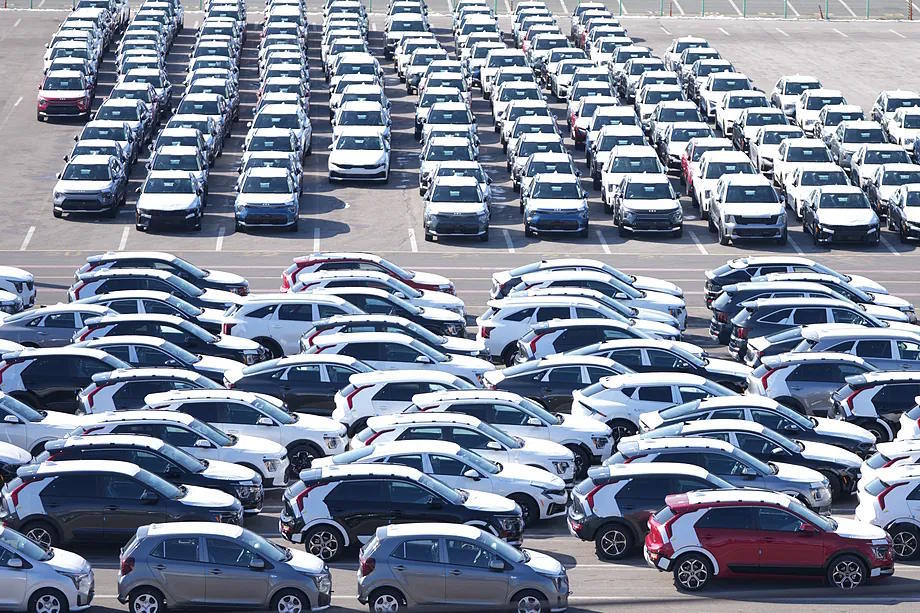
In a move that threatens to shake one of the most consolidated strategic alliances of the United States in East Asia, Donald Trump announced a sharp increase in tariffs on imports from South Korea, mainly affecting automobiles and pharmaceutical products.
Trump has justified his new tariff blow by pointing out that Seoul has violated the trade agreement signed by both countries last year. For South Koreans, the measure raises new questions about Washington's credibility as a reliable partner and the future of military cooperation between two nations that have strengthened ties as pressures from China and North Korea on regional security have increased.
Trump, through a comment on his Truth Social network, said that the tariffs will increase from the current 15% to 25%. South Korean media have explained that this announcement has not yet been officially communicated to Seoul through the usual channels of the Department of Commerce or the White House, a detail that has surprised South Korean officials. The presidential office in Seoul has reported that the Minister of Commerce will travel to Washington to try to mitigate the political and economic impact of Trump's new order.
The market's reaction was immediate. In the South Korean stock market, shares of manufacturers such as Hyundai and Kia fell by up to 5% in the early hours of Tuesday, before partially recovering their losses. The South Korean won also weakened against the dollar, reflecting investors' uncertainty about a possible trade escalation between allies.
In July 2025, after months of intense negotiations, both countries announced an agreement in which the US reduced tariffs on South Korean products to 15%, in exchange for promises of South Korean investment in key sectors of the US economy worth at least $350 billion.
However, it is precisely the so-called Special Law on Strategic Investments in the United States that is still pending approval in the National Assembly, the South Korean Parliament. The bill was introduced but has not yet been validated by the relevant committee.
The trade agreement, sealed during President Trump's visit to South Korea in October last year, aimed to end a period of tensions and encourage the economic integration of both economies within a broader strategic framework. However, analysts argue that since it has not been ratified by the South Korean Parliament, the agreement remains a memorandum of understanding and not a binding treaty. In other words, it has not been effective, which has angered Trump. The South Korean government argues that a delay in legislative procedures does not constitute a breach of the agreement.
Among South Korea's main exports to the US are vehicles, accounting for nearly 27%. An increasing proportion of South Korean cars are circulating on US soil. Bilateral trade amounts to over $160 billion annually, with a significant presence of semiconductors, electronic products, and manufactured goods.
The original agreement included other commitments in strategic sectors: from the coordinated purchase of liquefied natural gas to investments in shipbuilding, nuclear energy, and critical materials. For example, Korean Airlines agreed to purchase over 100 Boeing aircraft, in a deal exceeding $36 billion.
The reactivation of the toughest phase of Trump's trade war against South Korea also shakes the traditional military alliance: the US maintains around 28,000 troops in the Asian country under a mutual defense treaty dating back to the Korean War, aimed at countering threats from North Korea and balancing China's growing influence.