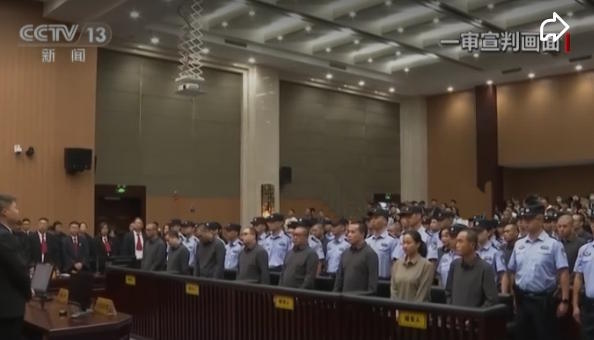
China has closed one of the darkest chapters in its fight against Southeast Asian criminal networks with the maximum penalty. Eleven members of the Ming family, a mafia clan that for years de facto ruled vast areas in northern Myanmar, were executed on Thursday after being convicted of murder, illegal detention, fraud, and managing gambling houses.
The sentence was handed down in September last year by a court in Zhejiang province and was widely publicized by state media, which aimed to send a clear warning: Beijing acts harshly against transnational criminal networks.
The Mings were part of the so-called "four families" in northern Myanmar, Chinese ethnic clans that ran scams, casinos, and armed militias. For years, they controlled Laukkaing, the capital of the autonomous region of Kokang, a border city with China that transformed into a showcase of brothels, casinos, and human trafficking.
According to the Chinese court, between 2015 and 2023, operations linked to the Ming family generated over 10 billion yuan (around 1.2 billion euros). They set up a sophisticated online fraud network that trapped thousands of Chinese workers, trafficked to Myanmar with false job offers and forced, under threats and torture, to deceive - usually through phone scams - thousands of victims worldwide.
Through advertisements on social media and messaging apps, young Chinese were recruited with promises of well-paid jobs. Once they crossed the border, their passports disappeared, and captivity began. Endless days in front of screens, emotional scam scripts, physical punishments for not meeting targets, and, in extreme cases, exemplary torture and murders. The complexes were guarded by armed men and managed as a kind of human fraud farms.
The heart of the Ming family's empire was the Crouching Tiger Villa, a complex in Laukkaing run by the clan leader, Ming Xuechang, who had been a member of the Myanmar state parliament and had close ties to local power structures.
Like other criminal bosses and warlords, the boss managed to shield his business thanks to years of collusion with local authorities, both from the Military Junta that seized power in 2021 and the rebel militias fighting against the military.
The Ming's businesses began to crumble in 2023. Pressure from Beijing, the most powerful and influential ally of the Burmese regime, pushed the military to act. That same year, several clan members were arrested, and Chinese authorities offered rewards of up to 70,000 euros for information leading to the capture of the rest of the family.
The case of a Chinese actor who traveled to Thailand for a supposed job and ended up locked in a scam center in Myanmar went viral on Chinese social media and put a face to a tragedy that had been silently brewing for years. Stories like these sparked public outrage and accelerated Beijing's pressure. The arrests and extraditions set a precedent: for the first time, the major clans in northern Myanmar were no longer untouchable.
The death sentences were approved at the end of last year by the Supreme People's Court of Beijing, which considered the evidence presented on crimes committed since 2015 to be "conclusive and sufficient." According to the sentence, the Ming's activities also contributed to the deaths of 14 Chinese citizens.
The patriarch, Ming Xuechang, committed suicide in custody before being sentenced. Among the detainees who were executed was his son, Ming Guoping, leader of the Kokang Border Guard Force, a militia aligned with the Burmese coup Junta.
Kokang, the region where the Ming's power was established, is an enclave of Chinese ethnic majority, with historical, linguistic, and commercial ties to China. For years, it was a natural refuge for smuggling networks, drugs, and illegal gambling. After the military coup in 2021 and the international isolation of the Junta, these criminal networks became an essential source of income for the military regime, which accepted money and weapons in exchange for impunity.