A Chinese drug developed to combat Covid-19 could become a new tool against one of the deadliest viruses known. Researchers from the Asian giant have identified that the oral antiviral VV116 shows significant activity against the Nipah virus, a pathogen with mortality rates that can reach 70% and that is currently in the spotlight due to a small outbreak detected in India.
The finding has been announced by the Wuhan Institute of Virology, under the Chinese Academy of Sciences, and recently published in the scientific journal Emerging Microbes & Infections. The study is the result of a joint research led by the mentioned institute, which was a few years ago under international scrutiny for the conspiracy theory that the SARS-CoV-2, the virus that caused the 2020 pandemic, escaped from one of the maximum security laboratories of this center.
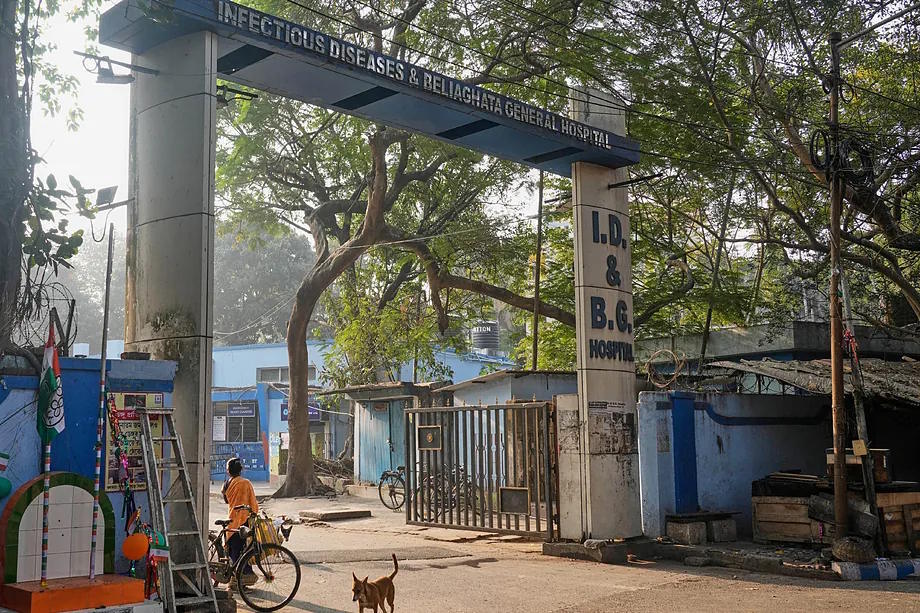
Now, the focus is on Nipah. The Ministry of Health of India reported on Tuesday that two cases had been confirmed in the state of West Bengal, reducing the number from the five positives that local media had counted earlier in the week. "Tests have been conducted on 196 close contacts," the official statement said.
First detected in Malaysia in 1998, Nipah has sporadically jumped in small outbreaks in countries in South Asia and Southeast Asia. It is transmitted from animals to humans - mainly through fruit bats - and can also spread among people. There are currently no approved vaccines or specific treatments.
China now points out that VV116, a drug originally authorized for the treatment of Covid, has shown in laboratory tests a powerful ability to inhibit the replication of Nipah. The researchers verified its effectiveness against the two main variants of the pathogen: one strain detected in Malaysia and another in Bangladesh.
The most relevant results, as detailed in the report, come from experiments conducted with golden hamsters, a common animal model for studying severe viral infections. In a scenario of lethal infection, oral administration of VV116 at a dose of 400 milligrams per kilogram of body weight increased the survival rate to 66.7%. Additionally, the treatment significantly reduced the viral load in key organs such as the lungs and the brain.
"This finding is the first to demonstrate the therapeutic potential of VV116 against the Nipah virus," stated the Wuhan Institute of Virology. Vigonvita Life Science, the Chinese biopharmaceutical company that collaborated in the research, stated this week that the preclinical results are "promising" and that they will closely monitor the evolution of the Nipah outbreak. If necessary, they assure, they could initiate clinical trials to evaluate its use as a preventive measure.
In Beijing, state media have reported on the "great attention and public concern" following reports of the Nipah outbreak in India, especially because China is on the eve of the Lunar New Year holidays, a period of high traveler influx into and out of the country. The 40-day travel peak, known as chunyun, extends this year from February 2 to March 13.
In recent hours, Chinese health workers have pointed out that, almost every year, small Nipah outbreaks have been reported, especially in India and Bangladesh, and that the World Health Organization (WHO) considers the risk of further infection spread to be low.
"India has the capacity to contain this type of outbreaks, as has been demonstrated in previous episodes. Meanwhile, national and state health teams are jointly implementing the recommended public health responses," explained a WHO official to the Chinese newspaper Global Times.
"There may be increased exposure to Nipah, given the known reservoir of the virus in the bat population in some parts of India and Bangladesh, including West Bengal. It is necessary to strengthen community awareness of risk factors such as the consumption of date palm sap," the statement continued.
"Nipah has relatively limited transmission routes compared to highly transmissible respiratory pathogens such as influenza or SARS-CoV-2. Nipah infections in humans are mainly associated with direct contact with infected animals, particularly bats or pigs, or with the consumption of food contaminated with animal secretions such as saliva, urine, or feces," explains Dr. Zhao Haiyan, a virologist at Wuhan University.
The news of the Nipah outbreak in India - the two confirmed cases correspond to nurses from a private hospital located about 25 kilometers from the city of Calcutta, who were admitted on January 4 - began to have repercussions in the international press earlier this week when several airports in Asia (Thailand, Nepal, Taiwan, and Hong Kong) announced that they had strengthened health surveillance and passenger control from West Bengal.