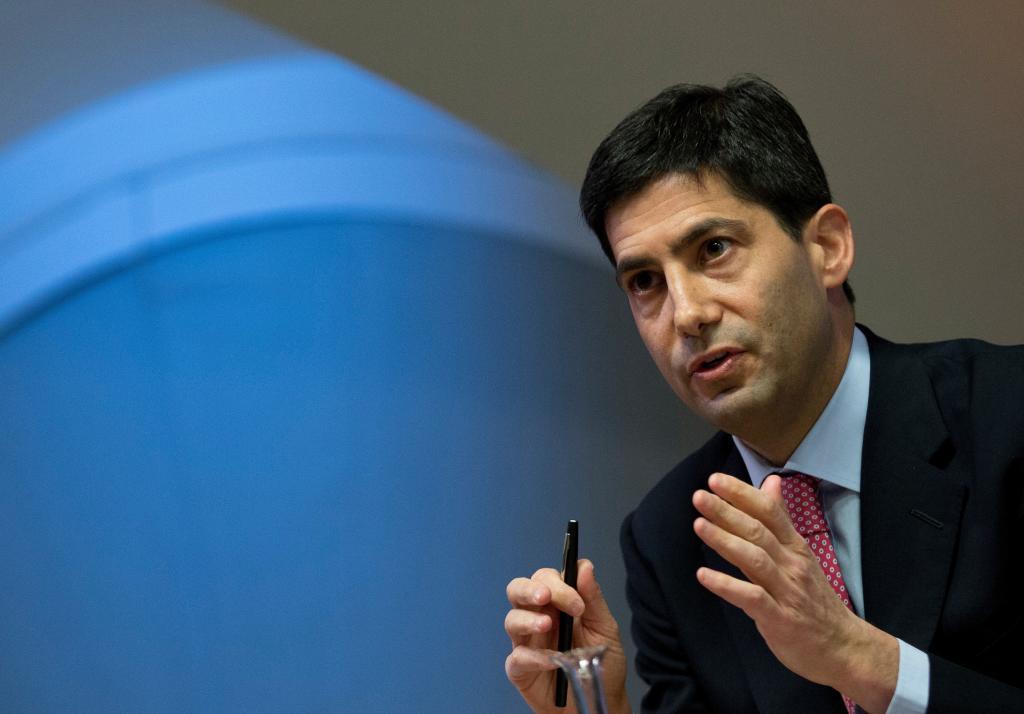
The President of the United States, Donald Trump, has chosen veteran Kevin Warsh, 55, to be the next Federal Reserve Chairman. If confirmed by the Senate, Warsh will succeed Jerome Powell when he steps down in May. In recent weeks, the White House seemed to have narrowed down the list to four candidates. Warsh himself, National Economic Council Director Kevin Hassett, BlackRock executive Rick Rieder, and one of the Federal Reserve governors, Christopher Waller, who was one of the two who voted in favor of a rate cut on Wednesday. The President personally met with each of them in recent weeks after a delicate process lasting months. Ultimately, he made the decision based on the extensive contacts of the chosen candidate, both on Wall Street and within the Republican world.
Trump was not entirely convinced and even considered the option of appointing his Treasury Secretary, Scott Bessent, possibly holding both positions simultaneously, something unprecedented in a century. It was Trump who chose Powell in 2017 (later retained by Joe Biden) and quickly regretted it. Before leaving office in 2020, he publicly expressed several times, when crossing paths with Warsh, that he should have made a better choice.
The President has privately and publicly expressed his fear of a repeat scenario with the current chairman: candidates telling him what he wants to hear to secure the appointment and then seeking the independence historically attributed to the Central Bank. "They say everything I want to hear," he lamented in Davos, "It's incredible how people change once they get the job. It's a shame, a kind of disloyalty because they say they have to do what they believe is right," he added.
Hassett is his closest collaborator, and although he seemed inclined towards him initially, he recently stated that he did not want to lose him and that he was more useful assisting from within the Executive. The White House does not hide its agenda or obsessions. They want interest rates to drop rapidly to around 1%, from the current 3.50-3.75%. Any other scenario is unacceptable. "I want my new Federal Reserve Chairman to lower interest rates if the economy is doing well and not disrupt the market without any reason. Anyone who disagrees with me will never be the Federal Reserve Chairman!" he warned in late December. Therefore, they have exerted all imaginable pressure on Powell and the governors, including insults, threats, disdain, and even criminal investigations or unjustified dismissals that are now the subject of dispute in the Supreme Court.
The entire Executive apparatus is fully engaged. Trump already has two key figures on the Fed committee, the aforementioned Waller and Stephen Miran, another of his direct advisors. With Warsh, they would be three, with much more influence. And they will not be the last.
Warsh studied at Stanford and Harvard, specializing in Law. He spent seven years at Morgan Stanley in the M&A department. He then advised President George W. Bush on economic policies. He was subsequently appointed to the Federal Reserve Board of Governors for five years, from 2006 to 2011, becoming the youngest candidate in history at just 35. After his term, he turned to teaching as a visiting professor at the Hoover Institution and the Stanford Graduate School of Business.
He is a partner at Duquesne Family Office and serves on the boards of UPS and Coupang, South Korea's leading e-commerce company, as well as on the Congressional Budget Office's Panel of Economic Advisers. Additionally, he is married to the daughter of Ronald Lauder, a significant Republican donor and heir to the Estée Lauder family.
Warsh, a lawyer by training, is not an academic, classical economist, or history specialist like Janet Yellen or Ben Bernanke. Nor does he have the background Powell had. This has been evident both during his time at the Fed and afterward. Critics recall that in the months leading up to the subprime crisis and the Great Recession, when the housing bubble was deflating and financial markets were becoming increasingly volatile, Warsh praised the rise of credit default swaps and other derivatives, applauding their safety and risk coverage, completely ignoring the impending collapse. He also underestimated data predicting the economic collapse or the positive effects of stimulus packages that ultimately facilitated the recovery of the U.S. economy long before the European economy, embroiled in a lengthy debate on orthodoxy and fiscal adjustment.
In late autumn 2010, when the country had a near 10% unemployment rate and 1% inflation, Warsh criticized the Federal Reserve's measures to boost the economy, arguing that the real problems were structural and that monetary expansion would merely mask the situation and increase inflation. He constantly saw inflationary threats as if he were a Bundesbank official in Frankfurt. Records from his years at the Fed show his steadfastness and failure to learn from previous misjudgments.
Despite this, Trump has always had him in mind. First for the Fed in 2017 and later for various high economic positions, including Treasury Secretary. From many perspectives, he would have been the perfect candidate for a Republican president. The issue is that the Republican Party no longer exists as it did in the past. Not coincidentally, Ben Bernanke wrote in his memoirs that Warsh's "numerous contacts on Wall Street" and his "particularly good connections among Republican lawmakers" were "invaluable" when they were desperately trying to prevent the collapse of the entire financial system during the crisis.
Warsh is known for advocating low taxes, spending cuts, free trade, and minimal government interference. During his tenure as governor, he argued that the Federal Reserve should intervene less despite high unemployment to "shift responsibility" to Congress for measures he deemed beneficial, such as cutting social spending and signing new free trade agreements.
As known, this is no longer the recipe of a conservative White House that completely disregards Congress, has erected the largest protectionist barrier in a century, declared a trade war on the planet, dictates to companies what to do with their profits, intervenes or prohibits certain businesses or thresholds.
Although Warsh now praises the president and defends his measures on television, including tariffs or pressure on the Fed, during his time at the institution, he was a monetary hawk, extremely cautious about inflation, and advocated for strictness in interest rates. Especially during the 2008 financial crisis and beyond. His ties to billionaire Stan Druckenmiller, an investor not in favor of further rate cuts, raised many doubts in Trump's circle.
To ingratiate himself, he has done everything possible in interviews, speeches, and columns. "Most of the Federal Reserve's problems are due to its own mistakes," he stated a few months ago, saying that the institution "must stop defending its mistakes and justifying its critics, and get back on the right track. First, interest rates must be set appropriately, and second, there must be an impression of knowing what one is doing," he said, quoting another former Central Bank President, Paul Volcker. "Economic growth in the United States is about to skyrocket, but it is being hindered by the central bank's poor economic policies, poor supervisory policies, poor monetary policies, and a set of very confusing rules that we have seen from last year to this," he said last summer on Fox News, Trump's favorite network.