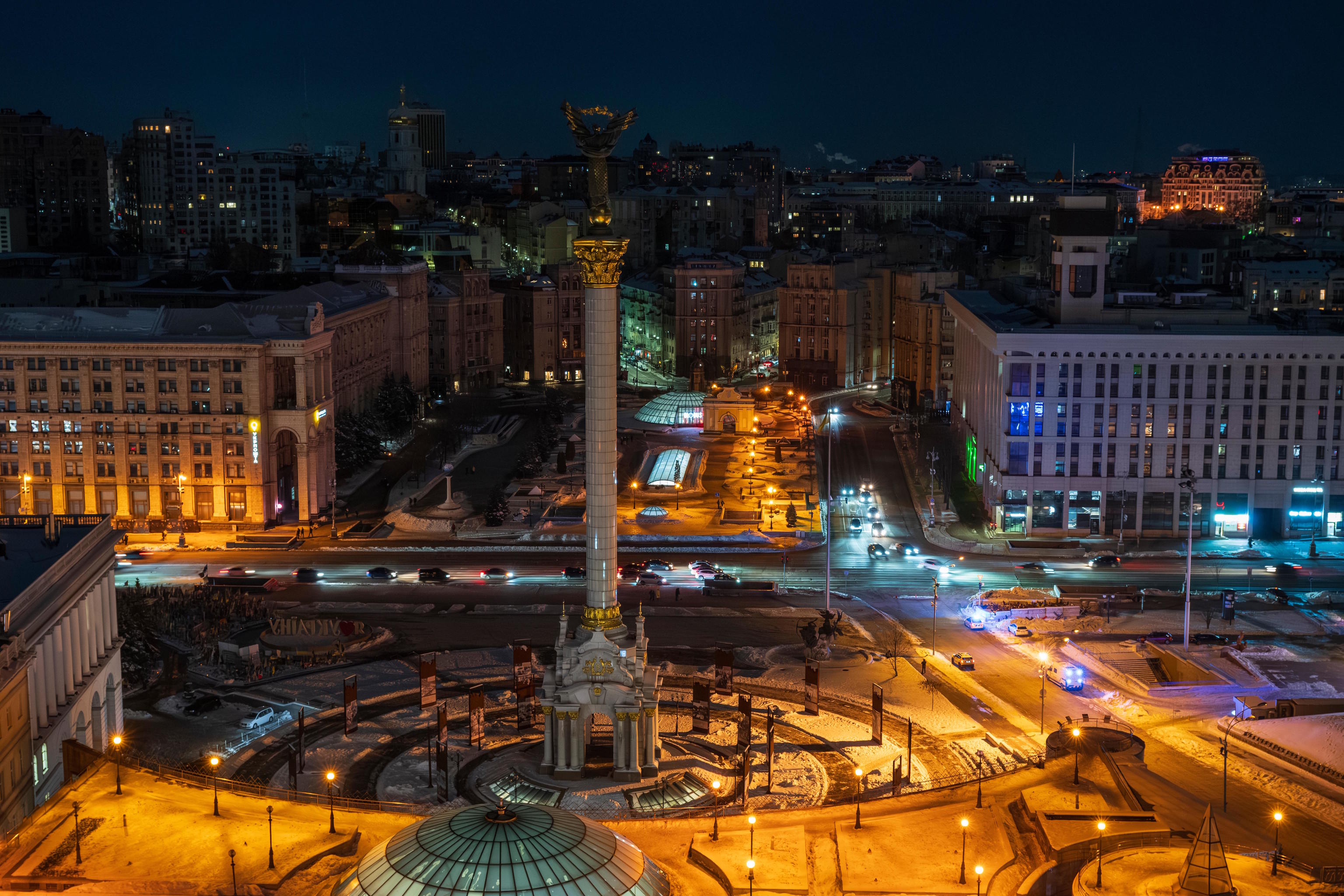
In the bars that remain open in Kiev, two things stand out: the rumble of the diesel generator at the door and a chalkboard where many establishments have written a countdown: the days left until spring. Faced with the almost absolute absence of results for Russian troops on the battlefield, Vladimir Putin resorts to what has worked best for him so far: punishing the Ukrainian civilian population still remaining in the cities, exhausted after almost four years of invasion. The weapons are well known, but now, in addition to missiles and drones, the coldest weather of the year accompanies them.
Efforts by Donald Trump to achieve an energy truce ended with a new ploy by the Russian autocrat: his ceasefire to reassure the US President only lasted two days, was violated in some areas, and also ends just as the worst cold and snowstorm in many years begins: an arctic front with temperatures dropping to 26 degrees below zero in some areas of the Kiev metropolitan area and minus 30 degrees in Kharkiv, the country's second-largest city.
Yesterday, while the ceasefire was in place, a Russian drone attack on a bus in the Ukrainian region of Dnipropetrovsk killed at least 15 people and injured seven. They were workers of Ukraine's largest energy company, DTEK, which has already lost many employees.
Russia already implemented this same strategy in the Syrian war of bombing power plants and their distributors. This helped the tyrant Bashar Assad and is how they try to win a war that is proving difficult on the front. General Surovikin, now fallen out of favor, implemented it in Ukraine as early as 2022, but it is this year that Russia has been most ruthless towards Ukrainians and their energy network.
The situation is that there are neighborhoods, sometimes entire cities, that go hours and days without electricity, water, or heating. In warm seasons, it would be a huge inconvenience to lead a normal life, but at 25 degrees below zero, it is a humanitarian catastrophe. Water has frozen in many city pipes, causing them to burst, on a massive scale. DTEK workers are racing against time to replace the destroyed elements of the attacked power plants and restore power.
And all this must be done with the daily danger of being attacked by Russian drones and missiles while carrying out their work. The government has deployed what it calls "Invincibility Points," large tents in neighborhoods where people can warm up, charge their phones, or let their children play without having to wear coats. There are lines to get in.
The bombings were compounded by a stroke of bad luck: on Friday, an energy accident caused a major blackout in Moldova and Ukraine, keeping the country in the dark until the connection was restored after many hours in the Middle Ages. Yesterday, there were 800,000 homes without power in Kiev, meaning millions of people. The capital's metro could not operate due to the blackouts, and the network could not withstand the damage.
The next round of peace talks between Russian and Ukrainian delegations will take place on Wednesday and Thursday, as announced by Zelensky yesterday. Envoys from Russia, Ukraine, and the United States are expected to meet in Abu Dhabi on those days to continue negotiations aimed at ending Moscow's full-scale invasion of its neighbor, without any advances so farthat allow dreaming of peace.