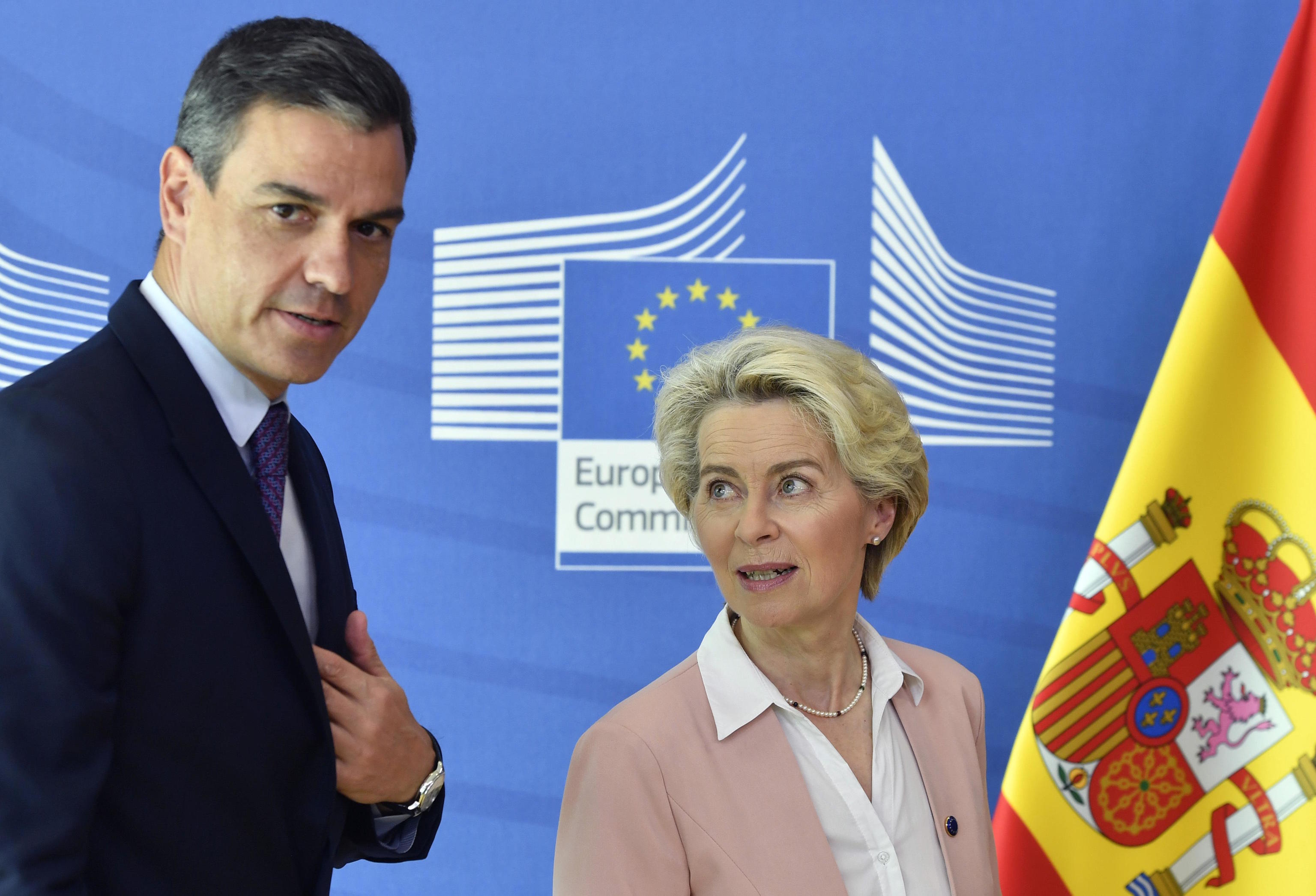
Germany wants to impose a "Two-Speed Europe." This is not a new concept and has been attempted to varying degrees in different historical moments or contexts. However, Berlin's latest attempt is likely much more transformative because it aims for a small group of countries to make crucial and, importantly, fast decisions. This would be much more agile, as one of the EU's major issues is its slow decision-making processes.
"Now is the time for a Two-Speed Europe," stated German Finance Minister Lars Klingbeil last week at an event in Berlin. "To survive in an increasingly unpredictable geopolitical situation, Europe must become stronger and more resilient," he emphasized in a letter reportedly sent to France, Italy, Spain, The Netherlands, and Poland.
Germany's intention is for the six major economies to make these decisions. In fact, the finance ministers of these nations already held a virtual meeting last Wednesday. The goal, as explained by the Spanish Ministry of Economy, was to "identify and accelerate key projects on the EU agenda to build a stronger and more resilient Europe."
"The group, comprising the largest economies on the continent, aims to generate political momentum to strengthen the competitiveness and strategic autonomy of the European Union in the face of a changing geopolitical landscape. Among the initial priorities discussed are the need to advance the Union of Savings and Investments, strengthen the international role of the euro, improve defense spending efficiency, deepen the integration of the single market, and enhance the resilience of critical mineral supply chains," sources from Carlos Cuerpo's department added. The intentions and objectives are clear.
However, this measure is not generating much enthusiasm in Brussels. In the offices of the Berlaymont building, home to the European Commission, it is considered unnecessary to have another group or entity. There are already some duplications, they explain, with the Eurogroup and the Ecofin. Moreover, many within the EU bubble and in the capitals believe that the meeting of eurozone finance ministers has lost its purpose. The meeting of the six major economies, according to EU sources in conversation with this newspaper, would only add another layer to the decision-making process and, of course, would threaten to weaken the authority of Ursula von der Leyen's Executive.
Yet, there are voices in Brussels, quite a few, that argue that deciding on issues among 27 countries is unfeasible. Because among those 27 nations are Hungary or Slovakia, which almost always go in the opposite direction. In fact, many decisions are already made among the remaining 25 capitals. Also, because the United States and China are moving at full speed. With the current decision-making system, it seems challenging to compete with these two economic powerhouses, and the EU needs to adjust its functioning to adapt to the new geopolitical landscape.