For many months, Donald Trump used tariffs as leverage to try to bend India, one of his most important strategic partners in Asia. The President of the United States, in addition to pressing to reduce the trade surplus that works against his country, had a clear purpose: to try to get New Delhi to break energy ties with Russia, another of his traditional allies.
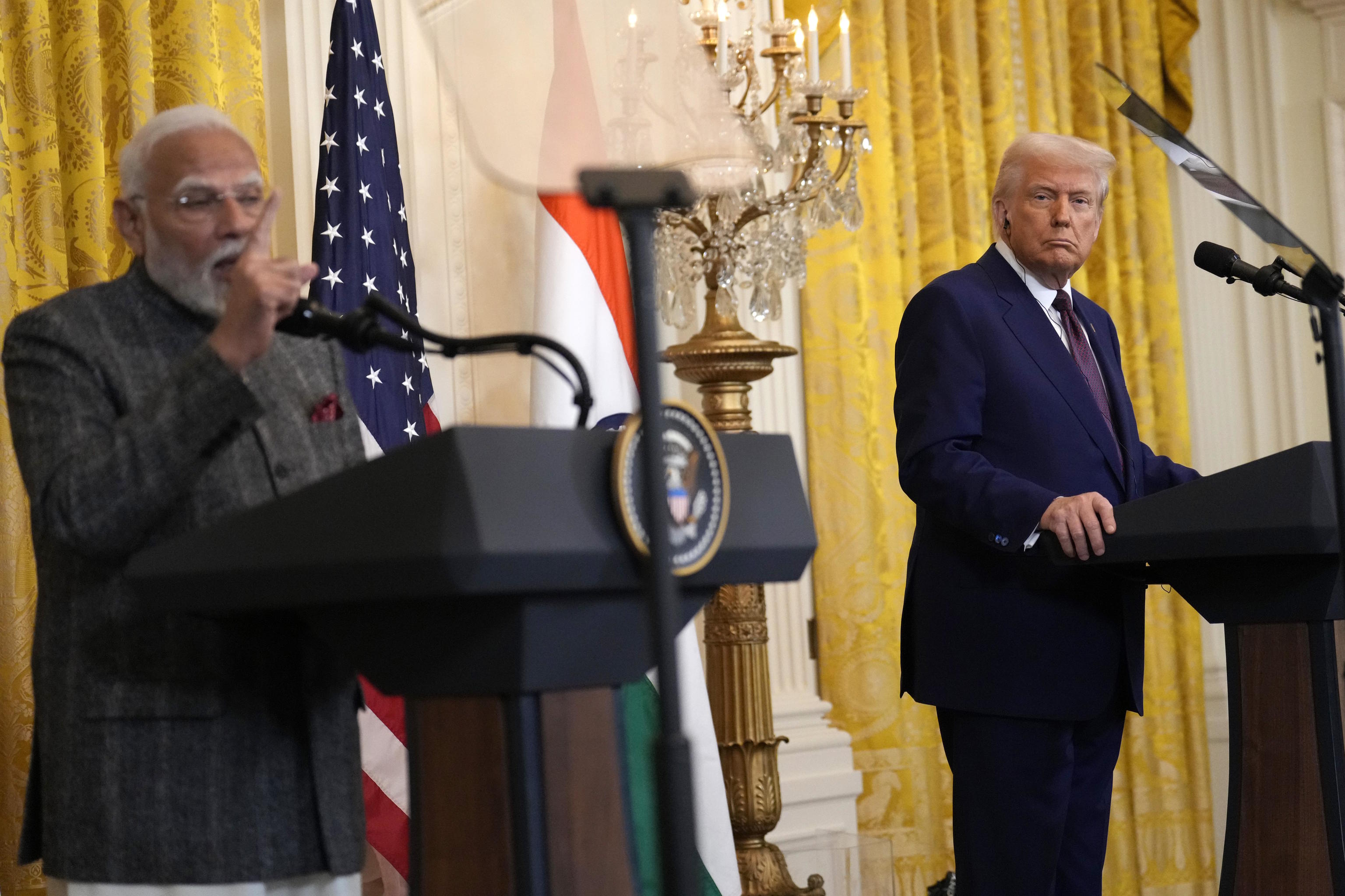
On Monday, Trump claimed to have closed a trade deal with India after a phone call with Prime Minister Narendra Modi, putting an end - at least on paper - to a tariff escalation that had brought bilateral relations to their lowest point since the beginning of his second term.
The announcement, as usual, was made through his social media. "Out of friendship and respect for Prime Minister Modi and at his request, we have agreed to a trade deal between the United States and India with immediate effect," wrote the Republican, stating that Washington will reduce its "reciprocal" tariff on Indian products from 25% to 18%.
According to Trump, India would have committed to stop buying Russian oil, a statement the President has made on previous occasions.
In addition, Modi would have committed to completely eliminate import taxes on U.S. products and to purchase energy, technology, and agricultural products from the U.S. worth 500 billion dollars. "India will buy much more from the United States and potentially from Venezuela," said the American, without offering more details.
Trump has demanded on other occasions that India buy more American weaponry and energy to reduce the trade deficit, commitments that Modi has reluctantly accepted, aware that Washington remains his country's main trading partner.
Nevertheless, if something has characterized Indian diplomacy, it is its historic policy of "non-alignment," inherited from the Cold War: a delicate balance that has allowed it to maintain solid ties with both the U.S. and Russia without fully leaning towards either.
Since Trump's return to the White House in January 2025, India has been one of the countries most affected by his tariff offensive. In July, the U.S. President imposed a 25% tariff on Indian products, accusing New Delhi of not doing enough to reduce its high trade surplus with the U.S.
A month later, Trump went a step further and announced an additional 25% tariff on certain Indian products in retaliation for the increased purchases of Russian oil since the invasion of Ukraine. The measure raised the total burden to 50%, the highest imposed by the U.S. Administration on one of its trading partners.
Now, while Delhi remains silent, the White House insists that this additional 25% tariff will be lifted following the alleged reduction in Russian oil imports by India. Trump celebrated the decision by stating that it "will help end the war in Ukraine," in a message posted on Truth Social.
The announcement comes just days after India signed a historic mega trade deal with the European Union, allowing for the free exchange of almost all goods between New Delhi and the bloc nations, strengthening the international position of the Asian country amid the global trade reconfiguration.
From Washington, however, there were criticisms of this agreement. Treasury Secretary Scott Bessent criticized that Brussels is "financing a war against itself" by signing the pact with Delhi, arguing that it undermined Washington's efforts to penalize the Modi government for continuing to buy Russian oil.
The personal relationship between Trump and Modi, who had a very good rapport during the former's first term, remains close. However, Trump's tariff blows pushed Delhi to approach its neighbor China after years of hostility. This is precisely the scenario that Washington has tried to avoid over the last five years, nurturing its relationship with India as a regional counterbalance to Beijing, even tolerating its historical closeness to Moscow.
In recent months, the Modi government has insisted that it has no intention of stopping buying Russian oil, arguing that these imports are linked to the energy needs of its more than 1.4 billion inhabitants.
Leaders from Modi's party and the opposition have denounced Trump's "hypocrisy," pointing out that the United States continues to import Russian uranium hexafluoride for its nuclear industry, palladium for electric vehicle manufacturing, as well as fertilizers and chemicals.