In December, the United States announced a historic arms sales package to Taiwan: over $11 billion, the largest ever authorized by a US administration to Taipei. The package includes precision missiles, advanced artillery systems, and drones. The deal, which still needs approval from the US Congress, prompted an almost immediate reaction from China. Beijing responded with two days of military maneuvers around the island, exercises simulating a maritime and aerial blockade that have become a common pressure tool in recent years.
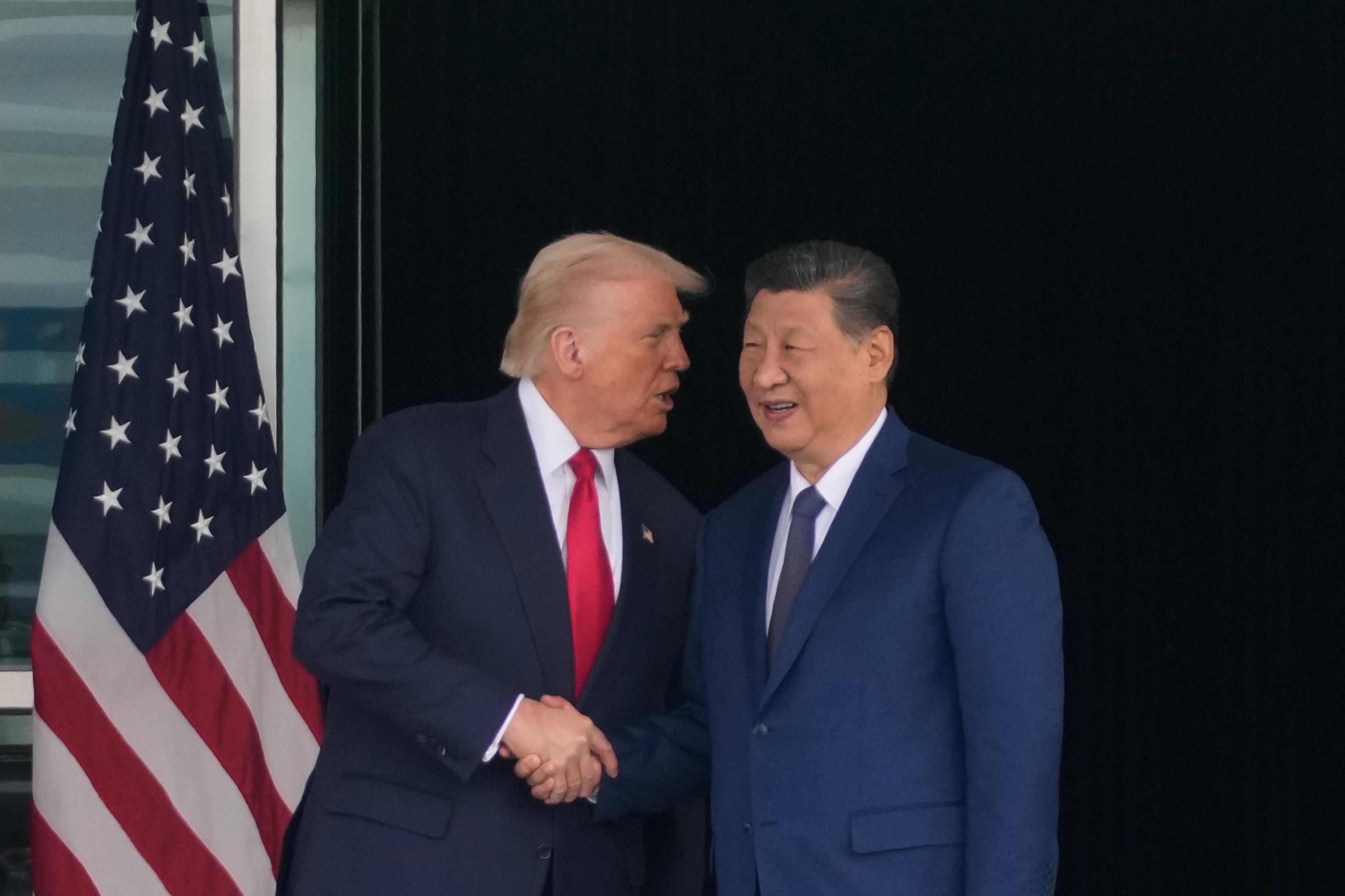
During the first call of the year between Xi Jinping and Donald Trump on Wednesday, the Taiwan issue occupied a substantial part of the conversation. The Chinese Foreign Ministry released an unusually detailed statement in which Xi warned the US president to act "prudently" in supplying arms to the island, which Beijing considers a rebellious province.
These types of warnings are usually part of regular diplomatic exchanges, but rarely do they resonate with such emphasis in Chinese official versions, indicating how sensitive the Taiwan issue has become as a red line for Chinese leadership.
Xi also reiterated that "the Taiwan issue is the most important matter in China-US relations." This formulation, repeated by the Chinese leader in recent years, reflects Beijing's absolute priority on the so-called "reunification," a goal that the ruling Communist Party presents as an essential part of the "national rejuvenation" proclaimed by the supreme leader.
Washington's position remains anchored in the delicate balance maintained since 1979. The US does not officially recognize Taiwan as an independent state and adheres to the "One China" policy, but is obligated by the Taiwan Relations Act to provide the island with the necessary means for self-defense. This strategic ambiguity - not explicitly promising to defend Taiwan but not ruling it out either - has been a pillar of stability in the disputed strait for decades.
The US continues to be Taiwan's main international sponsor and arms supplier, a support that systematically irritates Beijing. "China must safeguard its sovereignty and territorial integrity and will never allow Taiwan to separate. The United States must handle arms sales to Taiwan prudently," reiterated the Chinese statement following the call between Xi and Trump.
According to the same official version, Trump stated that he "understands and values China's concerns regarding Taiwan" and expressed his willingness to maintain communication with Beijing, describing the relationship between the two powers as the world's most important bilateral relationship, a definition that, despite commercial, technological, and military tensions, is still shared by both countries.
In Taipei, Taiwanese President Lai Ching-te reacted on Thursday morning to emphasize that the island does not perceive any cracks in its relationship with Washington. "The relationship between Taiwan and the United States is rock solid, and all cooperation projects will continue without interruptions," he stated in an attempt to convey confidence to both the local public opinion and international allies.
The arms package announced late last year - the second under the current Trump administration - came shortly after Lai presented an ambitious special budget of $40 billion to strengthen the island's defense, including the construction of the T-Dome, a new air defense system designed to enhance protection against missiles and aerial attacks.
Military reinforcement is a key aspect of Lai's strategy, who had already announced in 2025 the goal of increasing defense spending to 5% of GDP by 2030. However, even that figure falls short of Trump's demands, who has pressured Taipei to reach 10%, a level that would far exceed the budgetary efforts of most US allies in Europe and Asia.
However, at present, domestic Taiwanese politics have become an obstacle to these plans. The Parliament, controlled by the opposition, has blocked Lai's budget proposal and instead suggests a much more moderate increase in military spending, reflecting a deep debate within Taiwanese society on how to strengthen defense without compromising the balance of public finances under pressure from demographic aging and regional economic competition.