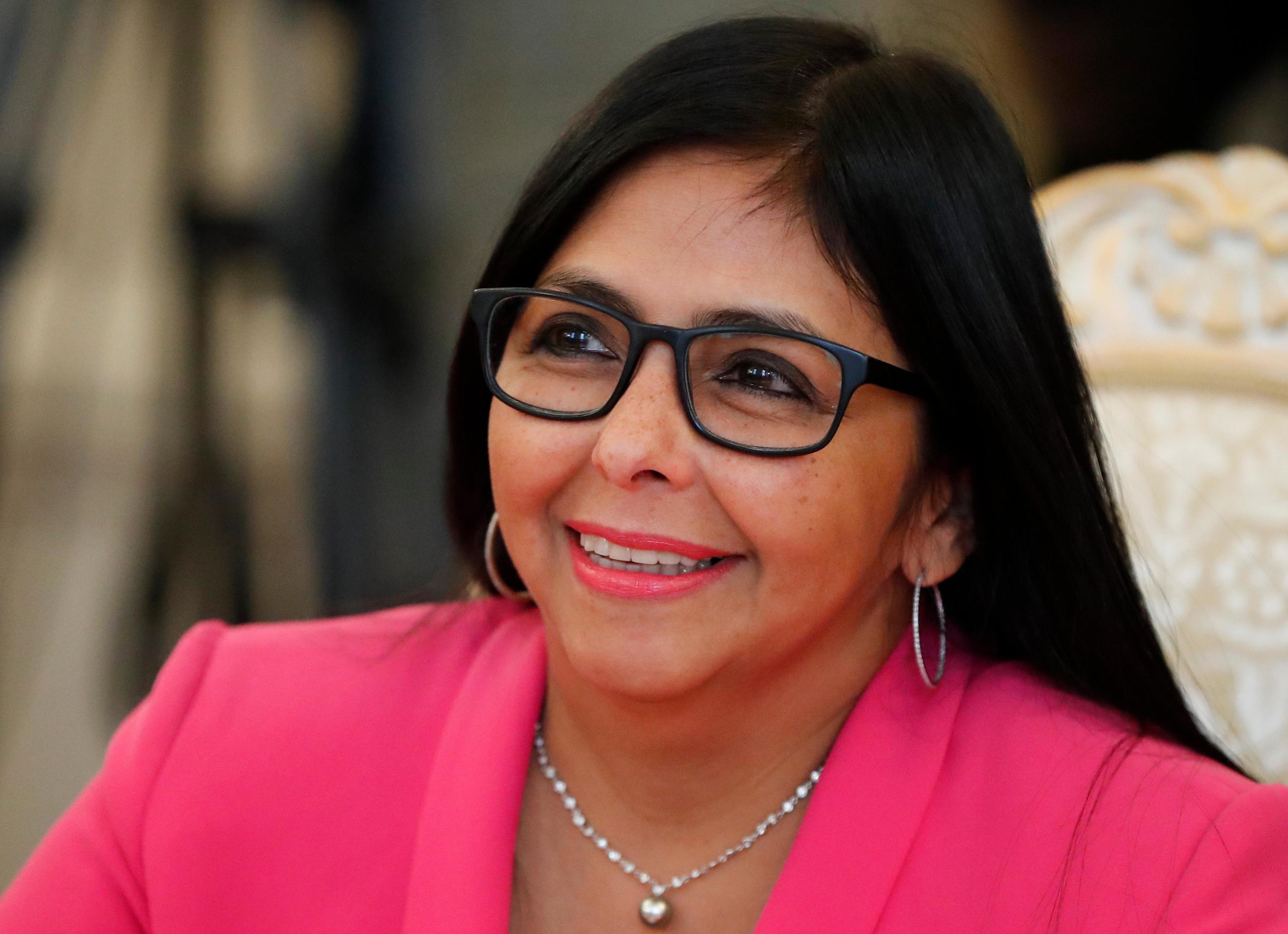
Can anyone imagine Cuban soldiers protecting the oil facilities of the American company Chevron in Venezuela? American workers with their helmets and fireproof suits in a massive oil export terminal, with a backdrop of Russian-made Mi-24 armed helicopters piloted by soldiers of the Anti-Aircraft Defense and Revolutionary Air Force, while their communist brothers die in the Venezuelan jungle attacked by forces that do not accept the regime of Delcy Rodríguez?
There is no need to imagine it. For 16 years, that was the situation in Cabinda, an Angolan territory enclave embedded in the Democratic Republic of the Congo. The Cubans, who had intervened in Angola in 1975 to save the communist government of that country from collapse, which emerged after the independence brought by the Carnation Revolution to the former Portuguese colony, had no problem allocating thousands of men to defend the Malongo Terminal, a massive oil complex owned by Chevron, which, by historical coincidences, is the only foreign company currently exporting oil from Venezuela.
The civil wars in Angola offer a possible draft of what could be the future of post-Nicolás Maduro Venezuela. Not only because of the case of Cabinda, Chevron, and Fidel Castro's soldiers. That is almost an anecdote. The most relevant aspect today is that the Angolan communists converted to capitalism in 1990, and the United States - and all of the West - turned their backs on their former enemies, whom they had supported as much as the famous anti-communist guerrillas in Afghanistan.
No one had a major problem treating the old leaders of Angola, who offered a more stable environment for foreign investment and, moreover, knew the national oil industry much better than the opposition. Perhaps the biggest difference is that Venezuela does not have a tradition of violence like Angola, where, at the peak of the civil war, an average of a thousand people died each day. But the pragmatism of Washington and other Western and African countries may advise caution to those who expect U.S. intervention against the Caracas regime to be the first step towards democracy. It is true that Oscar Wilde said, "History does not repeat itself; historians repeat it." But one must also consider Mark Twain's quote: "History does not repeat itself, but it often rhymes." With Delcy Rodríguez, who knows the Venezuelan oil sector very well, and with considerable uncertainty about how far Donald Trump wants to change the power structure in the Caribbean country, the comparison, at least as a theoretical exercise, with Angola is inevitable.
To understand the situation that led the Angolan communists to embrace oil capitalism, one must go back to the civil war that began in 1975. The struggle between the coastal tribes, grouped in the Marxist-Leninist People's Movement for the Liberation of Angola-Workers' Party (MPLA-PT), only resisted the push of the inland tribes - the ovimbundu - grouped in the Union for the Total Independence of Angola (UNITA) because Fidel Castro's Cuba agreed to be the Soviet Union's 'errand girl'. Havana sent 675,000 soldiers to fight in Angola. Including the so-called 'black wasps', an elite troop that, according to some reports, also protected Nicolás Maduro and suffered 38 deaths in the capture of the Venezuelan dictator by the United States on December 31. In Angola, 10,000 Cubans did not return, and another equal number, who did return, with AIDS, were imprisoned by Castro.
It was a forgotten war of the Cold War. But it was also a war in Washington, Chevron against the State. And the company won. This was something that the then-communist president of Angola, José Eduardo dos Santos, understood perfectly. After all, when in 1986 Ronald Reagan made the famous decision to provide Stinger anti-aircraft missiles to the Afghan mujahideen, he also gave them to UNITA, whose leader, Jonas Savimbi, was received that same year at the White House to compare his struggle with that of the 'Founding Fathers' of the American War of Independence.
But in that same 1986, 95% of Angola's state revenues came from what Chevron paid for its operations in Cabinda. With that money, Luanda paid Castro for the 'rent' of the Cuban soldiers - who eventually exceeded 50,000 two years later - and who were the only thing that allowed them to resist UNITA, which, in addition to the United States, had the support of apartheid South Africa.
In 1991, peace arrived. Cuba and South Africa withdrew. And Dos Santos and Savimbi signed reconciliation. But only for a few months. In 1992, hostilities resumed. In 1993, 350,000 Angolans died: as many as in the previous 16 years of civil war, and Angola became the bloodiest conflict in the world.
But by then, the United States no longer supported UNITA. On the contrary: they were on the side of the MPLA, which very conveniently had abandoned communism and the words 'Workers' Party' a year before the Cubans left. The MPLA, in reality, had never truly been communist. In the worst moments of the civil war in the seventies and eighties, they had granted oil exploitation licenses to the French Elf and the Italian Agip.
Without a civil war and without the need for the Cubans, they had nothing to hide. Dos Santos opened the country to oil exploitation. Shell, BP, Repsol, and other companies entered Angola. And the United States under Bill Clinton provided the MPLA with what Cuba could never have given them: detailed satellite images of UNITA movements. Gradually, the ex-communists turned capitalists cornered their enemies. In 2002, after nine years of war, Savimbi was shot dead in an ambush. By then, no one remembered him. Dos Santos held all the power, although the United States maintained a relationship, albeit close, with a high degree of discretion, and never invited him to the White House.
Angola entered the 21st century as a dynamic economy, but with monstrous inequalities and astronomical corruption. Dos Santos's daughter, Isabel, became Africa's first woman to amass a billion-dollar fortune. In 2013, it reached 3.5 billion. Three years later, her father appointed her president of the Angolan state oil company, Sonangol, a position she immediately lost after her father's death. Today, Isabel Dos Santos lives in Dubai, with most of her assets seized - although she may still have several hundred million left - and an Interpol arrest warrant for corruption and looting of her country's public coffers.
As for Angola's leadership, little has changed. Dos Santos died in 2017 after 38 years in power, 11 as a communist and 27 as a capitalist. His successor, João Lourenço - known as 'JLo', in a weak joke with singer and actress Jennifer Lopez - follows in his footsteps. He is a general of the MPLA, who studied military training in the Soviet Union only to discover that oil is much better. Recently, he invited Pope Leon XIV to Angola.
Angola maintains its Marxist flag, with the machete (rural proletariat) and the gear (urban proletariat) on a black (Africa) and red (blood shed against colonialism) background. But there is nothing left of its old Marxism sustained by Cuba. The 'black wasps' - or even the 54 Soviet soldiers killed in the war - had nothing to do against the pragmatism of former communists who realized that life is better with the United States. Today, Angola is the strongest ally of the United States to contain Chinese expansion in Africa, and it remains a dictatorship. The country's elite knows very well, between Marxism and hydrocarbons, what to choose.