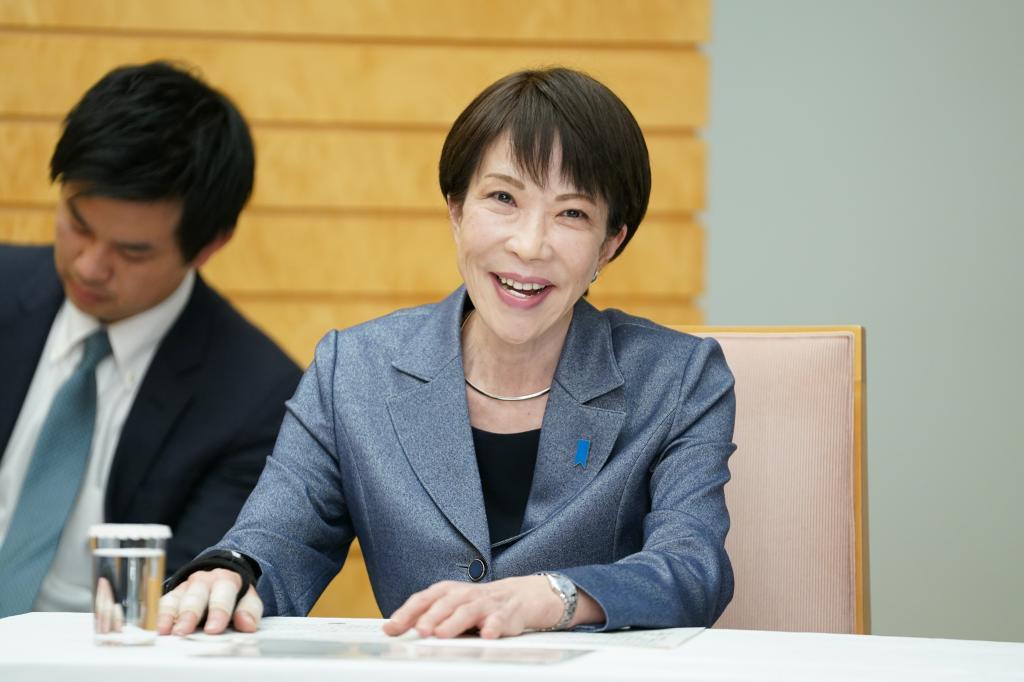
At the end of last year, an editorial in the Yomiuri Shimbun, Japan's highest-circulation newspaper, joked about the political "crush" between Donald Trump and Sanae Takaichi. The newspaper pointed out that the then newly appointed prime minister was deploying all her charms to cultivate a personal relationship with the US president, a strategy that many in Tokyo interpreted as pure pragmatism: public flattery, promises of investments, purchases of American goods and energy, and rhetoric aligned with the nationalism that Trump has made his trademark.
The harmony was showcased in October when the Republican visited Tokyo. "It is a new golden age in the alliance between the United States and Japan," declared Takaichi. Trump, for his part, did not hide his enthusiasm for having in Japan, a key player in the Indo-Pacific region, an ideologically close leader who advocates for strengthening defense spending and toughening the discourse on immigration and security.
Two days before the general elections this Sunday, US support has once again burst into a campaign that is far from Washington. Trump posted a message on social media expressing his "total and complete endorsement" of the Japanese prime minister. "She deserves great recognition for her work... She will not disappoint the people of Japan!" he wrote in capital letters, before announcing that he will receive her at the White House on March 19, assuming she will retain her position.
Although the alliance with the United States is a historical pillar of Japanese foreign policy, never before had a US president made such explicit statements of support for a candidate in the midst of an election campaign. Washington has traditionally supported Japanese governments, regardless of who held the position, and has avoided commenting on specific electoral processes to avoid the impression of interference. Trump's message, as he has been doing for many months in elections held in other parts of the world, partly breaks with that practice and reflects his personal affinity with Takaichi.
In Tokyo, at the popular Shibuya crossing, the world's busiest intersection with a sea of pedestrians moving in all directions when the traffic light turns green, the faces of the candidates and campaign vans have infiltrated the classic neon signs and commercial billboards. A few meters from the Hachiko dog statue, a family leafs through electoral brochures featuring Japan's current star.
"I like that Takaichi speaks clearly. She is direct and ambitious, something that has been lacking in many Japanese leaders for years," says Sora, a 31-year-old consultant. "I think it is important for Japan to have a leader who does not seem weak in front of other countries," adds Keiko, a 68-year-old retiree, alluding indirectly to China and North Korea, topics that have dominated the campaign. Both women will vote for the conservative Liberal Democratic Party (LDP) led by Takaichi.
The 64-year-old prime minister made history by becoming the first woman to govern Japan. Last year, the LDP was on the brink after losing the parliamentary majority and accumulating scandals of irregular financing. But Takaichi's emergence four months ago, after winning her party's primaries, changed everything. All polls place her as the clear favorite.
The LDP and its coalition partner, the Japan Innovation Party, could reach around 300 seats out of the 465 in the Lower House, according to the most recent polls. Surpassing the 261 deputies would guarantee a stable majority, enough to control parliamentary committees and approve budgets without depending on specific agreements. Takaichi herself has promised to resign if she does not achieve the majority, a risky move that has raised tension in the final stretch of the campaign.
One of the most striking aspects of her popularity is the support she has among young people. Various surveys indicate that support among those under 30 has skyrocketed, even reaching 90%.
An unusual phenomenon in a country where youth electoral apathy has been chronic. In some groups, the wave of enthusiasm for her figure almost reaches pop devotion. Japanese analysts attribute the support to a mix of factors: an image of firm leadership and a discourse that combines national pride with promises of rearmament, technological modernization, and economic growth.
If Trump is among her most visible allies, in the other superpower, China, the perception is very different. Just weeks after taking office, Takaichi revived an old red line by stating in Parliament that a Chinese attack on Taiwan could trigger a Japanese military response, leaving the door open to the intervention of the Self-Defense Forces.
Beijing's reaction was immediate, with diplomatic protests and selective economic restrictions affecting sensitive sectors of Japanese exports. For the Asian giant, Takaichi's rhetoric broke decades of Tokyo's strategic ambiguity; for the Japanese government, it was an adaptation to an increasingly uncertain security environment.