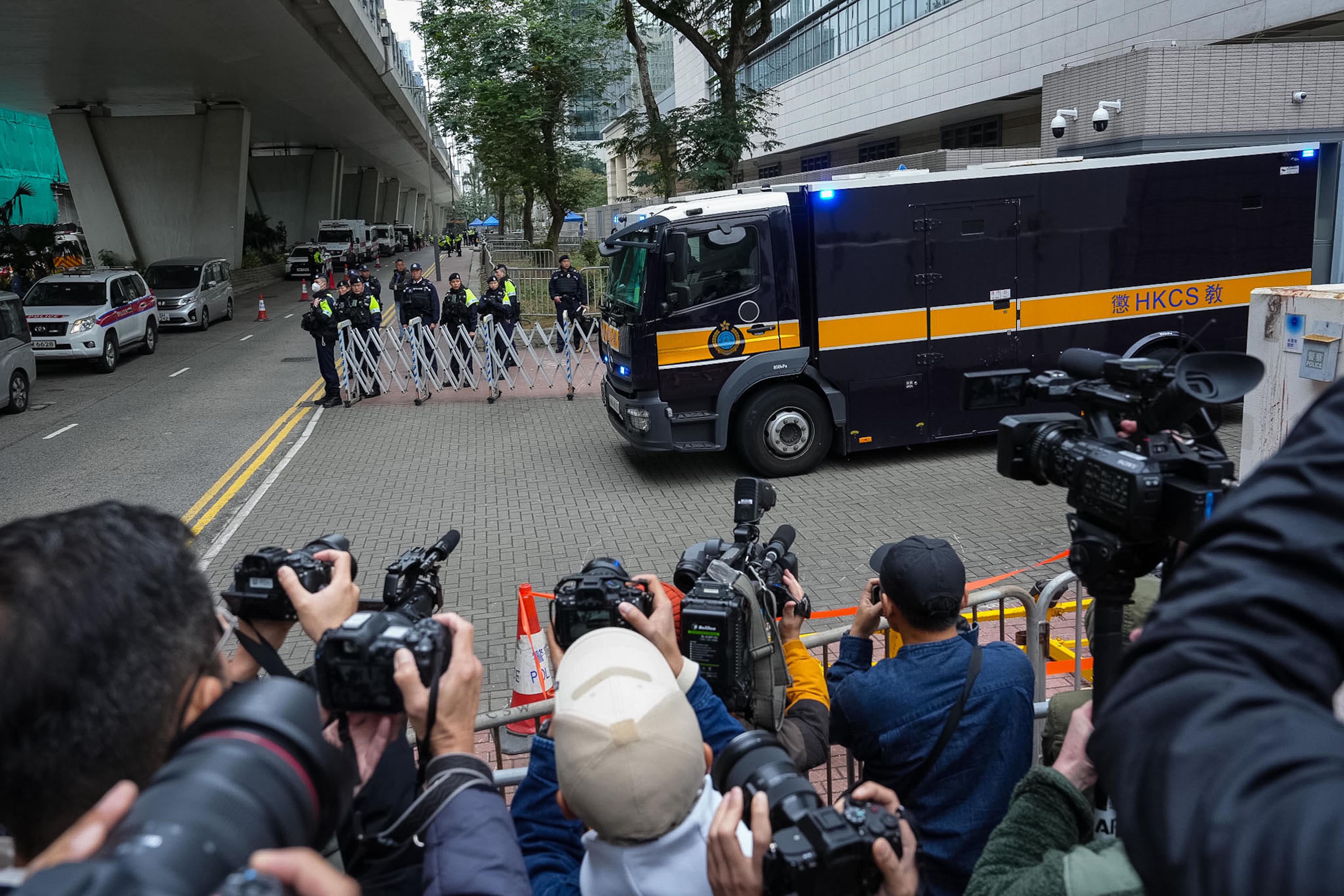
Jimmy Lai, media tycoon and symbol of the pro-democracy movement in Hong Kong, has been sentenced to 20 years in prison for offenses related to national security. The sentence, according to critics, marks a milestone in the city's transformation: from a bastion of freedoms in Asia to a territory where dissent faces severe sanctions under direct control of Beijing.
The 78-year-old businessman, with a British passport, was found guilty in December of sedition and conspiracy to collude with foreign forces, although he pleaded not guilty to all charges. Under the national security law imposed by the Chinese government after the 2019 protests in Hong Kong, collusion with foreign powers can carry a life sentence. Lai is so far the most prominent figure prosecuted under this repressive regulation, used against dissidents and activists.
The Hong Kong court considered Lai to have acted as an "intellectual mastermind" of conspiracies aimed at destabilizing Xi Jinping's government. According to Judge Esther Toh, "there is no doubt that the accused never wavered in his intention to destabilize the Chinese Communist Party." Lai allegedly used his influence and fortune to finance pro-democracy groups that pressured foreign governments to impose sanctions against China and Hong Kong, and used his now-defunct newspaper Apple Daily, founded in 1995, to disseminate materials that the court deemed seditious between April 2019 and June 2021.
The conviction has sparked criticism from governments of democratic countries and human rights organizations, who have denounced the trial as an attack on press freedom and judicial independence. Elaine Pearson, Asia director at Human Rights Watch, described the sentence as "cruel and a sham" and stated that it aims to "silence anyone who criticizes the Communist Party."
From the UK, Foreign Minister Yvette Cooper already denounced a "politically motivated" process, while Prime Minister Keir Starmer stated that he raised Lai's case in his meeting with Xi Jinping in Beijing in January. Washington also expressed concern, and former President Donald Trump even publicly promised to intervene to "save him."
Lai's family has reiterated their concern about his deteriorating health in prison, although Hong Kong and China authorities maintain that he is in good health and that his rights are "fully protected."
On Monday, the court also sentenced several former editors of Apple Daily to around 10 years in prison. The judges considered them "accomplice witnesses" to subversion crimes.
"This has been a show trial from the start; the script was already written. We knew a draconian sentence was looming," said Caoilfhionn Gallagher KC, who leads the tycoon's international legal team. "Sentencing Jimmy Lai, who is already 78 years old, to two decades in prison is an affront to justice and the culmination of over five years of malicious legal warfare against a brave and elderly British citizen and prisoner of conscience."
Lai's case reflects Beijing's tightening grip on Hong Kong, where the national security law has replaced the freedoms promised to the city upon its return to China in 1997. Organized dissent against the Communist Party no longer has a place in one of Asia's major financial centers.
Jimmy Lai's story in Hong Kong began with an act of audacity befitting his character: at the age of 12, he became a stowaway to escape from China. Born in Guangdong, he experienced the harshness of life from a young age: at just nine years old, he carried bags at his city's train station. In 1960, he hid at the bottom of a ship bound for Hong Kong, then a British colony, and began making a living in a woolen glove factory.
By the age of 20, he had been appointed director of the factory, although the company was on the brink of bankruptcy. Lai risked all his savings in the stock market and, with luck on his side, made enough money to buy the factory and transform it into a prosperous sweater manufacturer for the American market.
A turning point in his life was the Tiananmen Square massacre in June 1989. Lai recalled that the repression in Beijing pushed him towards the media: "It was the repression that led me to dedicate myself to the business of freedom." His first project was Next Weekly, an investigative magazine, followed by other cultural, economic, and travel publications, all with a constant critical thread towards Beijing.
In 1995, just two years before Hong Kong's handover to China, Lai invested 100 million Hong Kong dollars (about 12 million euros) to launch Apple Daily, a sensationalist tabloid that quickly became one of the most read newspapers in the city and the cornerstone of his burgeoning media empire, which also reached Taiwan. The Apple Daily mixed local sensational news, society pages, and investigative reports, but never lost its editorial stance critical of the Chinese government. This stance intensified in 2019 during the massive pro-democracy protests.
Lai, who had an estimated fortune of 1.2 billion dollars in 2020, financed student movements and pro-democracy parties that filled the streets of Hong Kong demanding more freedoms. He participated in demonstrations and became one of the most visible benefactors of the cause.
His legal troubles began in 2020: he was first sentenced to five years and nine months for fraud. In 2021, he received another sentence of 13 months for inciting citizens to participate in a banned commemoration of the Tiananmen Square massacre. Each ruling was followed by international criticism and allegations of political persecution, solidifying his image as one of Hong Kong's main pro-democracy symbols.