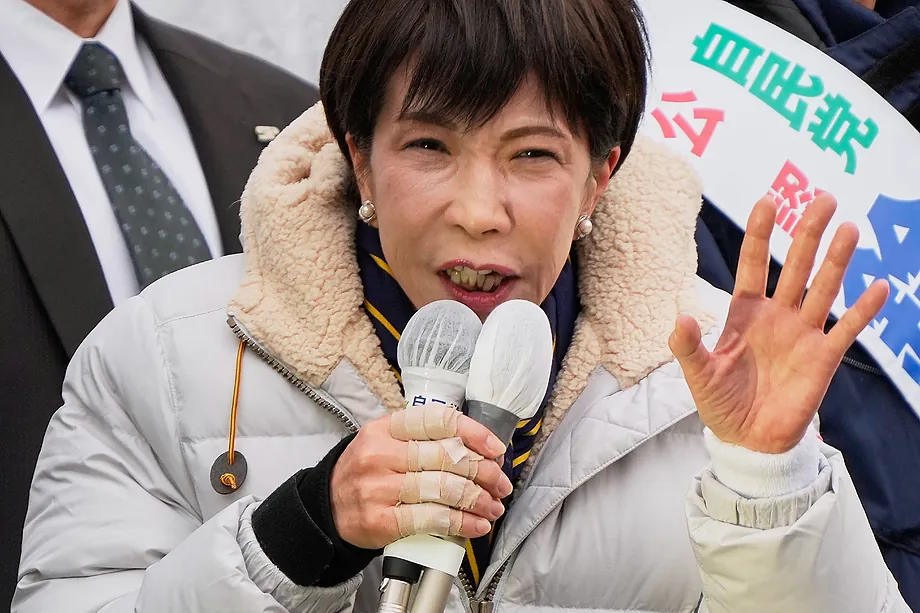
Just four months ago, Sanae Takaichi, a 64-year-old veteran conservative politician, came to power in Japan surrounded by controversy and skepticism. The world took notice of her because she was the first woman to lead one of the major Asian powers, breaking away from the traditional and sober male leadership. Her more personal, ideological political style, less technocratic than that of her predecessors, quickly resonated with many Japanese, even sparking a fan phenomenon among the younger generation. However, the true test of her popularity was yet to be measured at the polls. On Sunday, the coalition led by Takaichi swept through general elections that she herself called early to strengthen her leadership.
Takaichi's risky move has paid off. The coalition led by the Liberal Democratic Party (LDP) is on track to secure more than 316 out of the 465 seats in the Lower House, regaining a stable supermajority it had lost after years of irregular financing scandals and a succession of lackluster leaders whose popularity plummeted in polls.
This outcome - a historic victory for the LDP, which held 198 seats before the elections - would allow the ruling bloc to control the presidency of the most powerful chamber of the country's bicameral parliament, with full authority to steer legislation and budgets. This significant leap will enable Takaichi to advance her plans for economic revitalization and a more radical agenda aimed at enhancing Japan's military capabilities. "We will build a strong and resilient economy," stated the leader in her first remarks after the elections.
The LDP, which has governed almost uninterrupted since the post-war period, has found a new coalition partner in the Japan Innovation Party after its traditional ally, the Buddhist Komeito, broke ranks to align with the main opposition party following Takaichi's primary victory. In this context, the far-right Sanseito party also made a strong entrance, capturing part of the more conservative electorate under the slogan "Japan first."
Decades of economic stagnation and political scandals had fueled the perception that the Japanese political system was exhausted. Paradoxically, Takaichi managed to capitalize on this atmosphere. Her image resonated with segments of the electorate seeking a break from the bureaucratic and distant style that had characterized the LDP for years. Among young voters, some polls indicate that support among those under 30 years old surged to unusual levels.
"For my generation, Japan has always seemed to be in a sort of pause, as if the country doesn't know where it's heading. Takaichi, at least, offers a clear narrative, a vision. That carries a lot of weight," says Rina, a 22-year-old law student who attended the leader's final campaign rally in a park on the outskirts of Tokyo on Saturday. "I like that she emphasizes security and order. Many young people live with precarious contracts and feel that the system doesn't protect anyone," adds Mitu, another university student.
At that final campaign event, Takaichi pledged to make Japan "a more prosperous and secure country", mentioning stricter immigration controls. The prime minister often relies on radical rhetoric against immigration, portraying it as a potential threat to social cohesion and national identity.
"I'm not against foreigners, but I believe the government should have more control over who enters," says Kohei, a 44-year-old finance sector employee. "Politics always seemed boring to me. But Takaichi speaks more clearly than other politicians. Maybe we don't agree with everything she says, but she conveys energy and the idea that Japan can still be strong," opines Mika, a 27-year-old designer.
Takaichi's likely resounding victory does not overshadow the deep tensions running through the country. Japan continues to face a combination of structural challenges that no government has managed to resolve: anaemic growth, a massive public debt, and a demographic crisis that threatens to redefine society in the coming decades.
The prime minister's economic program reflects this urgency. Takaichi has advocated for expansive fiscal policies to revive the economy and stimulate domestic consumption, as well as channeling investment into strategic industries - semiconductors, precision machinery, or chip manufacturing equipment - to preserve Japan's technological advantage.
However, her electoral promise to suspend the 8% tax on food sales to alleviate price increases has shaken investor confidence in an economy burdened with the highest debt load among developed nations. In recent weeks, pressure on government bonds and yen volatility have reflected concerns about how Tokyo would absorb the estimated impact of five trillion yen on its annual revenues.
The economy was the main focus of the campaign, but not the only one. Takaichi has pledged to strengthen military capabilities and continue increasing defense spending in response to pressure from North Korea and growing rivalry with China. Her intention to revise the post-war pacifist Constitution is applauded by the more conservative electorate, which also supports her tougher stance against Beijing and the strengthening of the alliance with the United States.
In March, Takaichi will travel to Washington for a summit with President Donald Trump, who publicly endorsed her during the campaign. The Japanese leader, aligned with the nationalist discourse of the Republican, won his favor after promising multimillion-dollar Japanese investments in the U.S. as part of a trade deal aimed at reducing tariffs on Japanese products.
On the domestic front, Takaichi holds controversial positions: she opposes the legalization of same-sex marriage, rejects amending the legislation requiring married couples to share a surname, and advocates for the exclusive male succession line in the imperial family to continue.
Despite her popularity, these stances have made her a highly criticized figure among more liberal urban sectors and part of the female electorate. The ascent of a woman to power was celebrated as a historic milestone, but that expectation was dampened when her cabinet included only two female ministers. Nevertheless, the leader has introduced topics into the political debate in Japan that have been absent for decades, such as menopause or women's health.
Japan's greatest challenge remains demographic: almost a third of the population is over 65 years old, and the number of births has dropped to historic lows. The government has established a centralized structure to coordinate policies on birth rates, support for families, and regional revitalization, with the aim of stabilizing the population in the long term.
During the election day, intermittent snowfall covered neighborhoods in Tokyo from early morning. The images of silent lines on whitened sidewalks became an unintentional metaphor for the political moment: a country accustomed to calm but undergoing a cold shift in direction.