Mr. Tang remembers that, 15 years ago, Beijing was known as the world capital of smog: that dense mixture of smoke and fog that forms when air pollutants such as dust particles, soot, and toxic gases combine with atmospheric moisture.
"Breathing was almost like risking your life. I know several people who had always been healthy and suddenly became ill and died from respiratory diseases," explains this septuagenarian who lives in Chaoyang, one of the central districts of the Chinese capital.
Every winter, coal chimneys, combustion engines, and factories turned Beijing into a mirror image of the worst scenario in Gotham, Batman's fictional city. For decades, rapid urban growth, the expansion of the automotive fleet, the massive use of coal, and the presence of heavy industries turned the air into a daily threat. Pollution was not just an environmental problem: it was political and social.
To address the crisis, the Chinese government implemented stricter environmental policies in the mid-2000s, with a decisive push during the Beijing 2008 Olympics. At that time, the city sought to project an international image of modernity and cleanliness.
Coal boilers were shut down, public transportation was improved, the purchase of electric vehicles was incentivized, and renewable energy was expanded. But the most radical measure was relocating factories to the neighboring province of Hebei, moving heavy industry out of the urban area and directly reducing emissions.
According to the Beijing Municipal Ecology and Environment Office, the results have been spectacular. In 2025, the capital recorded only one day with heavy pollution, a 98.3% drop from the 58 days reported in 2013. The average annual concentration of PM2.5, the most closely monitored indicator of fine particulate matter in the air, was 27 micrograms per cubic meter, for the first time below the 30 limit set by authorities since monitoring began. In practical terms, authorities insist, days of severe pollution have been practically eliminated from the city.
To understand the magnitude of the change, one must know that a day classified as severe pollution implies an Air Quality Index (AQI) between 201 and 300, with average PM2.5 levels of 150 to 300 micrograms per cubic meter, concentrations that were common 10 years ago and posed a serious health risk.
"Blue skies are not given, they are earned," said Li Tianwei, director of the Atmospheric Environment Department, an agency within the Chinese Ministry of Ecology. A phrase that has been repeatedly echoed by official spokespersons to defend stricter environmental policies.
"Days of heavy pollution have been practically eradicated in Beijing. It is a historic achievement," stated Liu Baoxian, deputy director of the Municipal Environmental Office of the capital, when presenting the air quality results for 2025 last January.
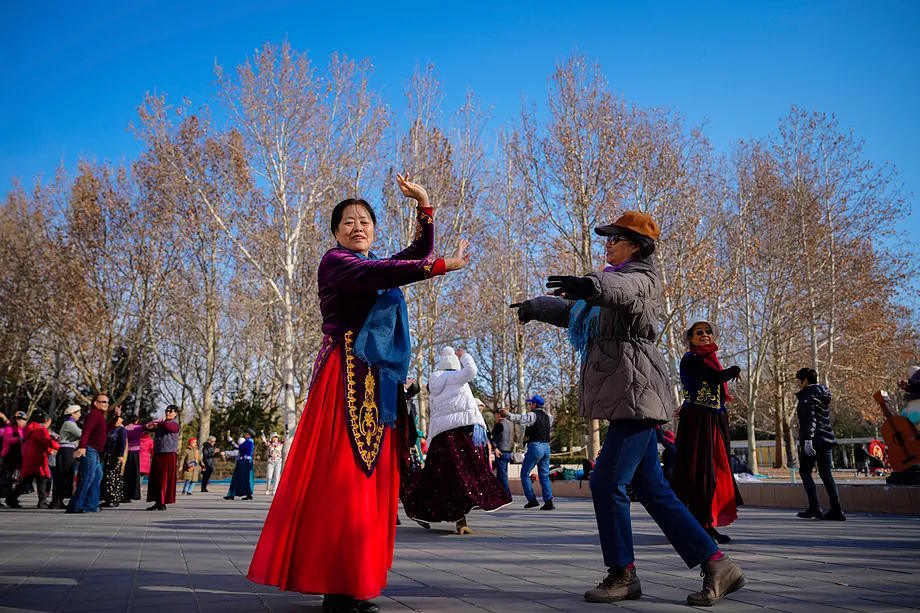
Beijing is not completely free from gray days with pollution, but those winters when the city was covered in a gray veil that reduced visibility to a few hundred meters are long gone; the sun's rays hardly ever reached the ground and traffic jams released clouds of smoke mixing with factory soot.
Many pedestrians still wear masks, although not as much as before. And doctors report that hospitals are no longer as crowded with cases of bronchitis, asthma, pneumonia, and other respiratory diseases that used to spike during the colder months.
"Before, every day, we would go out on the street and feel a metallic taste in our mouths, irritated throats, and watery eyes. The city was uninhabitable many days of the year, and now we often don't even notice when we see the blue sky," says Emma, an Italian businesswoman who has been living in Beijing for almost two decades.
"Air pollution is reversible. Beijing stands as a testament to the possibilities of reducing air pollution. This achievement did not happen by chance or luck. It was the result of a long and arduous journey with important lessons that can serve as an example and best practices for any nation," recently praised Siddharth Chatterjee, coordinator of the United Nations Development System in China.
Beijing has now become a model that Xi Jinping's government seeks to replicate nationally, with local authorities also applying stricter air quality standards. But this success is overshadowing a significant consequential crisis that emerged in neighboring Hebei.
Since 2017, the central government banned coal burning for residential heating in much of this province bordering the capital, as part of the effort to keep the air circulating towards Beijing clean every winter. Initially, administrations significantly subsidized the use of natural gas, a cleaner but much more expensive alternative. However, last year, subsidies were cut or eliminated, leaving many village residents with heating bills they could not afford.
Local media shared scenes at the end of 2025 of families huddling under multiple blankets or burning wood to stay warm, even though this burning is also prohibited. The paradox is evident: while Beijing begins to breathe clean air, the inhabitants of Hebei pay the price of environmental progress with cold and restrictions.