Jeffrey Epstein has reached the highest levels of British politics and institutions. The Royal Family announced yesterday that it is "ready to support" a potential UK police investigation into the possible handover of State secrets to Epstein by Andrew Mountbatten - former prince and brother of King Charles III - regarding his trips to China. The king himself declared yesterday that he is "deeply concerned" about the accusations against his brother.
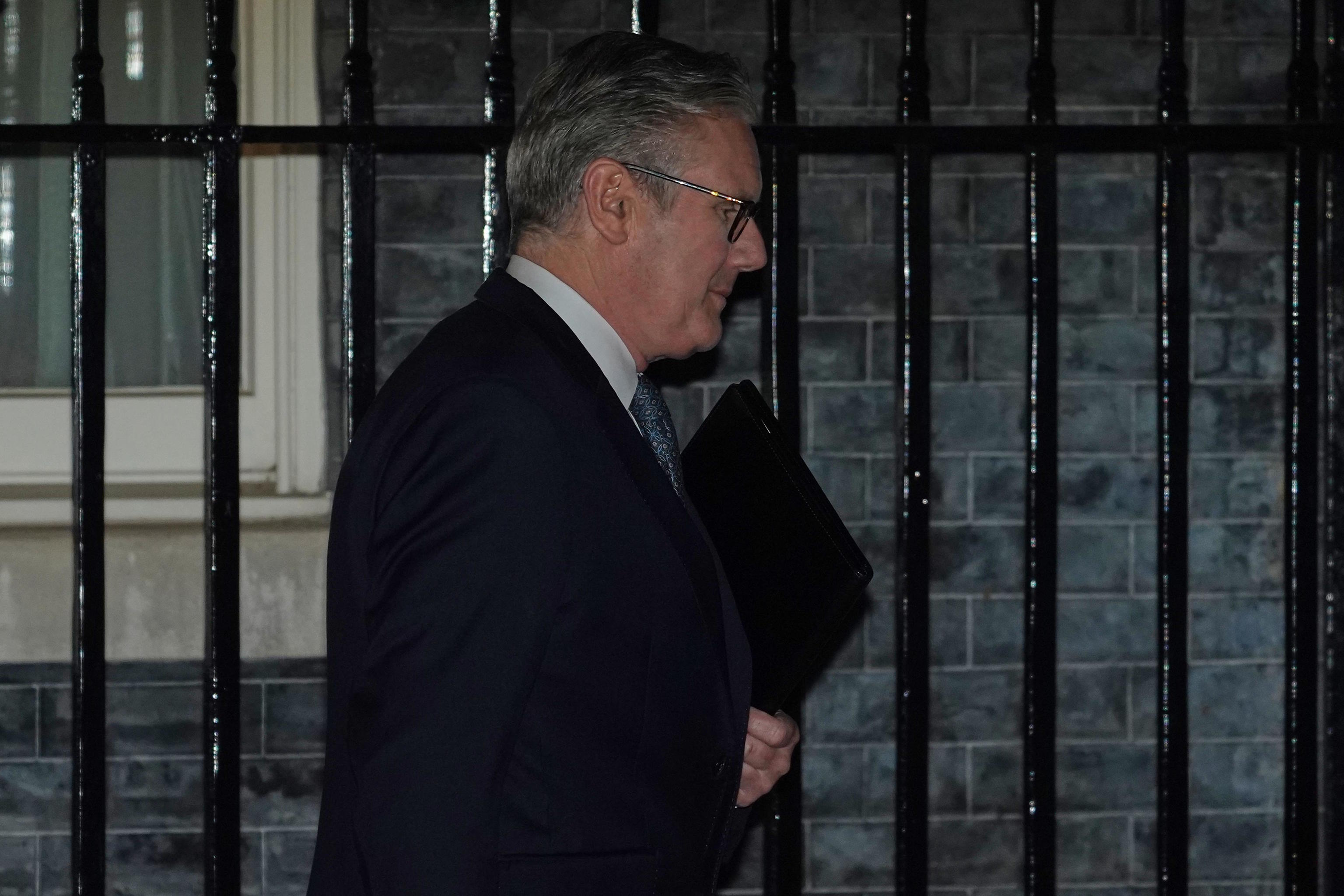
Buckingham Palace's communication came as the Labour Prime Minister Keir Starmer is trying to prevent his own party from forcing him out of office for appointing Peter Mandelson as US ambassador. Mandelson had a much closer professional relationship with Epstein than was known until the Donald Trump administration disclosed three million emails from the man who was the procurer for the elites of the US and Europe.
This week will be crucial for Starmer's survival as Prime Minister. The political climate changes almost minute by minute, depending on what the leaders of the UK Labour Party say - or fail to say, in a country where prime ministers have very limited power over their political parties, parliamentary groups, and even their own cabinets.
There is no doubt that Starmer is politically very weakened, having unnecessarily irritated broad sectors of the party, disregarded the base, and is immensely unpopular. With all these elements, showing him the door would be easy. But the Prime Minister has one thing in his favor: the weakness of his rivals. If he lacks charisma, so do those who aspire to succeed him. If he is unable to unify the party, his enemies each represent a faction. That is his great advantage.
It's not much. But it's a consolation. On Monday afternoon, Starmer secured a very important support: that of his own ministers. One by one, members of his cabinet expressed their backing. Again, in other latitudes, this would be unthinkable. But in the UK, it is the usual procedure. It is not insignificant that the Prime Minister has the public support (at least for now) of his ministers, including the centrist Health Minister, Wes Streeting, who has never hidden his intention to succeed him; nor the Environment Secretary, Ed Miliband, who in 2015 was a candidate for Prime Minister and was soundly defeated by the Conservative Party; nor the Home Secretary, Shabana Mahmood, whom Starmer himself promoted to the position just four months ago.
With that front closed - at least for now - the Prime Minister entered last night into the lion's den: his own parliamentarians. There, the Prime Minister was going to have a tougher time. Parliamentarians hold the future of the Prime Minister in their hands, and they will not be satisfied with just a change in tone or symbolic adjustments. For starters, they want real communication with the head of government, whom they accuse of having blatantly ignored them once he took office.
In recent weeks, Starmer has begun to rectify that policy by inviting more and more parliamentarians to his weekend residence at Chequers. But many see this as a mere concession to the gallery. They want more. And that includes a government that shows, at the very least, sensitivity to the voters.
In Parliament, there is also who seems to be Keir Starmer's biggest rival: his former Deputy Prime Minister, Angela Rayner, who had to resign in September for evading payment of £40,000 (€46,000) to the Treasury. Ideologically, Rayner is acceptable to many - including financial markets - because, although centrist, she is more left-wing than Starmer. And then there is her apparent desire to get rid of the Prime Minister. Since returning to her seat, she has established a broad network of relationships with the rest of the Labour caucus that has allowed her to lead the offensive against Starmer for Mandelson's appointment, which has included forcing the Government to hand over to the House of Commons documentation on the selection process for the US ambassador.
The problem for Rayner is that she is still under investigation by the Treasury. And until she clears that, her chances for the position will be relatively limited. Equally blocked is the Mayor of Greater Manchester, Andy Burnham, the undisputed leader of the left. In his case, the issue is that Labour Party statutes require the Prime Ministerial candidate to be a parliamentarian, which he is not. And there Starmer has blocked him, by ensuring that the party prevented him from being the candidate for the seat being decided on the 26th of this month in the Gorton and Denton constituency, located on the outskirts of Manchester.
If Burnham were to run, he would likely win. By preventing him, Starmer risks losing the seat to the Greens, who threaten to outflank a sinking Labour, or to Reform-UK, which has become the dominant force on the right after the collapse of the Conservatives. But the Prime Minister knows that with Burnham in the House of Commons, the opposition will have what it needs to go after him: a candidate.
All these signs of weakness ultimately play against Starmer. But as long as there is no face that exemplifies the opposition, the Prime Minister can keep going. Even though his situation is anything but solid. The leader of the Labour Party in Scotland, Anas Sarwar, who had traditionally been an ally of Starmer, publicly called for his resignation on Monday. It was the final blow to a 24-hour nightmare for the head of government. On Sunday, his Chief of Staff, Morgan McSweeney, had resigned, stating "I take full responsibility" for Mandelson's appointment.
McSweeney's departure was seen as a move by Starmer to rid himself of a figure who, as an electoral strategist, is highly esteemed but has managed to anger part of Labour in his role as the Prime Minister's chief advisor. The problem is that the next morning brought another unexpected departure: that of Downing Street's Communications Director, Tim Allan. These are many blows for the Prime Minister, who tomorrow faces a tough parliamentary session with the opposition leader, Kemi Badenoch, and in two weeks the uncertain elections in Gorton and Denton.