On the day when the debate on the mass regularization of hundreds of thousands of immigrants opened in Spain, the news barely took a few minutes on some Japanese news programs, but it left a mark in everyday conversations within the Migrant Solidarity Network of Japan, an NGO in Tokyo. "We are facing an unprecedented demographic crossroads: we are the most aged developed country in the world, and the workforce is shrinking," says Akito Tanaka, coordinator of social programs at the mentioned organization.
"Refusing to accept an adequate flow of migrants is not only ignoring the economic reality but also giving up on our collective future. Policies that are increasingly limiting the entry of foreign workers are exacerbating this problem," she continues.
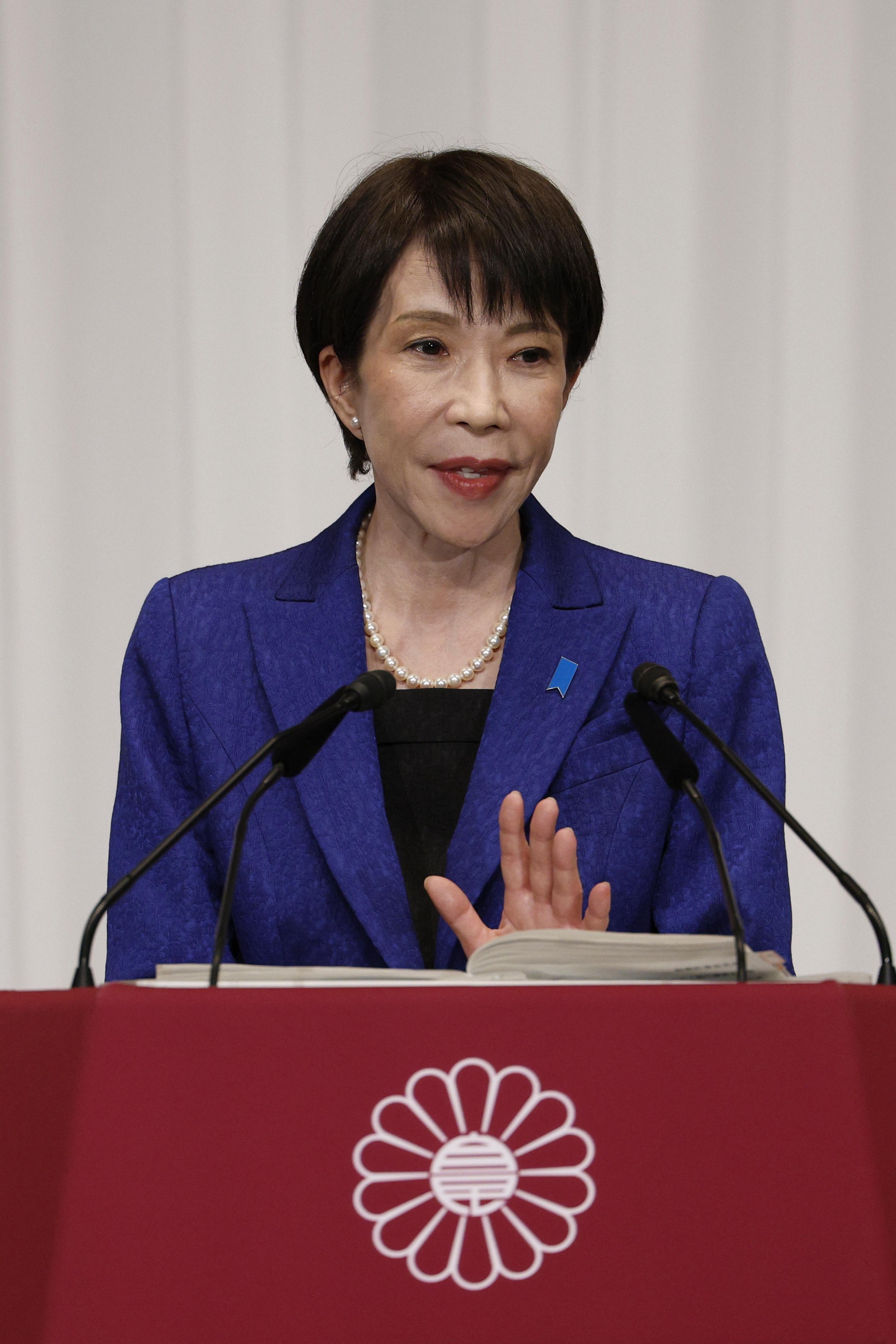
In Japan, the idea of legalizing a large population of foreign workers at once sounds inconceivable to the vast majority. The government of the conservative Sanae Takaichi has placed the anti-immigration campaign at the center of national policy. One of her first decisions upon taking office last October was to create an office aimed at promoting what she defined as an "orderly coexistence society with foreigners".
Leading this office, Takaichi appointed a woman who is emerging as another figure of the Japanese right: Kimi Onoda, 42 years old, daughter of a Japanese mother and an Irish-American father. An atypical politician, both in origin and trajectory, who has become a key player in the new hardline on migration in a historically isolationist country.
Onoda was born in Chicago and raised in Okayama, in western Japan. Local media have reported that she experienced bullying in school due to her mixed-race appearance, is a fan of manga and video games, and worked as a model before transitioning to politics with the ruling Liberal Democratic Party (LDP), where she rose from municipal councilor in 2011 to senator in 2016.
Takaichi's arrival opened a new door in her career: she was appointed State Minister for Economic Security and, above all, Minister in charge of an "Ordered and Harmonious Coexistence Society with Foreigners," the newly created position.
Onoda's official narrative is clear: Japan must protect its social order and rigorously enforce immigration laws. She and her team are pushing to tighten residency permit requirements, improve visa control systems, and carefully evaluate foreigners' property acquisitions.
This has been a central battleground during the elections last Sunday, which Takaichi won by a landslide, declaring that the goal of Onoda's office is to strengthen surveillance of irregular immigration and prepare more restrictive policies.
"When the government prioritizes control and exclusion over integration, it is closing the door to those who could significantly contribute to Japan's social and economic fabric," criticizes Naomi Suzuki, a human rights activist. "Xenophobic rhetoric and restrictive measures not only damage Japan's international reputation but also fuel a climate of fear," says Daisuke Hara, another activist who coordinates a network of Christian groups assisting migrants in Tokyo.
In Japan, foreign residents represent only about 3% of the population. However, in recent years, the migration issue has shifted from a bureaucratic matter to the forefront of political debate. In Takaichi's discourse, immigration does not appear as a solution to the country's aging population but as a phenomenon that must be constantly monitored to avoid disrupting social harmony.
Mass tourism is also fueling rejection of what comes from outside. In neighborhoods like Kyoto or Asakusa, some residents complain about saturation, noise, and the transformation of traditional shops into visitor-oriented businesses. Added to this is the fear, very present in the media and social networks, that foreign investors are taking advantage of the weak yen to buy properties at low prices.
Takaichi, who during her campaign denounced disrespectful behavior by foreign tourists at sacred sites, has tapped into this sentiment, particularly inflamed in Kawaguchi, a bedroom community on the outskirts of Tokyo. Here resides the largest Kurdish community in the country, around 2,000 people who began arriving in the 1990s, fleeing the conflict in Turkey.
In the last three years, their presence has been the subject of persistent rumors linking them to crime, despite experts pointing out that there is no data to support these accusations. Last summer, a Japanese man assaulted a Kurdish child playing in a park. When the child's father asked for an explanation, the aggressor responded with death threats.
A recent survey by the Asahi newspaper reveals that 66% of voters consider Prime Minister Takaichi's tougher immigration policies "promising," while 24% expressed concern. Similarly, 56% stated that the government should start restricting the number of foreign visitors arriving each year.
"The scale of these alleged problems remains small. But, as in other places, foreigners have become a convenient scapegoat for voters frustrated by inflation and economic stagnation," noted an analysis published in The Economist.
Last week, a popular Japanese cherry blossom festival in the city of Fujiyoshida, at the foot of Mount Fuji, announced its cancellation citing "an increase in disruptive tourist behavior." Local authorities justify the measure as necessary to protect "the safety, dignity, and daily life of residents" from "vandalism" by tourists. The case of Fujiyoshida is not isolated: historic cities like Kyoto have introduced access restrictions to temples and central streets, as well as a code of conduct for tourists visiting the geisha district.
In recent years, since Japan emerged again as a trendy destination among travelers worldwide after the pandemic, there have been numerous reports of incidents involving visitors disturbing a quiet way of life influenced by Zen Buddhism and Shintoism. In 2025, the country welcomed over 40 million tourists for the first time. Unprecedented figures that have sparked a national debate on the effects of tourism on coexistence.
A Spanish streamer known as Kelton went viral last year for an incident on a train while live streaming. In one of the train cars, he was confronted by an elderly Japanese man who asked him to stop recording and respect transport rules. The video shows the Spanish man pushing the elderly man on two occasions, sparking a wave of criticism in Japan that once again focused on the behavior of many foreign visitors.