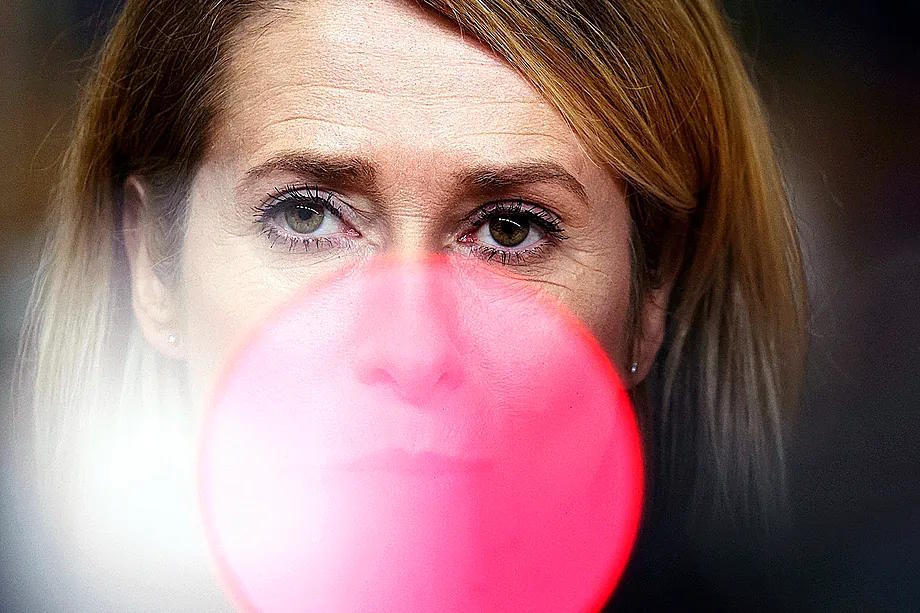
The EU's Chief Diplomat is determined to have Europe debate the idea of resorting to nuclear weapons. In recent days, Kaja Kallas has reiterated this stance twice, making it clear that it is not a slip of the tongue or a misunderstanding. She firmly believes that Russia's aggression towards Ukraine and the harassment of neighboring countries, including her own, Estonia, have changed the rules of the game. Therefore, she even suggests that non-proliferation treaties should be revisited.
"We need to have those discussions and understand where they come from. They stem from the fact that our transatlantic alliance is no longer what it used to be," she pointed out in statements reported by EFE, referring to the U.S. decision to reduce its presence in Europe to focus on the Indo-Pacific theater.
"Considering the current situation and the fact that this [nuclear weapons] is the only thing that truly serves as deterrence, it could be a topic for debate in future discussions," she had already mentioned in an interview with Helsingin Sanomat on Friday. "The overall picture at the moment seems to be that yesterday's rules no longer apply today, so it is up to us to design new rules," she emphasized in the Finnish media outlet.
Furthermore, she added in her recent statements that having more nuclear weapons "will not contribute to a more peaceful or less dangerous world," and that addressing the mentioned debate should take into account that Europe "is not an independent nuclear power." There is little doubt, therefore, about what Kallas deems necessary to secure Europe's future. It is somewhat awe-inspiring, or even fearful, that the EU's High Representative for Foreign Affairs and Security Policy believes this is the path to follow.
Kallas's statements come at a time when the EU's Commissioner for Defense and Space, Andrius Kubilius, has announced that a "missile tour" will start "soon." This tour aims to "engage with Member States and the industry on how to expedite the delivery of missiles to Ukraine and our own reserves," as he outlined in the European Parliament yesterday.
"The European Union is historically an economic giant. In defense, the European Union is also a giant. But a sleeping giant. In this world of giants, we must also be giants. True to our values and strong. Dear friends, let us awaken together the sleeping giant of Europe," Kubilius added yesterday. The warlike escalation in the language of the EU's executive members is evident, especially among those most sensitive to the threat posed by Russia.
In this regard, a high diplomatic source adds this explanation, which seems very enlightening: "Russia's intention is to expand. What we know about their mindset is that the size of the country does not reflect what they believe it should be. This is a regime that needs, in some way, to legitimize and maintain power. We know they have built a war economy. Their entire economy now largely revolves around it. And when the war ends, the war economy will have to continue." This means they will seek new countries to engage in battle with, and these nations will most likely be European.
All of this will be very present at the NATO Defense Ministers' meeting scheduled for Thursday in Brussels. Secretary of Defense Pete Hegseth will not attend, and instead, Undersecretary Elbridge Colby will be present. For some in the EU capital, this is further evidence of the diminishing U.S. commitment to the Alliance. For others, it is a decision that makes sense since Colby is the mastermind behind the new U.S. Defense strategy. According to the U.S. Ambassador to NATO, Matthew Whitaker, the U.S. commitment to the Alliance remains unwavering. However, it seems that Kallas and Kubilius do not exactly share the same view.