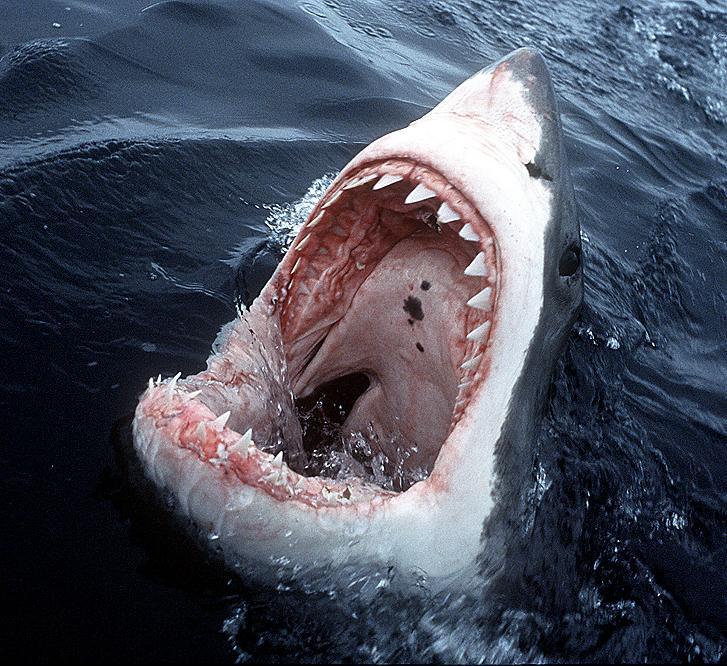
Researchers from the Spanish Institute of Oceanography (IEO-CSIC), in collaboration with the University of Cádiz, have documented a new confirmed record of a great white shark (Carcharodon carcharias) in Spanish Mediterranean waters.
The finding, recently published in the scientific journal Acta Ichthyologica et Piscatoria, provides new data on the presence in our waters of the most iconic and charismatic members of the oceanic megafauna.
The specimen was accidentally caught by a fisherman in April 2023 about 11 nautical miles off the coast of Dénia and Jávea, very close to Cabo de San Antonio, an area of underwater canyons and relatively deep waters near the coast, and during the peak season for bluefin tuna fishing. It measured approximately 210 cm in total length and weighed between 80 and 90 kg, indicating that it was a young individual. The great white shark is considered an adult when it reaches four and a half meters, but it can exceed six and a half meters.
This is one of the few verified records of a great white shark in Spanish waters in recent decades. The previous sighting dates back to June 2018, when the scientific expedition Alnitak reported a large great white shark of about five meters near the National Park of Cabrera, in the Balearic Islands. There was also documented the accidental capture of a large great white shark over five meters in length near Bolonia Beach (Tarifa, Strait of Gibraltar) during tuna fishing activities in June 2015.
"The origin of this work lies in the documentation of an accidental capture that we learned about thanks to the close collaboration we have maintained for years with the fishing sector," explains José Carlos Báez, researcher at the IEO-CSIC and lead author of the study. "Without this cooperation, this type of exceptional records would be impossible to know and scientifically contextualize."
This analysis confirms that the great white shark maintains a persistent, but extremely infrequent presence in Spanish Mediterranean waters, where its detectability is very low, as pointed out by the Spanish Institute of Oceanography.
Given the scarcity of recent confirmed records, any new occurrence of a great white shark in this region holds great scientific and conservation value, according to the study.
The lack of records of neonates and juveniles of Carcharodon carcharias throughout the entire Mediterranean is remarkable. Although the Strait of Sicily and the Gulf of Gabes (east of Tunisia) have historically been considered the main breeding areas for the species in the Mediterranean, the appearance of eleven neonates since 2008 has led to considering the bay of Edremit, in the northeast of the Aegean Sea, as a possible second breeding area and a new hotspot for the Mediterranean great white shark, as indicated in the article in Acta Ichthyologica et Piscatoria.
The presence of a juvenile in Spanish Mediterranean waters raises the question of whether this individual was born in the central Mediterranean breeding areas and later migrated here, or if it could have been born off the Spanish coast.
A comprehensive review compiled 62 documented records in Spanish waters, of which nine, between 1986 and 2001, were considered indirect evidence, mainly based on bite marks observed on stranded marine animals, especially sea turtles. In addition, specific areas of presence have been identified, such as the waters surrounding the Balearic Islands, an ecologically sensitive region of the western Mediterranean.
Recent studies have shown a significant decrease in the abundance of the great white shark in the peripheral sectors of the Mediterranean. In particular, between 1980 and 2016, the population in Balearic waters would have decreased by over 73%. Therefore, the presence of great white sharks in a region where the species has suffered such a sharp decline is notably relevant from a conservation perspective, according to the study.
The temporal coincidence of these records with the seasonal migration of Atlantic bluefin tuna to the Mediterranean for reproduction suggests that prey availability influences the movements of the great white shark. The historical decline of bluefin tuna in certain regions of the Mediterranean shows a notable synchrony with the disappearance of the great white shark in those same areas.
The researchers also point out that, over more than 160 years of records in Spanish waters, documented incidents involving people have been exceptionally rare, confirming that this species does not pose a significant risk to the population along our coasts.
Beyond its emblematic nature, the great white shark plays a fundamental role in the functioning of marine ecosystems. "Large marine predators play a key role in ocean balance. As highly migratory species, they connect different regions and contribute to the good state of the marine environment," concludes Báez.
During the Pleistocene, the great white shark was much more common in the Mediterranean, where it coexisted with giant prey now extinct. The sea we know today is almost a "desert" for such a super predator.