NATO launched the Arctic Sentinel mission on Wednesday, an operation through which the Alliance aims to quell the crisis sparked by the United States in Greenland and, at the same time, contain the growing interest of Russia and China in the region. The mission "underscores the Alliance's commitment to protect its members and maintain stability in one of the most strategically important and environmentally challenging areas in the world," according to U.S. Air Force General Alexus G. Grynkewich, who is the Supreme Allied Commander Europe.
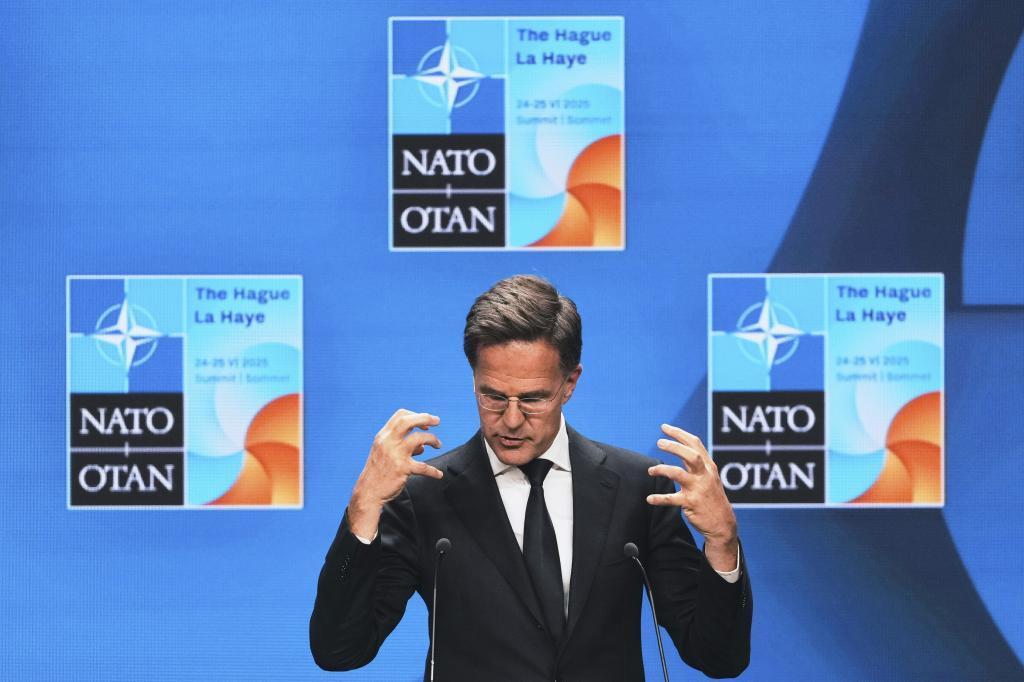
However, for now, it is more of a gesture than a forceful action. Still, it is of great importance because it originated from the meeting between U.S. President Donald Trump and NATO Secretary-General Mark Rutte in Davos, which helped defuse the crisis in Greenland.
The Arctic will be a key point geopolitically and in global trade. Climate change and the resulting ice melt will open up new routes, provide access to new areas, and allow for the extraction of minerals and rare earth elements.
Rutte has explained that "what is really new is that, for the first time, everything we do in the Arctic is brought together under a single command." "Not only will we be able to leverage what we do much more effectively and with greater impact, but we will also be able to identify existing gaps and what needs to be addressed," he added. There is no permanent mission in place, which had been considered at some point in Brussels.
In parallel, on the same day, the European Commission presented a new anti-drone action plan. Unmanned aerial vehicles linked to or directly from Russia have posed a constant threat to the EU in recent months, leading Brussels to propose a set of ideas, but again, without concrete legislation or action.
The plan includes possibilities such as using 5G networks to counter drone attacks, tightening the official registration of these objects, enhancing cooperation among states, and attracting investment to build a stronger European industry in the sector.
"In the current geopolitical context, Europe must develop local solutions to enhance its collective security. We have the talent, technology, and industrial capacity to protect our assets," stated Vice President for Technological Sovereignty, Security, and Democracy, Henna Virkkunen.