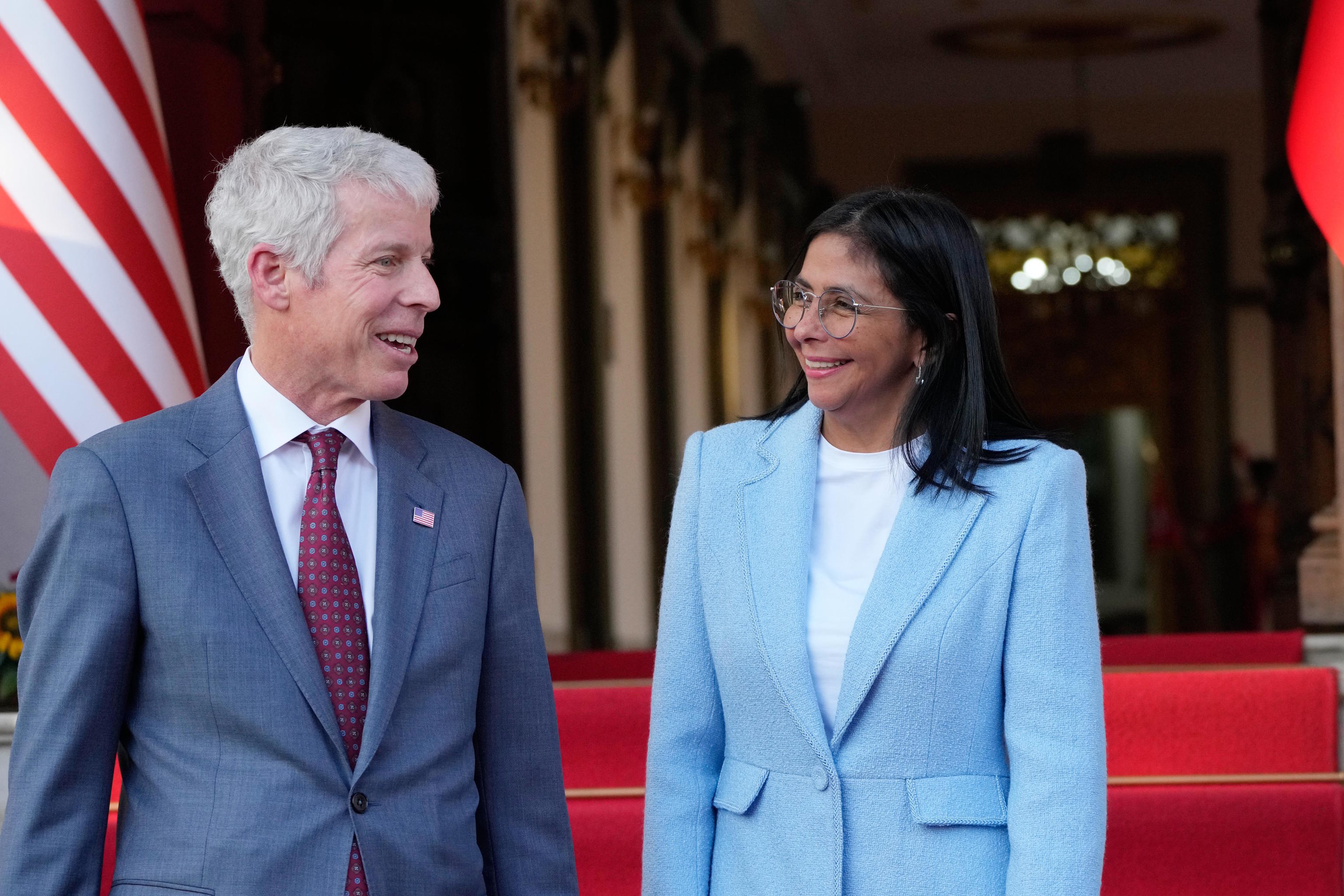
This Wednesday, the US Secretary of Energy, Chris Wright, landed in Caracas in what is considered the highest-level visit by a US official in this new period.
The objective is clear: to lead the reconstruction of the Venezuelan oil industry and consolidate the strategic alliance with the interim president's government, Delcy Rodríguez. This meeting takes place in a context of profound change following the military operation on January 3, involving 150 aircraft and culminating in the capture of Nicolás Maduro, who was transferred to New York to face drug trafficking charges. Delcy Rodríguez, who was vice president until then, assumed office on January 5 following the constitutional succession line.
Wright's arrival, welcomed on the tarmac by diplomatic chief Laura Dogu, symbolizes Washington's endorsement of this "recycled Chavismo" now seeking economic openness. According to the US Embassy, "his visit is key to advancing Donald Trump's vision of a prosperous Venezuela. The US private sector will be crucial in boosting the oil sector, modernizing the power grid, and unlocking Venezuela's enormous potential." The cornerstone of this new economic relationship is the recent reform of the Hydrocarbons Law, enacted on January 29.
This legislation represents a radical change from the last two decades of socialism, as it grants control over production, crude oil sales, and price setting to private companies, ending the "monopoly of the state-owned Petróleos de Venezuela S.A. (PDVSA)." To attract giants like ExxonMobil or ConocoPhillips back, which left the country during the nationalizations of the Hugo Chávez era, the law introduces independent arbitration to resolve disputes, eliminating the exclusivity of Venezuelan courts controlled by the ruling party.
Although President Rodríguez asserts that the law "reaffirms sovereignty over our energy resources," the new terms wide open the door to massive foreign investment. The financial results of this thaw are already visible. During January, Chevron tankers began transporting crude oil to the US, raising $500 million in the free market in the initial phase, without the discounts applied by the previous government. Meanwhile, Donald Trump has reinforced this economic protection through an executive order ensuring that revenues from Venezuelan oil sales are not confiscated by creditors in legal proceedings. With these measures, Caracas and Washington are laying the groundwork for a structural change aimed at restoring Venezuela's status as a global energy power under the direct influence of the US private sector.