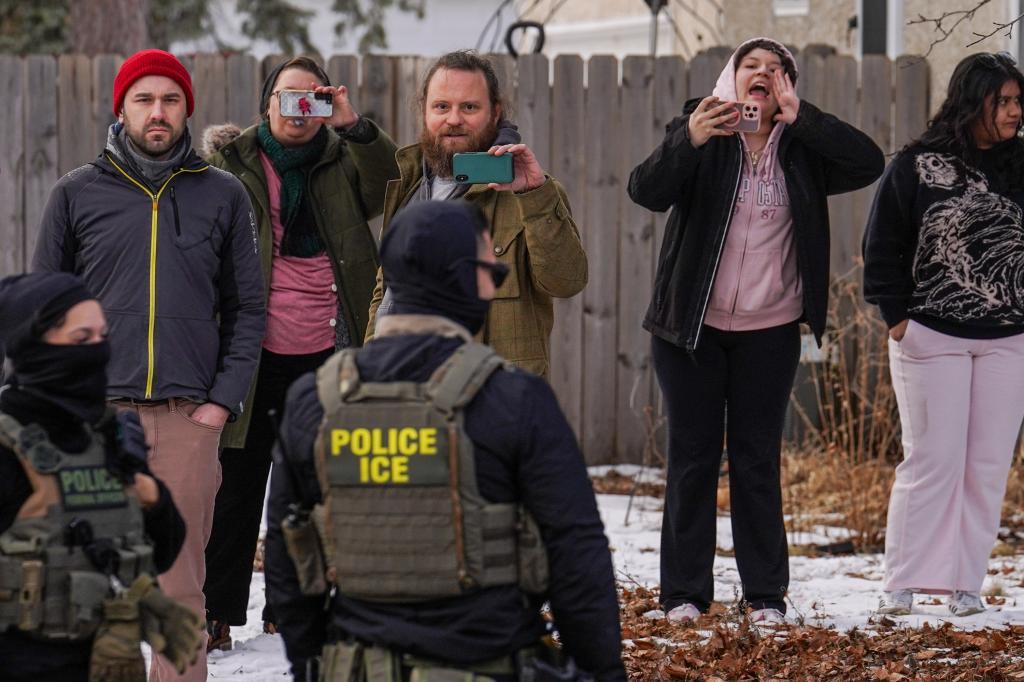
The President of the United States, Donald Trump, has given his consent this week to end the deployment of ICE, the Border Patrol, and other controversial immigration agencies in the state of Minnesota.
The decision, announced on Thursday by the government's immigration czar, Tom Homan, comes after months of presence of up to 3,000 federal agents, following the deaths of two protesters, Renee Goods and Alex Pretti, and the shooting of a third man. After hundreds of complaints of abuse of power, excessive use of force, inhumane methods, bypassing laws, procedures, and rules, threatening witnesses, journalists, and neighbors protesting their presence and actions. Also, after the government is once again on the brink of a shutdown due to the lack of agreement in Congress to extend funding for the Department of Homeland Security.
"Operation Metro Surge is going to end," said Homan at a press conference, explaining that he proposed a gradual withdrawal to the White House, and the President approved, pointing to the "success in detaining threats to public safety" and "unprecedented levels of coordination" with state officials and local law enforcement. "We leave Minnesota much safer," he insisted despite the climate of fear instilled in places like Minneapolis after two and a half months of raids, clashes, and widespread paranoia.
The czar, now portrayed as the friendly face of the administration despite his reputation as a hawk and advocate of tough measures and mass deportations, added that the agents withdrawing from this operation will return to their positions or be reassigned to other parts of the country, as the Executive's agenda remains unchanged. "A small group of personnel will remain for a while to close the operation and transfer full command and control to the field office, as well as to ensure that the disruptive activity continues to decrease," he noted.
Surveys show widespread disapproval of ICE operations and government methods, even among those who support a tough stance against illegal immigration. The President's popularity continues to decline, and the outlook for the November legislative elections is bleak for Republicans.
Homan, urgently dispatched by Trump two weeks ago to address an out-of-control situation, had already laid the groundwork in two previous appearances. Admitting mistakes, ensuring it would become much more "surgical," seeking collaboration with local authorities, and even announcing a reduction of up to 700 agents. Today, he explained that "a significant reduction in personnel has already begun this week and will continue next week (...) Thanks to our efforts here, Minnesota is no longer a sanctuary state for criminals."
Since late 20205, Homeland Security claims to have arrested over 4,000 individuals in Minnesota, but has not been able to provide precise data. The President's and his Attorney General's interventions have been riddled with false information, including images of alleged criminals who were not or had long been in prison. Similarly, American citizens, immigrants with all proper documentation, minors, and children born in the US have been detained, and therefore citizens.
"This operation has been catastrophic for our neighbors and businesses, and now is the time for a great recovery," celebrated the Mayor of Minneapolis, Jacob Frey. "We will show the same commitment to our immigrant residents and the same perseverance in this reopening, and I hope the whole country supports us in the future (...) They thought they could break us, but the love for our neighbors and the determination to persevere can survive an occupation. These patriots of Minneapolis are showing that it's not just about resistance; supporting our neighbors is deeply American," he added.
The withdrawal of ICE was one of the demands of the Democrats to negotiate funding for the Department of Homeland Security. The deadline for reaching an agreement in Congress on funding for many public services was January 31. Everything seemed headed for another federal government shutdown, as happened between October and November 2025. In the end, a minimal agreement was reached, approving funds for other agencies but not for Homeland Security, which oversees ICE and the Border Patrol. A two-week extension was approved for them, which now expires. And it was clear that there would be no agreement. The end of the deployment in Minnesota may not be sufficient, as there are more demands regarding operations nationwide, but it was a necessary condition.