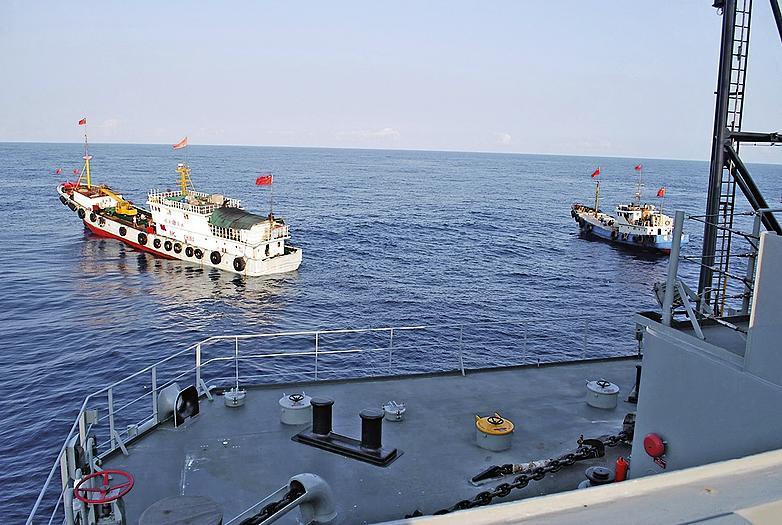
The seizure of a Chinese fishing boat by Japanese authorities once again highlights how much tensions between Tokyo and Beijing have entered a more rough and structural phase. In another time, this would have been just another episode in the fight against illegal fishing. But in the current climate of confrontation between the two Asian neighbors, every move at sea has political resonance.
The incident, which occurred on Thursday about 170 kilometers from Nagasaki in southwestern Japan, ended with the arrest of the 47-year-old captain, who, according to the Japan Fisheries Agency, tried to flee after refusing to stop the vessel for inspection. The boat, with eleven crew members on board, was intercepted within Japan's exclusive economic zone, the maritime space of up to 200 nautical miles from the coast where a State exercises rights of exploitation and resource control.
"A fisheries inspector ordered the boat's captain to stop for an inspection, but the boat did not comply and fled," the agency's statement reads. "As a result, the ship's captain was arrested that same day."
According to the Japanese public broadcaster NHK, the vessel appeared to be fishing mackerel, a species abundant in the area and a frequent subject of fishing disputes in the East China Sea. From Tokyo, recalling that they have detained other fishing boats from South Korea and Taiwan in recent years within their exclusive economic zone, they try to present their action as a simple application of the law.
The Chief Cabinet Secretary of Japan, Minoru Kihara, reiterated on Friday that Japan will continue to act firmly to "deter illegal fishing by foreign vessels." However, in Beijing, these minor incidents in disputed waters are often interpreted more politically.
Relations between Japan and China are going through one of their most tense moments in years, following a series of disagreements ranging from regional security to cultural exchanges.
The most recent turning point came when the Japanese Prime Minister, Sanae Takaichi, stated late last year before Parliament that her country could militarily intervene in case the Chinese military attacked Taiwan. A statement that was received in Beijing as a direct provocation on one of the most sensitive issues for Chinese leadership.
China's reaction, in addition to the usual diplomatic protests, included several economic pressure measures that, while not reaching formal sanctions, are often effective. Chinese authorities advised their citizens against traveling to Japan, a tool that caused immediate drops in tourism and in the revenues of businesses and hotels in cities dependent on Chinese visitors. Cultural and academic exchanges were also canceled, and several travel agencies suspended tour packages.
Simultaneously, Japanese companies with a presence in the Chinese market reported customs delays, stricter regulatory inspections, and nationalist campaigns on social media calling for the boycott of Japanese brands, a form of indirect pressure that Beijing has used in other diplomatic crises.
These tensions are compounded by a historic territorial dispute over the uninhabited islands known in Japan as Senkaku and in China as Diaoyu. Surrounded by rich fishing grounds and located in a strategic area, these islands have been the scene of recurrent incidents between coast guards and fishing vessels from both countries.
This week, after the coalition led by Takaichi swept the general elections, the Prime Minister, in an attempt to lower diplomatic tensions, stated that Japan was "open to various dialogues with China", insisting that Tokyo has not closed the door to discussions and that the relationship with the Asian giant should remain "constructive and stable."