I wake up with a strange discomfort in my right foot. My big toe is swollen and hurts enough to make me limp to the kitchen. I can barely put weight on it. I unlock my phone and open Ant Afu, a medical chatbot with artificial intelligence (AI) that has become my primary care clinic. I describe the symptoms, upload a photo of the toe, and wait.
The response comes in seconds. Dr. Afu explains that it could be a mild nail infection, probably a paronychia or onychomycosis, and offers a first care guideline: cleaning, disinfection, keeping the foot dry, and monitoring the temperature. If it doesn't improve in 48 hours, he suggests, I can schedule an appointment with a dermatologist or a podiatrist.
After authorizing access to my medical history, the application cross-references my medical records, allergies, and recent treatments. It recommends a topical antiseptic and a mild pain reliever, details how to apply them and how often. It even offers to purchase the medication for me, charging the amount to the electronic wallet linked to Alipay, the payment platform of its parent company, Alibaba. Before closing the consultation, it schedules a daily reminder: "Time to clean the toe and apply the ointment".
The next day, the redness has decreased, and the swelling has almost disappeared. Afu insists on moisturizing the skin around the nail and ventilating the shoes well. Although the infection seems to be subsiding, he suggests a free teleconsultation with a real dermatologist from a public hospital. In less than two minutes, the video call is active. The doctor confirms the initial diagnosis and recommends following the treatment indicated by the AI, adding only a light bandage to protect the nail.
Mobile medical consultations are becoming a mass phenomenon in China. Behind Afu is Ant Group, the technological arm of Alibaba that has been managing payments and everyday services for over 1 billion people through Alipay. The company launched its health application in June 2025 —Afu means well-being or blessing in Mandarin— and its growth is rapid.
"The appeal of services like Afu lies in eliminating the classic barriers of time and place"
According to the latest official figures, by early January, the platform exceeded 45 million monthly active users, who carry out over 10 million daily health-related consultations. A volume that places Afu at the center of the technological wave that is redefining healthcare access in China, especially outside major cities.
"The appeal of services like Afu lies in eliminating the classic barriers of time and place," explains a spokesperson for Ant Group. "The application combines automated responses —based on AI models trained with vast medical knowledge bases— with access to a network of over 300,000 licensed doctors for specialized consultations. It also allows for analyzing clinical reports, scheduling appointments, or connecting with hospitals and insurers."
According to a survey cited by the company among doctors from top-tier hospitals, over 70% recommend the use of these tools for routine consultations, as a way to alleviate the saturation of in-person care.
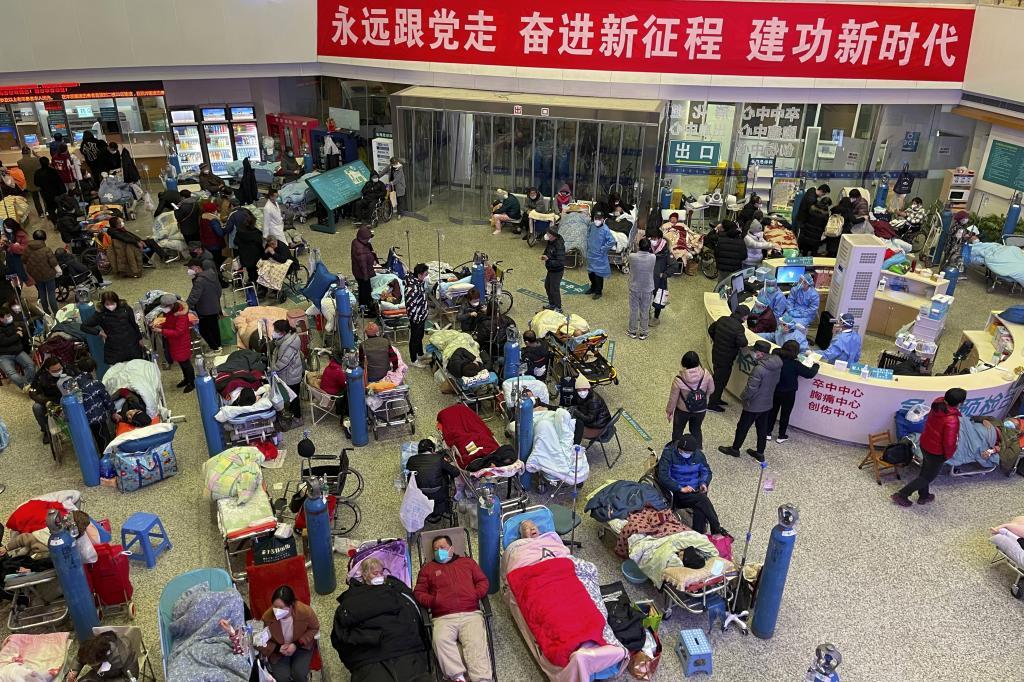
Although China has extensive healthcare coverage —basic medical insurance already covers nearly 95% of the population—, the system has significant gaps. It does not fully cover the treatment of complex chronic diseases and, above all, it suffers from a profound territorial imbalance.
Most high-level hospitals are concentrated in major cities. For millions of patients in inland provinces or small cities, receiving specialized care involves traveling hundreds of kilometers. Consultations, except in severe cases, are quick and mechanical, with overwhelmed doctors seeing dozens of patients per hour. Primary care remains the weakest link, even in advanced urban centers.
This scenario has opened up a unique opportunity for technological solutions like Afu, which now serves as the first point of entry into the healthcare system for millions of people. Over 60% of its users live in third-tier cities or rural areas.
Some local governments, aware of the rapidly aging population, are organizing courses to teach older people how to use these applications. China is going through a deep demographic crisis: birth rates are at historic lows and over 310 million inhabitants are over 60 years old, a number that will continue to grow in the next decade and further strain the demand for continuous medical care.
Ant Group developers have announced a significant update this week, introducing a "mode for seniors" designed to make it easier for older users to navigate the app. This feature includes larger letters and icons, default voice interaction, and the ability to inquire about health issues through direct phone calls with the virtual assistant. According to company data, around 20% of the app's users belong to the generations born in the 1950s and 1960s, reflecting significant adoption among older individuals.
Additionally, Afu has now improved its voice recognition technology to perfectly identify the different dialects spoken in the country, making communication easier for older users, as many of them are not fluent in standard Mandarin.
Just a few days ago, the Chinese Nutrition Society, under the National Health Commission, announced in a statement an agreement with Alibaba to train Anfu with "advanced nutritional knowledge", with the purpose of "providing users with more scientific and reliable dietary and wellness recommendations".
On my phone screen, Afu sends me a final reminder: "Has the toe improved?". I select "yes". The chatbot responds with a smiling emoji and a final tip on winter nail care, as if bidding farewell like a family doctor. As I close the application, it's hard not to think that perhaps in China, it won't be long before visiting a hospital without first consulting artificial intelligence becomes unusual.