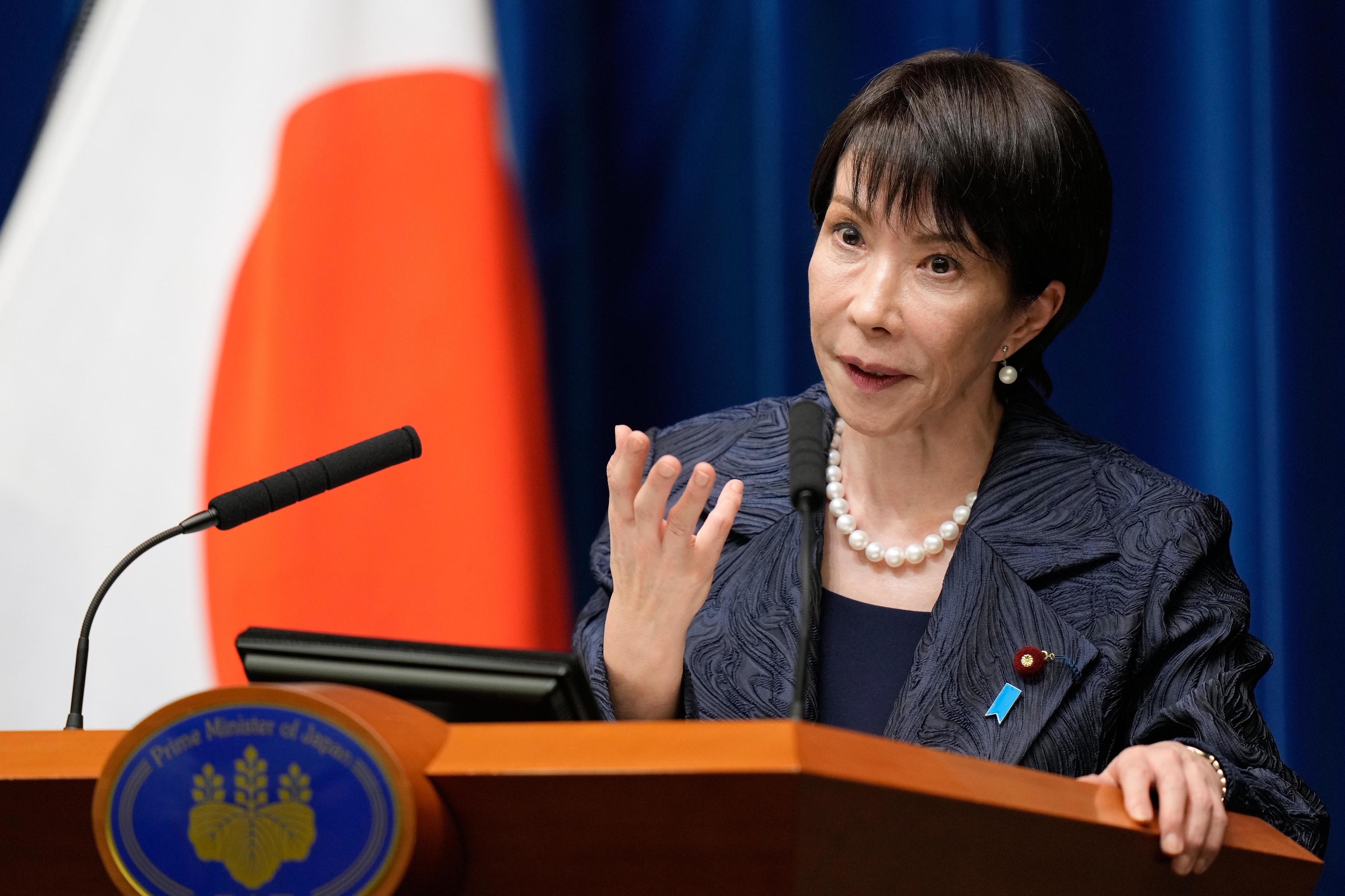
The day ended badly for Sanae Takaichi. The defeat in the Lower House elections in December 2003 weighed heavily, and the then member of the conservative Liberal Democratic Party (LDP) had lost her seat. Suddenly, as night had already fallen over Tokyo, Takaichi received an unexpected call. On the other end of the line was Taku Yamamoto, a veteran politician from her party whom she had known for years, a man of discreet and very shy demeanor.
"If you are seriously looking for a partner, I would like to propose marriage to you," Yamamoto bluntly stated. Takaichi was taken by surprise by that direct and unadorned phone proposition. Yamamoto, who had a reputation as an intelligent but clumsy politician with words, insisted using a unique and unromantic argument. "I have a chef's license," he said. "I will make sure you eat delicious food for the rest of your life."
That call marked the beginning of their relationship. The couple married a year later, and Takaichi legally adopted three children that Yamamoto had from a previous marriage. Today, Sanae Takaichi (64 years old) is the prime minister of Japan, elated after sweeping the general elections on February 8. Yamamoto, 73, is retired from politics. "Unlike in the West, it is better for the couple to stay out of the spotlight," this former legislator stated in a recent interview. "I will support my wife as a discreet husband," he added.
In Japan, the law requires spouses to share the same last name, a formality that Takaichi and Yamamoto have resolved in an unconventional way. The couple has been married twice: in their first marriage, Takaichi legally adopted Yamamoto's last name; in the second, he assumed her last name. The final decision was made almost playfully: they played rock-paper-scissors to determine which last name they would carry. Takaichi won, allowing her to maintain her political identity intact. As a result, Yamamoto's legal name became Taku Takaichi, although in his daily life and with the press, he continues to use his birth name.
The prime minister, known for her strong character and discipline, confesses in private circles that having a partner who understands the political life without competing with her has been a key factor in maintaining balance between her decisive public role and family life. But it wasn't always like that.
While Takaichi has always advocated for quite radical right-wing policies, Yamamoto has maintained a profile of moderate conservatism. These political differences were accentuated during the LDP presidential campaign in 2012, with two former prime ministers as the main candidates. Yamamoto, who has been a member of the Diet for eight terms, supported Shigeru Ishiba, while Takaichi backed Shinzo Abe, who won the primaries and became Japan's next leader. Local media reported that the rivalry between their factions became so intense that the couple stopped discussing politics at home.
In the following years, each developed alliances and support in different factions within the party, eventually holding divergent positions in internal votes and electoral strategies. In 2017, they announced their divorce issuing a joint statement citing "irreconcilable political opinions and aspirations." The breakup, although communicated with institutional serenity, was an unusual milestone in Japanese politics, a world where divorces of public figures are usually handled with absolute discretion.
The politics that had separated them brought them back together in September 2021 when Takaichi ran for the first time as a candidate for the presidency of the LDP, the party that has almost always governed Japan since the post-war period. Yamamoto, to the surprise of local observers, publicly supported her candidacy. That closeness, as noted in Tokyo, was the prelude to a new chapter in their relationship. In December of that year, they remarried.
Takaichi lost her party's primaries in 2021. But last autumn, after the prime minister's resignation, she ran again. This time she was elected leader of the LDP and, as the ruling coalition had a parliamentary majority, she became the first woman to lead the Asian powerhouse. Her popularity began to rise in polls, and in a bold move, she decided to call early elections to consolidate her position and test her leadership skills against public opinion and opposition parties.
Last Sunday, the LDP achieved a historic result, comfortably surpassing the absolute majority and giving Takaichi the ability to advance her agenda with an unprecedented margin of maneuver. "The recipe for her success is that she studies more than anyone else. Her room is full of books," highlighted her husband in an interview.
Takaichi grew up in Nara, a city that still retains the aura of an ancient imperial capital, surrounded by mountains and with deer roaming among temples and parks. Her background is modest: her father worked in an auto parts factory, and her mother was an administrative assistant in the Police.
In her youth, Takaichi showed a free and rebellious spirit: she rode a Kawasaki motorcycle and played drums in a heavy metal band. Before fully engaging in Japanese politics, she spent nine months in Washington as a collaborator on the team of Patricia Schroeder, a Democratic congresswoman who even considered her candidacy for the U.S. presidency, an experience that broadened her international perspective.
She defines herself as a workaholic and cites Margaret Thatcher as her great role model. Nothing reflects this obsession better than her promise upon taking office: "work, work, work, work, and work", a phrase that quickly became the expression of the year in Japan, a symbol of her tireless work ethic. However, even in the intensity of her political life, Takaichi seeks refuge in her passion: when stress mounts, she retreats home to play the electric drums.