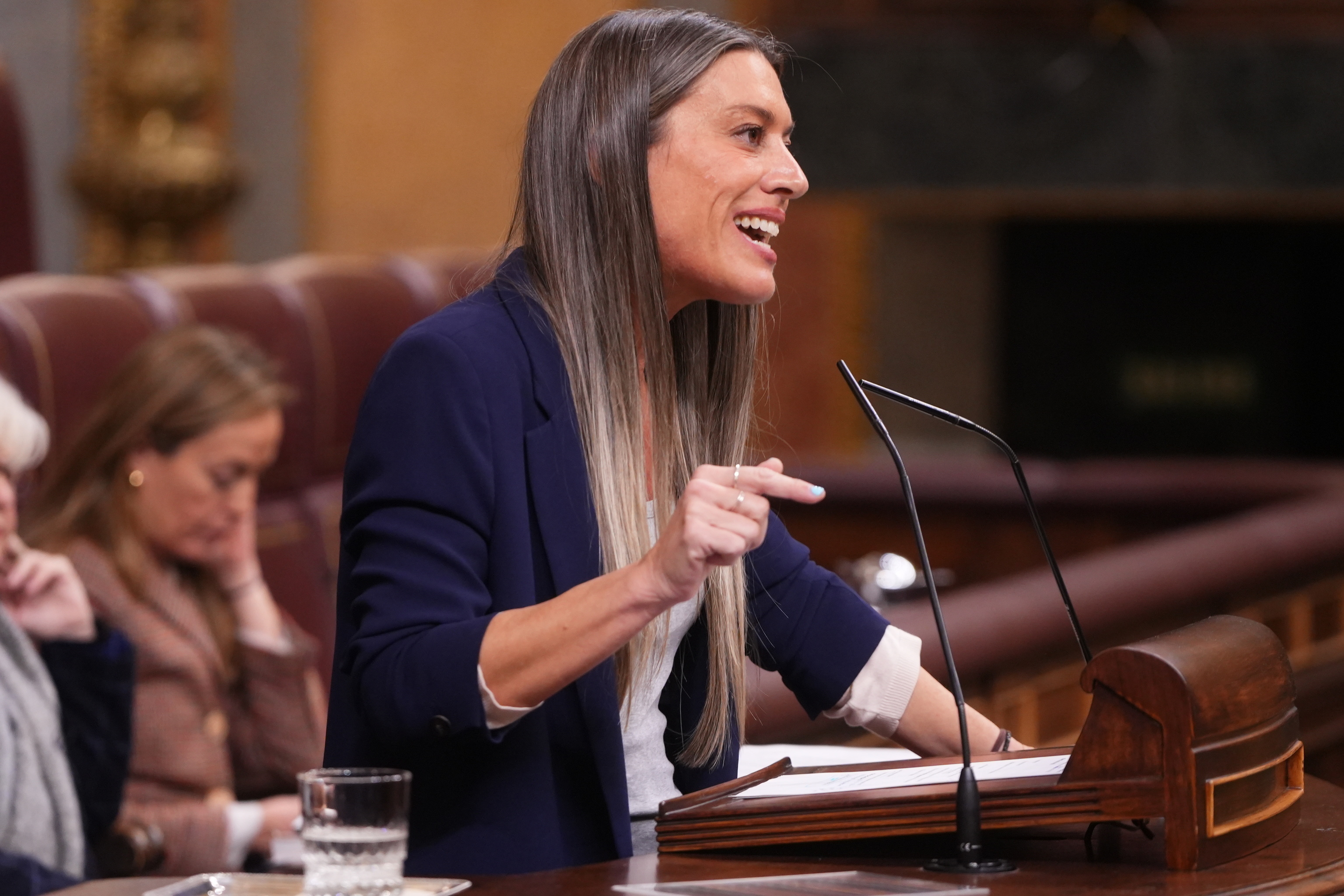
The seven votes of Junts will not back this afternoon the consideration of the bill proposed by Vox that aims to ban the use of the burka and niqab, the garments that cover the body and face of women completely, in public spaces. The separatist party, however, in agreement with this restriction, has already submitted its own initiative in the Congress, which, according to their spokesperson Míriam Nogueras, complies with European regulations.
Junts' proposal, besides advocating for the ban on the use of the burka and full veil in public spaces, calls for the delegation of state competencies in immigration, security, and identification of individuals to Catalonia. "It is a rigorous law that meets European standards," they state.
Junts justifies its position in favour of the ban by arguing that the burka "is oppression" and insisting that "freedom and security are non-negotiable". However, they also express their rejection of Vox's bill, emphasizing that the feminism of this party is not credible. They also claim to be against any kind of "populism" and the "naivety of the left".
The party of Puigdemont recalls that they have already defended the ban on the burka in the Congress of Deputies and also in the Parliament, inevitably linking it to the demand for the transfer of immigration competencies, a demand opposed by the PP, Vox, and Podemos.
Junts also points out that they have never voted in favour of Vox's initiatives, a party they describe as "anti-Catalan, anti-feminist, and contrary to human rights, which has also led the repression against Catalonia".
From left-wing parties, although the ban is controversial, the majority position is 'no'. For example, Compromís has already expressed its rejection of Vox's initiative, also supported by the PP, arguing that it seeks to "criminalize" and "cast suspicion" on those who wear these garments and, above all, to "portray immigrants from Islamic cultures as enemies". They insist that the Penal Code already includes articles that classify coercion as a crime and can therefore punish those who force women to wear the burka or niqab.
Sumar, on the other hand, states that they do not like any form of subjugation of women but describe Vox's proposal as "Islamophobic" and "hypocritical". For them, Vox's initiative is not intended to protect or defend women but rather to "provoke" and "spread racism and Islamophobia". They also argue that prohibition measures are not effective and may lead to the withdrawal of women wearing the burka or niqab from public life, confining them to their homes.
Podemos also largely opposes the proposal because it comes from Vox, an far-right party that "does not stand up for women" and only seeks to "impose prohibitions and not rights".