In just one lifetime, Jesse Jackson managed to be a successful quarterback, preacher, minister without a church, leader of the civil rights movement, the face of nonviolent resistance, a media figure like few others in the last half-century, a two-time presidential candidate, diplomat, mediator in the Middle East, negotiator of rescues, and the most important African American figure, influential and decisive between Martin Luther King and Barack Obama.
He had time to be arrested countless times, to found a movement, to advise presidents, and to participate in thousands of marches. He had time to write books, make grave mistakes, change his mind, and lose friends. He arrived too late to be the moral compass of a country broken by racial issues and too soon to aspire to the White House, but along the way, he helped write the history of a nation and lay the foundations for transformation.
Jackson, who passed away on Tuesday at the age of 84 due to a neurodegenerative disease, was the most imposing and important speaker for several generations of African Americans, orphaned after Dr. King's assassination, furious in streets that segregated them, enraged at authorities that allowed all kinds of abuses, and powerless against a system that ignored them.
Jackson was the voice that managed to break through ceilings and reach newspapers, radios, and televisions. He became, tirelessly, the popular and populist leader of the "rainbow coalition," that of "the poor, the marginalized, and the forgotten," eventually becoming the main actor he always wanted to be. The phone everyone had to call when something important was happening.
"Our father was a servant leader, not only for our family but also for the oppressed, the voiceless, and the ignored. We shared him with the world, and in return, the world became part of our extended family. His unwavering faith in justice, equality, and love inspired millions of people, and we ask that you honor his memory by continuing the fight for the values he guided," the family stated in a release.
Jackson was in Washington when King Jr. said "I have a dream." And he was with him in Alabama, in the most important marches in the history of civil rights. He was at the Lorraine Motel in Memphis on April 4, 1968, when he was assassinated. The following hours permanently alienated him from many, outraged by what they considered an excess of protagonism and an inaccurate version of what happened, but his quick reaction organizing interviews in front of the cameras, with blood-stained clothes, served to catapult him to the forefront and the headlines.
Jackson was, for decades, an omnipresent figure in the political, social, and religious life of the United States. A moral reference ironically plagued by weaknesses and contradictions, vices and pettiness. As full of passion as of ego, generous and selfish, ambitious and envious. Marked by a crusade against discrimination and in favor of equality, but also by a desperate search for the limelight, for his craving for notoriety, for a life full of exaggerations, half-truths, and mistakes, including children born out of wedlock. Or children turned congressmen who would end up in prison for misappropriating campaign funds for personal expenses.
Jackson was born in South Carolina in 1941, the son of a poor 16-year-old mother and a neighbor twice her age, he was married and never wanted anything to do with them. His stepfather ended up adopting him, but not before kicking him out of the house when his first half-brother was born. Tall and athletic, he quickly stood out in high school, as the leader of the football team and a star student. He earned a scholarship to play in college but left after a year, complaining that he wasn't a starter because he was black. Years later, journalists discovered that the quarterback was also African American. One of the countless lies or half-truths that marked his rise.
He studied to be a pastor and Sociology, but the 1960s crossed his path, and he dedicated the bulk of his time to the struggles for civil rights, traveling from his residence in Chicago repeatedly to the South. After King's death, he clashed with his successors and ended up leaving the organization, the Southern Christian Leadership Conference, to found PUSH, People United to Serve Humanity, the main vehicle he used until the end to spread his message throughout the United States. And the rest of the world.
His two sides
In the 1980s and 90s, he traveled extensively, achieving what the government of the most powerful country in the world could not. Freeing a pilot captured by the Syrians in 1984. Convincing, in person, Fidel Castro to release 23 American and Cuban prisoners. Saddam Hussein to release dozens of British and American citizens. Or the Serbs to hand over kidnapped UN peacekeepers in Kosovo. Or protesting against Apartheid from the streets of South Africa.
Jackson showed, every day, his two sides, capable of the best and the worst. His efforts to free that pilot in 1984 made him, once again, a national celebrity, boosting his political prospects and leaving behind criticisms of opportunism. But a few weeks later, some statements, using derogatory terms for Jews (as well as his never-hidden sympathies towards Palestine) diminished his chances. He never became president, not even vice president as he thought he could and deserved, but he changed the rules of the game.
Tall, attractive, with a natural gift for rhyme in his cadence, Jackson was not the first black presidential candidate, but the first with real chances, the first to leave a mark with phrases like "our time has come" and "I am somebody." He achieved significant success in primaries marked by perhaps the most amateur and dysfunctional campaign ever seen (which initially failed to garner support from the most powerful leaders of the black community, such as Coretta Scott King or Atlanta Mayor Andrew Young) with millions of votes and hundreds of delegates. This earned him precious time on the podium during the Democratic Party conventions in 1984.
"This is not a perfect party. We are not a perfect people. However, we are called to a perfect mission, that of feeding the hungry, clothing the naked, providing homes for the homeless; educating the illiterate; providing jobs for the unemployed; and prioritizing the human race over the nuclear race. We gather here this week to nominate a candidate and adopt a platform that will expand, unify, lead, and inspire our Party and the nation to fulfill this mission. My constituency is the desperate, the damned, the disinherited, the despised. They are restless and seeking relief. They have voted in record numbers. They have placed their faith, hope, and trust in us. The Democratic Party must convey to them that we care. I promise to do everything in my power not to disappoint them," he said in the most remembered speech of those years.
Four years later, with the slogan 'Keep Hope Alive,' he ran again, garnering seven million votes, surpassed only by the eventual candidate, Massachusetts Governor Michael S. Dukakis. Once again, his hour-long speech at the National Convention made many delegates cry and captured attention.
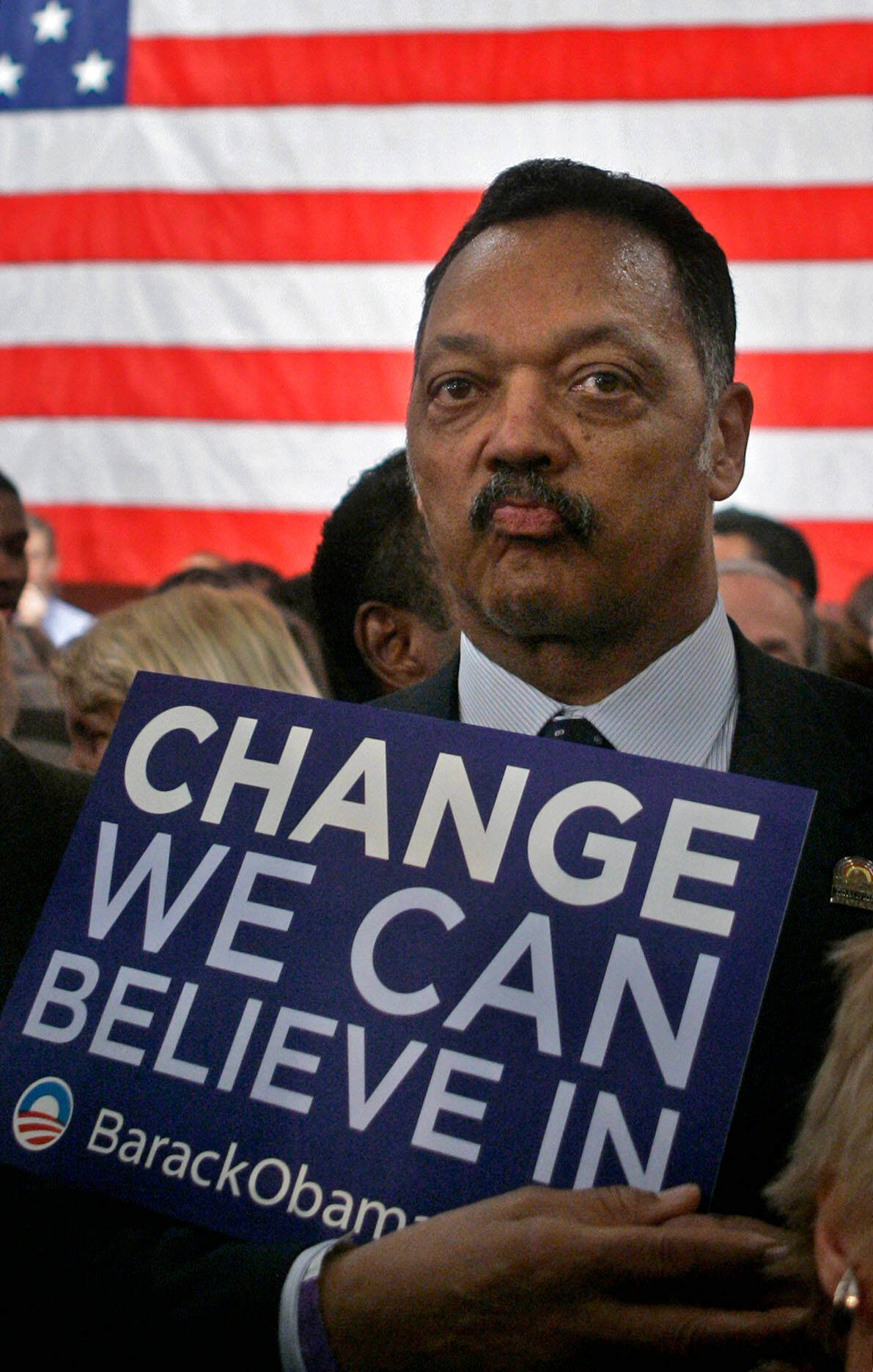
Although his personal aspirations did not materialize, his foray into the political forefront changed everything (starting with the rules for delegate allocation) allowing decades later for Obama to succeed where he failed. "Jackson's presence poses to the American republic questions and decisions it has tried to avoid throughout its history until today... And nothing will ever be the same," said James Baldwin, the great African American intellectual at the time.
He was always more a man of action than meditation, someone capable of absorbing insults, hatred, and threats and transforming it into a rhetoric of nonviolence. Defiant, proud, assertive, but nonviolent, de facto being the spokesperson for tens of millions of African Americans. Whether out of love or disdain, he kept the spotlight on him for 60 years.
n many ways, he was a man of the people, as Donald Trump recalled on Tuesday. "He was a good man, with a lot of personality, determination, and cunning. He was very sociable, someone who truly loved people! Despite the scoundrels and lunatics of the radical left, all Democrats, falsely and constantly labeling me as racist, it was always a pleasure to help Jesse along his path. I provided office space for him and his Rainbow Coalition for years at the Trump Building on 40 Wall Street; I responded to his request for help to pass and sign the CRIMINAL JUSTICE REFORM, when no other president even attempted it; I pushed through and approved, without anyone's help, long-term funding for Historically Black Colleges and Universities (HBCUs), something that Jesse loved but that other presidents would not do," he wrote on his social media.
Jackson began to consider a political career and even founding a party in the early 70s, but then became a key figure for the Democrats, from Carter to especially Clinton and Obama, because he brought in many votes and was able to interest millions of people who had never participated in elections. "He had a lot to do with the election, without recognition or acknowledgment, of Barack Hussein Obama, a man whom Jesse detested," Trump recalled pointing to some famous criticisms, including banned words, unaware that a microphone was on during a break on a Fox program.
With the turn of the century, the era of Jackson began to fade. His influence waned because the civil rights revolution in which Jackson had grown and excelled seemed distant. Ironically, his success, manifested in mayors, congressmen, senators, governors, and even an African American president, changed the world for which he had prepared and where he had a prominent place. Jackson continued to travel, protest, and be arrested. He cried when Obama won, shouted with the Black Lives Matter, but his time had passed.