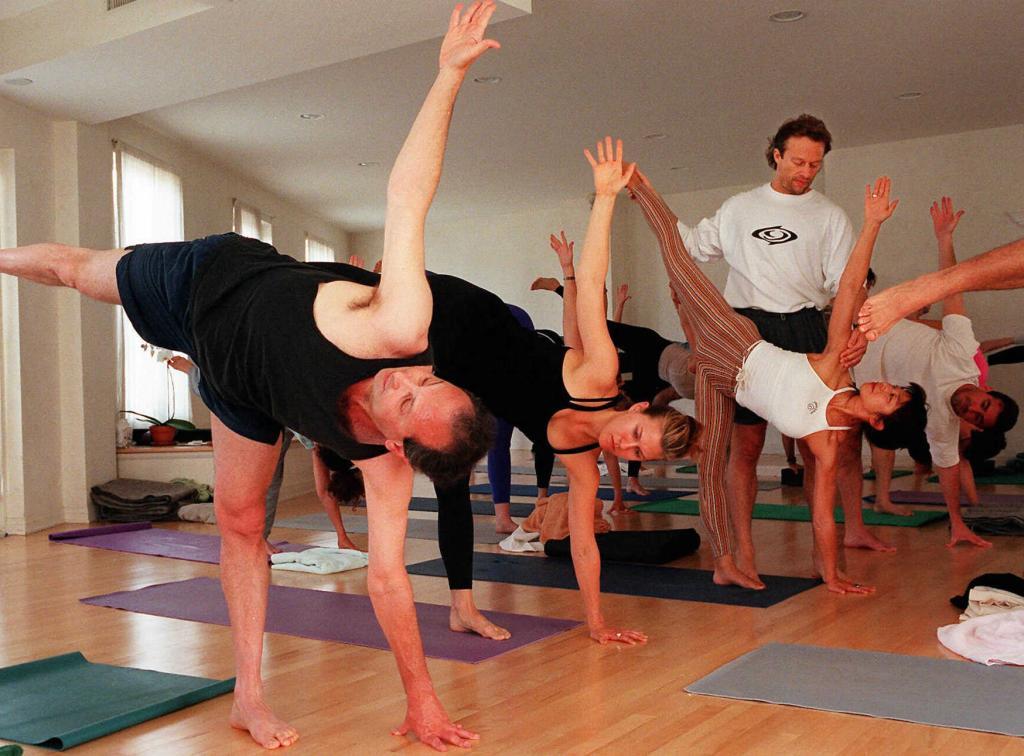
It is not right to start a journalistic report with a personal anecdote, but keep reading and you will understand. We had been living with Covid for several months, not even in confinement anymore, when I received a disturbing message from an old friend: "I don't see it in the media and I think you might be interested". Angela is a normal girl in her thirties, born into a normal middle-class family in a provincial city, with a degree in Psychology that she passed with honors, a couple of master's degrees, an avid reader who has lived in several countries on different continents, speaks several languages, with an above-average culture, and a great interest, always, in yoga, meditation, and ecology.
She attached to her brief message what at first glance seemed like a scientific paper, and which, upon closer inspection, was a treatise drowned in data without an apparent source about how governments around the world were injecting computer chips for control into the population through the coronavirus vaccines.
I didn't know how to reply: "I'll look into it, of course". And I never heard from her again.
It is not right to start a journalistic report with a personal anecdote, but it does not seem daring to think that the discomfort experienced by this reporter is not at all alien to most of her readers. And it is because Angela is the living embodiment of a new form of spirituality that, according to some experts, is destined to replace organized religion, but with a fragility that makes it highly susceptible to populist manipulation.
The three authors of Conspirituality (Capitán Swing), Matthew Remski, Derek Beres, and Julian Walker, also start with their own personal experiences, a book that unravels, viral discourse by viral discourse, influencer by influencer, fact by fact, how American yogis became the social base for conspiracy theories and anti-vaccination movements that propelled Trump back to the White House just over a year ago.
Speaking on behalf of the trio of writers is Matthew Remski, an American journalist and essayist based in Toronto and a veteran of yoga and holistic therapies inspired by the East, just like his colleagues. Remski believed so strongly in his youth that the answer to his life's anxieties lay in alternative therapies that he was involved, very involved, in at least three organized sects centered around Eastern spirituality before, as he describes it, turning to science and psychology and seeking formal therapy. Before that, he fully dedicated himself to studying conspirituality, a phenomenon so elusive that the one who coined it with that paradoxical combination of New Age spirituality - optimistic and holistic - with conspiracy theory - pessimistic and conservative, turned out to be one of its main proponents.
The British "independent researcher" Charlotte Ward disappeared from the digital radar in 2015. She left behind a trail of pseudoscientific and conspiratorial publications that served as theoretical support for Qanon arguments. A double agent, according to the authors of the book that now borrows the term to dismantle its creation.
"I think the key concept to understand all this is vulnerability," reflects Remski on the other side of the screen. "The psychological drift that led the wellness world to conspiracy theories during the pandemic has its roots in the previous 50 years of neoliberal apathy and political disconnection." The history of the emergence of yoga and the wellness culture in the US was, for him, one of a refuge for those who saw their revolutionary aspirations exhausted. "Protesters did not stop the Vietnam War. The FBI killed Fred Hampton and ended the Black Panthers. So in the 70s, there was a kind of widespread introspection towards the idea that if we cannot change the material conditions of the world, at least we can change ourselves," he explains.
The pandemic was the definitive spark for a social bomb that had been brewing for decades. "Suddenly, people in the wellness world had something tangible to contribute, something that seemed like a public service, a kind of secret power that traditional medical and political institutions simply could not or did not want to understand," argues Remski. "And that made them tremendously vulnerable to elements of the far right who took advantage of the chaos caused by Covid to spread rumors and health misinformation, and who ended up becoming the MAHA movement, Make America Healthy Again, led by Robert F. Kennedy Jr., now a top health authority in the Trump Administration."
"Suddenly, people in the wellness world had something tangible to contribute against Covid and, moreover, they could monetize it. Spirituality is a marketing accelerator."
There it was: a historically progressive, open, supportive, pacifist, humanitarian environment had become the social base for the most disturbingly retrograde government in US history. How? According to our particular guide in the universe of conspirituality, due to ignorance and money. And understanding how and when the yoga we know today was born leads to them.
"All religious movements arise from needs imposed by material conditions. Yoga has always been more political than we think," Remski asserts. "The modern postural yoga practiced by millions of Westerners today actually stems from Indian nationalism born after decolonization, at the beginning of the last century. Its purpose was to find a series of socially acceptable practices, away from superstitions and rituals, that would provide a sense of mastery over the new Westernized world, but also, on a more practical level, nationalists needed a unified physical education program for the newly decolonized public schools, which until then were very militarized. And then, of course, fascism came along."
"Did the Nazis practice yoga?" is the title of the seventh chapter of Conspirituality by the authors. We pose the question. "The esoteric forms of yoga deal with alchemy and the transformation of the body, something fascinating for a supremacist movement seeking to restore the glorious past of an idealized people through racial purification," the journalist explains after a long silence while stroking his beard. "The eugenic focus, combined with physical culture and discipline, ends up providing the German fascists with a good set of exercises for national health and their army."
Okay, modern yoga has a fascist past, but how have postulates gestated 100 years ago decisively influenced the fate of the information age? According to Remski, the answer is clear: through misinformation. If the pandemic was the spark that ignited the fuse, social media was the accelerant that multiplied the explosion. "Covid completely changed the religious landscape of the world because it brought the bodily politics of religious beliefs to the forefront and also brought to light the wounds of a population absolutely disillusioned with a predatory healthcare system, especially in the US, designed to maximize economic profit by disregarding public health," argues the journalist.
"A person with a healthy political culture will understand that the cancer here is voracious neoliberalism, but a global health crisis like the one we experienced in 2020 is fertile ground for the discourse to shift from The State does not protect me to The State wants to kill me, and for gurus to emerge like mushrooms offering easy solutions that you can do at home: 'If you connect with your spirit, you will be stronger than ever.' Without the pandemic, conspirituality would never have had the power it has today."
We have ignorance, what we lack is money. "The algorithm forces you to gamify and intensify thoughts. The more provocative you are, the more traction you will have. But, in addition, those thoughts can be easily monetized, so even someone who, with the best of intentions, albeit mistaken, promotes holistic therapies against Covid can quickly become a scammer. Spirituality is a marketing accelerator," the researcher asserts. Are yoga gurus turned conspiracy theorists true believers, or just scammers? "In our world, the boundary between belief and opportunism is very difficult to establish. Trump himself is simply a malignant narcissist who I don't expect believes in anything other than himself. He couldn't care less about vaccines and cancer research; what he wants is power."
"These new forms of spirituality will eventually succeed religion as the predominant way of relating to the sacred in our societies."
While in the US the link between holistic spirituality and far-right populism is clearly defined and even has a name, MAHA, in Spain the anti-vaccine movement has had far less traction. "A public healthcare system is the best vaccine against conspiritualism," Remski asserts. "The scenario isn't comparable. Here, for the moment, there are few flat-Earthers around, and our far right, which does promote denialist positions, is generally not very credible," argues Manuela Cantón, an anthropologist from Cádiz, who has studied new religious movements in Latin America and Spain for over a decade, from voodoo to zombification, including the Santa Muerte cult and the Evangelical Church, and recounts her experiences in *Imagination in Flames* (Ariel). The final chapter of her book deals precisely with the new holistic spirituality and neopaganism.
"There is a very deep unease that is causing people to seek ways to survive a situation of constant alarm and stress, but these new spirituality movements are so scattered and individualistic that it's rare to find someone who hasn't tried some of their practices, while you certainly don't know anyone who has gone to visit four or five churches to see what they had to offer," explains Cantón, and she ventures a prediction for the future: "These new forms of spirituality will eventually succeed religion as the predominant way of relating to the sacred, but I don't see it as likely that there will be a massive shift of people who stop seeking medical treatment for an illness to go and practice mindfulness."
The anthropologist places the relationship between this emerging religiosity and the rise of the far right on this side of the Atlantic within another type of movement. "Much of traditional Christianity is borrowing neo-Christian tactics. After all, prayer is also a form of meditation, isn't it? They know that the prevailing sensibility prioritizes individualism over the stricter, more hierarchical rituals of traditional churches," he analyzes. According to the CIS (Spanish Center for Sociological Research), between 2023 and 2025, the percentage of young people in Spain who identify as Catholic grew from 34% to 41%, and the resurgence of religious motivations is evident in today's culture. However, Cantón doesn't see much of a future for this apparent surge in vocations.
With one exception: the Hakuna movement.
"They're making a big impact because they've managed to combine the most skillful social media marketing strategies with evangelical pop. They prioritize music to slip in an absolutely retrograde discourse closely linked to the far right, circumventing the stigma attached to anything related to spirituality in our country."
Manuela Cantón says it's still too early to connect the pop revival of Catholicism with the reactionary wave sweeping across Europe, but the fact that cinemas were packed with young people eager to see "Los domingos" piqued her curiosity. "The question is: will this spiritual surge be a passing wave?" she asks. And she invites us to talk again in the future, perhaps not so distant.