The top drug lord fell on Sunday during a military operation carried out early in the morning, marking the first major action of President Claudia Sheinbaum against organized crime.
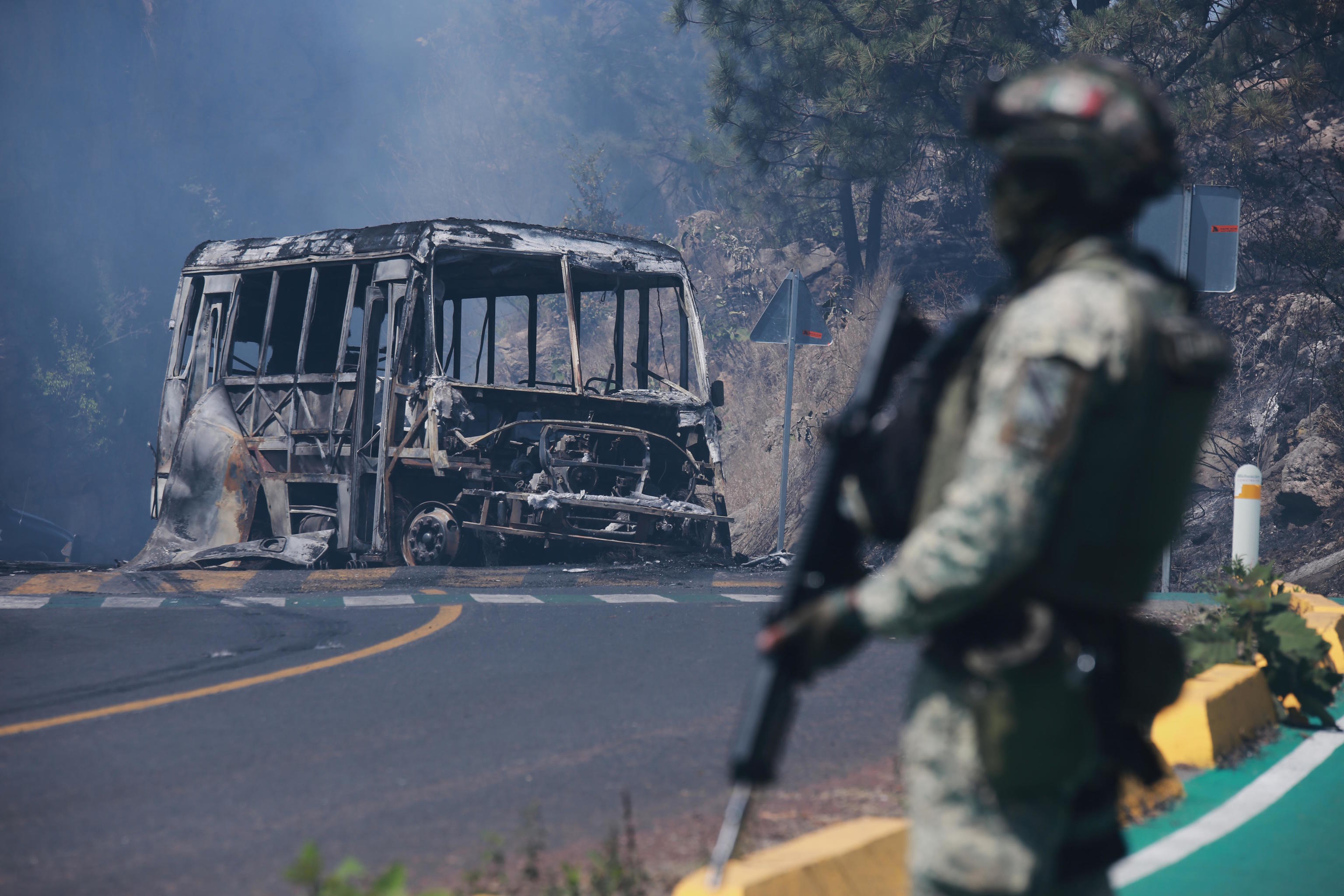
The disappearance of the leader of the country's most powerful criminal organization —which managed to surpass the Sinaloa Cartel— has triggered a furious reaction from its members in 13 states. The CJNG's offensive, whose tentacles extend from the United States to Ecuador, included the burning of vehicles, roadblocks, and armed attacks in more than half a dozen entities.
One of the critical points was the Guadalajara International Airport, where scenes of panic unfolded. Passengers experienced stampedes amid rumors that armed men had entered the facilities, while dense columns of smoke from burned vehicles on the runways were visible from the boarding gates. Simultaneously, in Aguascalientes, panic reached the sports arena: a women's football league match between Necaxa and Querétaro had to be suspended after gunshots were heard near the stadium.
From a political standpoint, President Sheinbaum has made a call for calm, ensuring absolute coordination with state governments and stating that, despite the disturbances, most of the national territory remains normal. Meanwhile, Jalisco Governor Pablo Lemus acknowledged the responsibility of the citizens in the face of uncertainty, also confirming the arrest of 25 individuals linked to the disturbances.
The significance of this blow transcends borders. The U.S. Department of State, which offered 15 million dollars for his capture, identified the CJNG as a global terrorist organization and the main culprit behind the fentanyl epidemic on its streets. "El Mencho," a former police officer who began his criminal career in the 90s, had become an elusive myth after the captures of "El Chapo" Guzmán and "El Mayo" Zambada, solidifying an empire that now teeters amidst flames and gunfire.