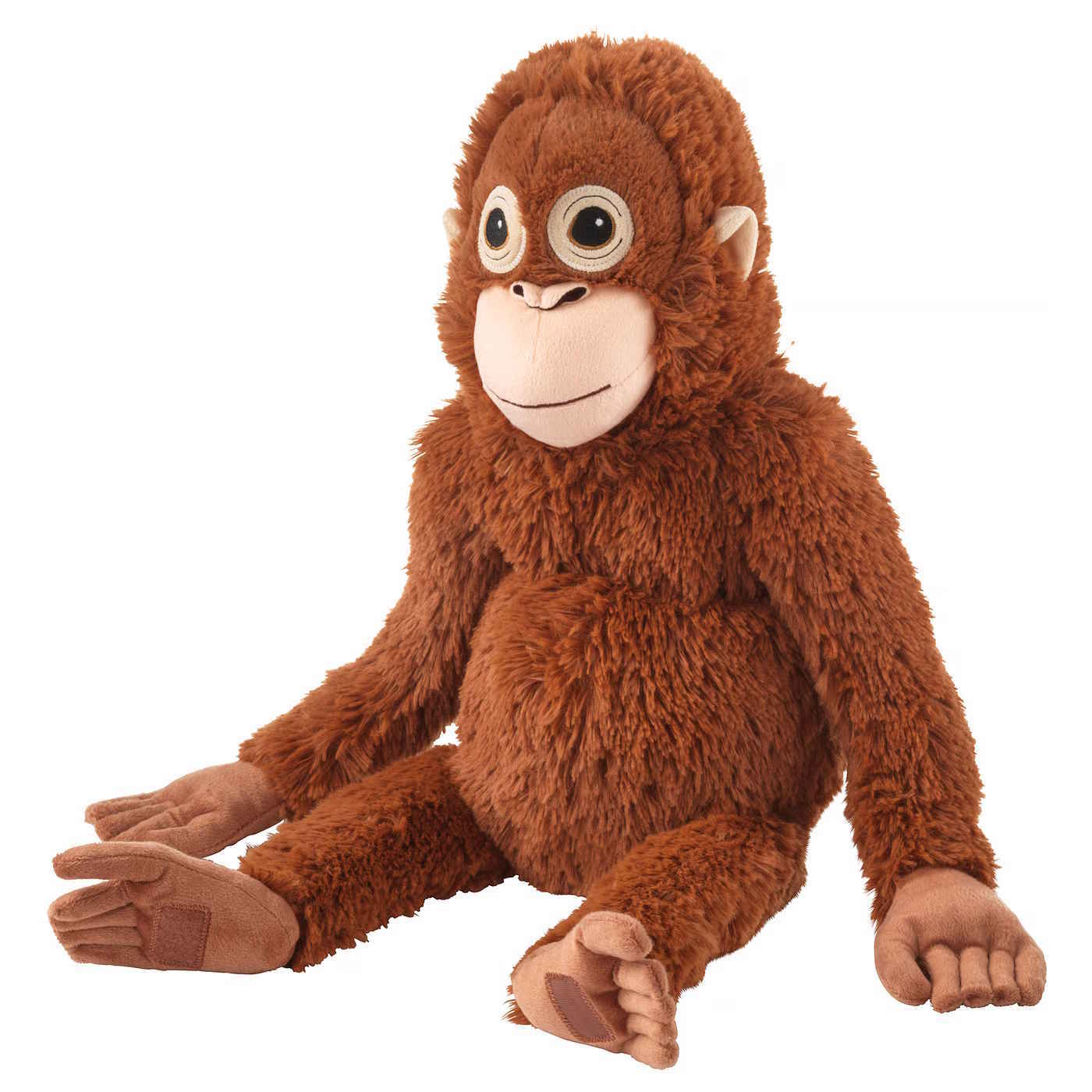
In a fenced enclosure at the Ichikawa zoo, in eastern Japan, there is a monkey that won't let go of its mother. The scene would be just another animal cuteness if it weren't for a detail that is puzzling: the mother is a plush toy, with excessively long legs and a blue and yellow tag sewn on its side. It is a plush toy sold for $19.99 at IKEA.
The real baby monkey is named Punch and, in a matter of days, has gone from being a rejected baby to a viral sensation. His story has traveled across Japan and has jumped onto the global stage of social media.
Punch was born in July 2025. He fit in two hands. Like any Japanese macaque, he instinctively sought his mother's belly as soon as he arrived in the world. He didn't find it. She pushed him away after a few days, and the caregivers had to intervene to feed him and keep him alive. He was left without that invisible anchor - warmth, scent, heartbeat - that orders a baby's universe. And he paid for it with loneliness.
When the veterinarians deemed him ready to rejoin the group, they moved him to the common enclosure with the other primates. But when Punch tried to approach his companions, he received pushes and scratches. Several videos shared on social media captured those moments of rejection. Punch had already captured the attention and solidarity of thousands of Japanese users.
That's when the surrogate mother came into play. The caregivers tried with towels, blankets, and different toys. But Punch ultimately chose a long-legged orangutan that he could hug and hang onto, as he would with an adult female. "It was easy for him to grab it", explained one of the zoo's staff to the Fuji TV network. "Maybe he also liked that it looked like a monkey." Since then, he is rarely seen without his toy, which followers have renamed "orangutan mom."
The story transcended the zoo's perimeter when it jumped from social media to local press and then numerous international media outlets began to echo it.
Just last night, in the United States, popular comedian Stephen Colbert appeared on his Late Show with the IKEA plush orangutan. "It's probably the saddest and cutest news of the week," the host said. "After his mother abandoned him, Punch had trouble making friends with other monkeys, so they gave him the plush orangutan, and now he takes it everywhere."
This week, hundreds of visitors from all over Japan are flocking to the Ichikawa zoo to photograph Punch. "A little monkey that has been growing up alone has become so beloved that many cheer him on when they see him with his plush toy, treating it like his mother," wrote Ichikawa's mayor, Ko Tanaka, celebrating the unexpected wave of affection.
The Japanese branch of IKEA Japan quickly took note of this unexpected free advertising campaign. The group's president in the Asian country, Petra Fager, visited the zoo with a donation of several spare plush toys and other toys. In some of the multinational's stores, the toy is already being promoted as having therapeutic potential.
But the unleashed phenomenon also has a less pleasant side. Animal rights organizations like PETA are protesting Punch's situation and denouncing that his virality masks a case of suffering and exploitation. In a statement, PETA argues that the image of the little one clinging to a plush orangutan is actually a reflection of deep emotional deprivation.
"Punch, six months old, was rejected by his mother and now lives in a concrete enclosure where the toy serves as an emotional substitute for isolation and loss," the statement reads.
The organization warns that it is not the first time a captive animal becomes a social media sensation at the expense of its well-being. They mention the case of Moo Deng, a pygmy hippopotamus calf in Thailand who in 2024 became a global sensation, with merchandising and appearances on shows like Saturday Night Live, while - as they denounce - enduring screams, object throwing, and inadequate conditions in its enclosure. When the media attention waned, they emphasize, the animal remained trapped in the same environment.