"We feel the need to have a valid interlocutor from this center with whom to address the issues that arise from the undeniable fact of having belonged to it, and the use of CESID resources being mentioned in the accusation, a matter that is not true to me."
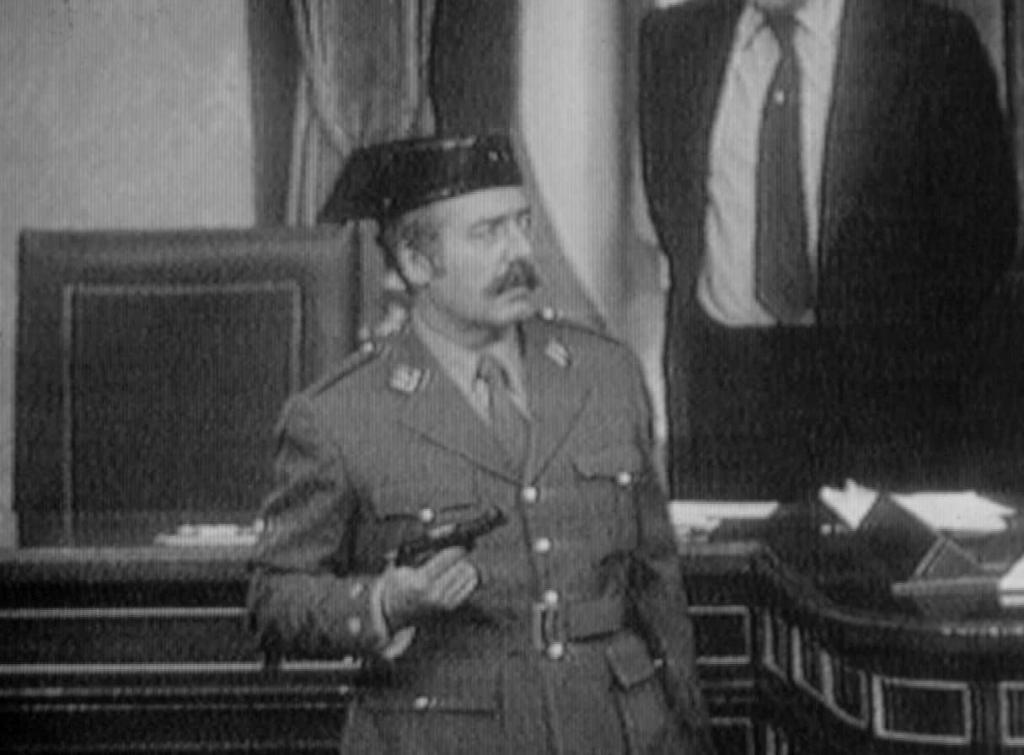
This is written on October 3, 1981 by José Luis Cortina, commander of the Higher Center for Defense Information (Cesid), to his superior, Emilio Alonso Manglano, in a letter now declassified by the Government in the documents related to the 23-F, focusing on one of the darkest angles of the coup: the involvement of the Spanish intelligence service.
In the letter, Cortina, who would ultimately be acquitted, requests "a communication channel" with the headquarters when the judicial process has already begun. This will ultimately only convict Captain Vicente Gómez Iglesias for "rebellion support" - and he will be pardoned in 1984 - but another document mentions four other implicated members as secure participants in the coup.
This is stated in another declassified Cesid document from Captain García Almenta, Sergeant Miguel Sales, and Corporal Monge Segura: "They knew the specific facts before they happened". The same report indicates that there are "indications" that Cortina was also involved, who despite his acquittal has been frequently pointed out as key in the coup attempt - he has even been labeled as a "coup spy" - and who met "in the days leading up to" the 23-F "with the Vatican nuncio" and "with the US ambassador, Mr. Toduman".
They, as stated in the document, supported "the column heading to Las Cortes". "Captain García Almenta had the resources, transmitters, receivers, and vehicles at his disposal and distributed them to Sergeant Miguel Sales, Corporal Rafael Monge, and Corporal José Moya Gómez to support the column heading to Las Cortes".
Furthermore, the internal report continues, "Captain Gómez Iglesias stayed in contact with Captain García Almenta and directed Corporal Rafael Monge in the march towards the Congress". Even "Sergeant Sales Maroto and Corporal Moya Gómez carried out surveillance missions in the area of the Congress", in favor of the coup plotters.
Once the coup failed, the document explains, "an order was given in the Unit to activate Operation Mister, dates were corrected, justifying the movements of the Unit personnel", to disguise the involvement of these commanders.
Who activated this "Operation Mister", according to the Cesid's own report? "Commander Cortina", meeting with Almenta, Sales, and Monge. It is then when an investigation begins and "contradictions" are noted in all their statements. Additionally, in solidarity with the investigation that focused on these Spanish secret service agents, "four agents" were "dismissed". None of these commanders were even investigated in the subsequent process.
The so-called 'Jaudenes Report', now declassified, reveals their maneuvers. Gómez Iglesias removed himself from the service on that 23-F claiming to suffer from a "kidney colic". Almenta ordered that morning of the 23-F to provide Moya, Monge, and Sales with three cars with "fake plates" and a different radio frequency than the group's, in order to "carry out a mission".
The group carries out surveillance missions around the Cortes, where a phone call is recorded, "from a phone booth", from Gómez Iglesias to Almenta. Monge participates in the surveillance "very nervous" upon realizing the seriousness of the situation and supposedly on Almenta's orders, highlights the report.
As the night progresses, the group considers the "need" for Gómez Iglesias to "enter the Congress", but suddenly they notice "numerous plainclothes agents outside" and realize that the coup has been defeated. On the morning of the next day, the 24-F, Almenta gives the same order as the morning before: the same three cars and the unusual radio frequency for the three agents. 'Operation Mister' has been launched to cover up the group's involvement in the coup attempt.
The 'Jaudenes Report', however, exonerates those four commanders based on discrepancies in their statements, assuming nevertheless that several of them hint at knowing the facts, but exonerating them.