Shark attacks are among the events that cause the most alarm, although the number of fatalities recorded each year worldwide usually hovers around a dozen. The number of victims is likely higher because, according to the US institution that has been investigating and documenting all known cases since 1958, "a significant fraction of incidents is likely not reported."
This organization is the International Shark Attack File at the Florida Museum of Natural History and includes records dating back to the 16th century. The 2025 data is being published this Wednesday and, as every year, analyze unprovoked bites, that is, incidents in which the affected person did not initiate contact with the animal, either intentionally or unintentionally. Activities that influence shark behavior, such as spearfishing, releasing it from a hook or net, attempting to touch or feed it, are not analyzed in this statistic, which serves to evaluate the biology of these animals, their behavior, and the risk they pose to humans.
What do the data from last year say? Shark bites returned to levels close to the average, following the significant decrease in 2024, when only 47 attacks and four deaths were reported. In 2025, there were 65 unprovoked bites worldwide, slightly below the average of 72 attacks recorded in the last 10 years. Those 65 attacks resulted in nine fatalities (compared to an average of six deaths in the last 10 years).
There were also 29 provoked bites - when the victim interacted with the shark first - resulting in three deaths. In other words, combining provoked and unprovoked attacks, at least 12 people died in a hundred incidents in 2025.
The USA and Australia continue to be the countries with the most cases, although there was also an incident off the coast of the Canary Islands, a couple of kilometers from a beach in Fuerteventura: a shark attacked the paddleboard of a British surfer before biting his leg. Despite having a deep wound in his thigh, the man managed to return to shore and receive medical attention.
Surfers like the one affected in the Canary Islands accounted for 32% of cases last year, while 46% of the victims were swimming and 15% were snorkeling.
The USA led the ranking in bites and Australia in fatalities. In 2025, there were 25 attacks in the North American country, accounting for 38% of incidents worldwide, although the number has decreased compared to the previous year. One person was killed: in California, triathlete Erika Fox, 55, was attacked by a great white shark (Carcharodon carcharias) while swimming in the open sea in Monterey Bay.
The shark attack capital
Although this death occurred in California, Florida is by far the state with the most attacks, particularly in Volusia County, often referred to as the shark bite capital of the world. In 2025, there were 11 attacks in the Sunshine State (compared to an average of 18 in the last five years).
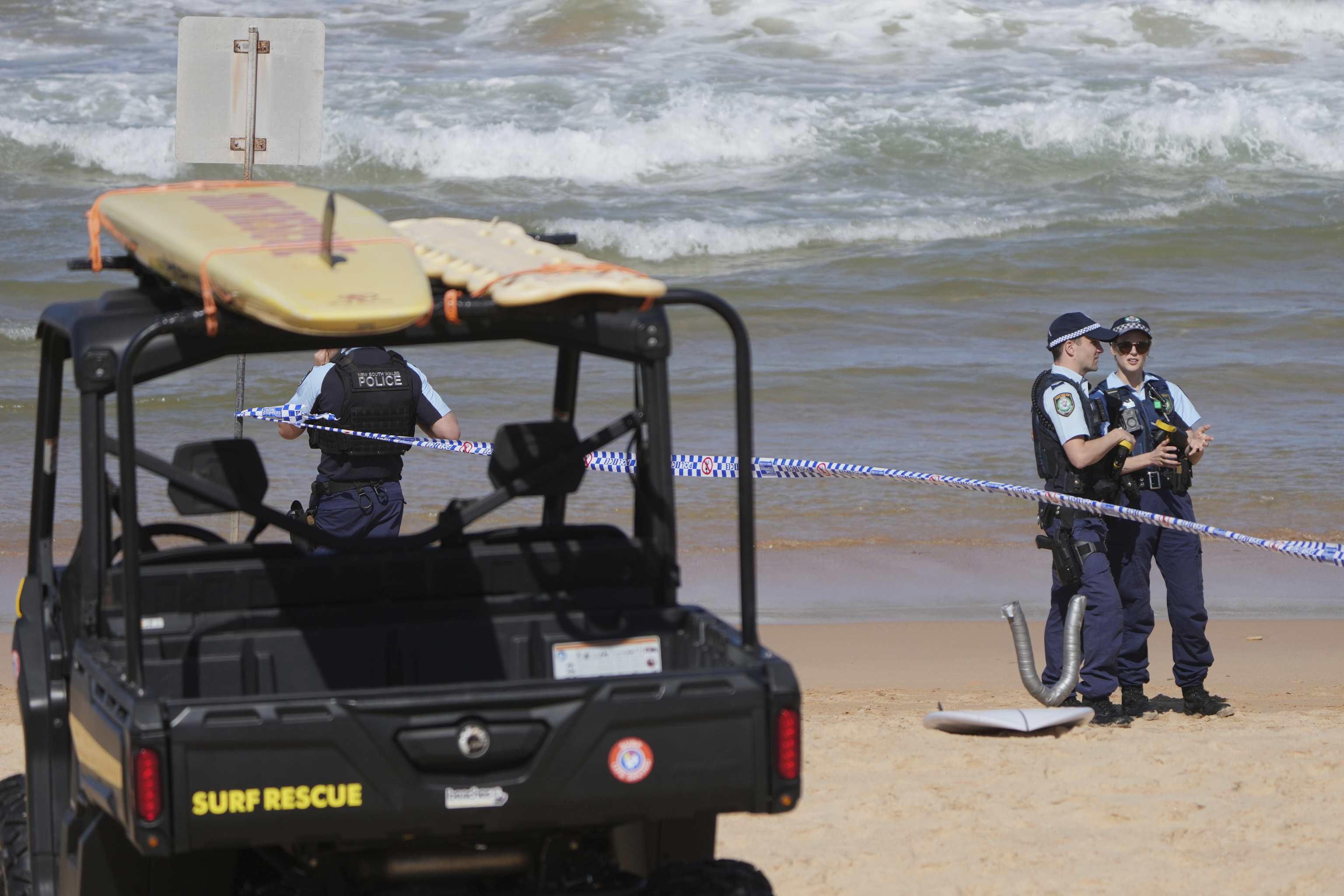
Australia ranked second on the list last year, with 32% of the bites and 56% of the deaths. Thus, there were 21 bites and five fatalities.
"If these bites had occurred anywhere other than Australia, they probably would have resulted in even more deaths. Their beach safety is unparalleled. Within minutes after a bite, they already have helicopters in the air ready to respond," said Gavin Naylor, director of the Shark Research Program at the Florida Museum of Natural History, in a statement.
Australian coasts are home to the three species attributed to the majority of serious bites: the aforementioned great white, the tiger shark (Galeocerdo cuvier), and the bull shark (Carcharhinus leucas). Their serrated teeth, powerful jaws, and large size - great white sharks can reach up to 6 meters in length - make even an exploratory bite potentially deadly.
Three of the deaths in Australia and the one in California are attributed to the great white shark. Last year also saw the first confirmed death caused by the bite of a sandbar shark (Carcharhinus obscurus), in an incident in South African waters. There were also fatalities in Vanuatu and Mozambique.
However, in most cases, the specific shark species cannot be determined, as witnesses often cannot identify it, coupled with the fact that several species are closely related and difficult to distinguish without thorough analysis.
According to Gavin Naylor, "shark bites are a consequence of the biology of the animals, weather conditions, and the number of people in the water at the time of the incident." Global patterns, he adds, "change only slightly from year to year. But regional incidents fluctuate greatly, and these local trends are interesting."
In fact, the report warns of the poor state of global shark populations, which remain well below historical levels. Thus, of the 1,200 known species, 30% are endangered. "It's a high number, especially because these animals have managed to persist for about 330 million years. They have survived the Permian Extinction and the Cretaceous Extinction. Clearly, they are resilient, and yet they are in this situation," says this expert.
Their decline is largely due to overfishing. In some countries, such as the USA and Australia, stricter protections have allowed certain populations to recover. In other regions, changes in temperature and water conditions are altering the distribution of sharks, which may give the impression of sudden population increases locally, even if global figures remain stable or decrease. Scientists have found that, even with increased protection, global shark mortality due to fishing has increased.
Just last week, researchers from the Spanish Institute of Oceanography and the University of Cadiz documented a new confirmed record of a great white shark in Spanish Mediterranean waters, specifically a young individual (2.10 meters) accidentally caught by a fisherman in April 2023 about 11 nautical miles off the coast of Denia and Javea.
Tips to avoid being a shark attack victim
Despite the commotion caused by attacks, scientists emphasize that the chances of being bitten by a shark remain extremely low, and drowning or being struck by lightning are much more common causes of death. Globally, lightning strikes cause approximately 24,000 deaths each year.
However, the risk of being bitten by a shark can be reduced by frequenting the waters where they live or traveling to countries where they reside. Recommendations from the International Shark Attack File include not swimming alone and always trying to do so with others nearby, avoiding swimming at dawn and dusk, staying away from areas where people are fishing, and not wearing jewelry. "If participating in shark tourism activities, it is recommended to avoid chumming tours, which are illegal in Florida but common in some regions of the world. Feeding sharks can teach them to associate human activity with food, which could increase the risk," this organization points out.