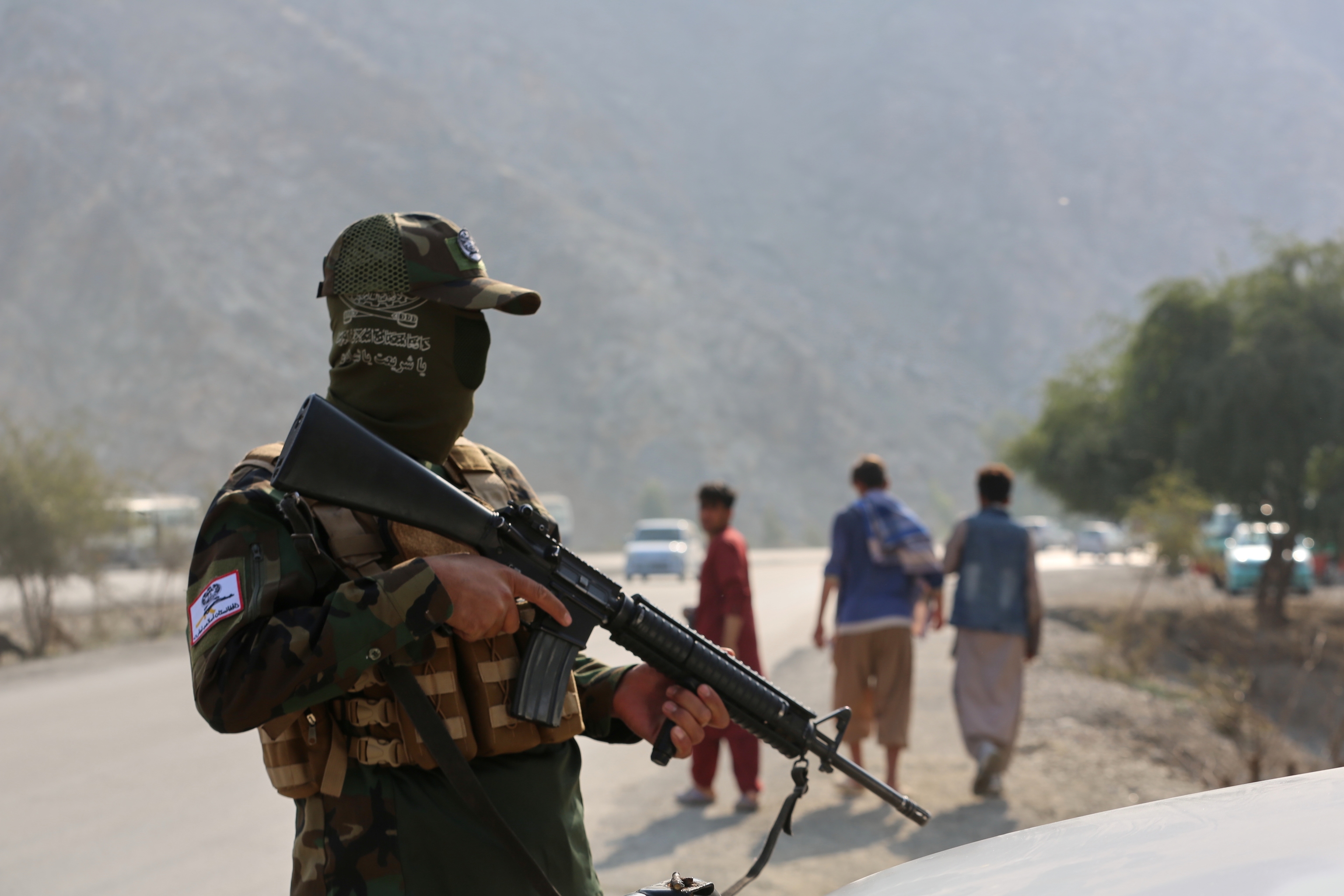
In the early hours of Friday, the sky over Kabul resounded with attacks by Pakistani fighter jets. Two other Afghan provinces were also bombed. Islamabad maintains that it was only responding to a previous attack launched from Afghan territory. It is another chapter in a historical rivalry. But the cross-border bombings and artillery exchanges are no longer mere border skirmishes: it is an increasingly direct clash that threatens to escalate a conflict simmering for decades.
In the morning, the Pakistani Minister of Defense, Khawaja Asif, spoke out on the social network X with a strong message: "Our patience has run out. From now on, we are in an open war between you and us," he wrote.
Everything escalated on Thursday night when the Taliban launched attacks on Pakistani positions along some sections of their porous and disputed border. Kabul stated that these attacks were in retaliation for a Pakistani bombing that left 18 dead last weekend. Hours later, the Pakistani army launched Operation Ghazab Lil Haqq, which can be translated as "Operation Just Fury".
The Taliban spokesperson, Zabihullah Mujahid, accused the "cowardly Pakistani army" of bombing Kabul and the southeastern provinces of Paktia and Kandahar, considered the spiritual birthplace of the Taliban. Pakistani authorities responded that, following the previous Afghan attack, their forces were punishing regime positions. Both governments promised to defend their territorial integrity "at any cost."
The war also involves numbers. Islamabad claimed to have killed 133 Afghan fighters and destroyed 27 military posts. Kabul, on the other hand, reduced its casualties to eight soldiers killed and eleven wounded, while raising Pakistani losses to 55 soldiers and claiming to have captured positions along the Durand Line, the disputed border.
The newspaper Al Jazeera, which has a wide network of correspondents deployed in both countries, reported that fighting continued throughout the day in various stretches of the border. "In response to repeated rebellions and insurrections by the Pakistani army, large-scale offensive operations were launched against Pakistani military bases and facilities along the Durand Line," declared the Afghan government spokesperson.
This 2,574-kilometer border between the two countries was drawn by the British Empire in 1893 without considering tribal or ethnic realities of the area. Since then, it has been a constant source of disputes, especially among the Pashtun communities divided between two states. Afghanistan has never fully recognized that dividing line. Each incursion, each outpost, and each barbed wire reopens a historical dispute that no government has managed to close.
"The armed forces are determined not to allow any threat to the country's security," said Pakistani Prime Minister Shehbaz Sharif on Friday. "There will be no leniency in defending the homeland, and every act of aggression will be met with an appropriate response."
The current escalation has a specific trigger: the activity of the Tehrik-e-Taliban Pakistan (TTP), the Pakistani insurgent group that has been fighting Islamabad since 2007 and maintains ideological and personal ties with the Taliban. Islamabad accuses the TTP of operating from hideouts in Afghanistan and carrying out, under orders from leaders hidden there, the wave of attacks that has shaken Pakistan in recent weeks. Kabul denies this. But the distrust is structural. Since the Taliban's return to power in Afghanistan in 2021, sporadic clashes have multiplied in the border regions.
Last weekend, the Pakistani army bombed alleged TTP camps and factions affiliated with the Islamic State on Afghan soil. According to Islamabad, dozens of militants were killed. Taliban authorities denounced that the attacks hit civilian areas, including a madrasa and homes in the east of the country, resulting in at least 18 deaths. The Afghan retaliation came on Thursday night: coordinated offensives along six border provinces and the release of videos showing convoys and gunfire in the darkness.
Simultaneously, violence spread to the Torkham crossing, one of the main commercial and human crossings between the two countries. Refugee camps in Nangarhar were hit, with several injured, including women and children, according to Kabul. Evacuations also took place on the Pakistani side.
"After the withdrawal of NATO forces, peace was expected to prevail in Afghanistan, and the Taliban were expected to focus on the interests of the Afghan people and regional stability. However, the Taliban turned Afghanistan into a colony of India," continued the Pakistani Minister of Defense in his message on X. "They gathered terrorists from around the world in Afghanistan and began exporting terrorism. They deprived their own people of fundamental human rights. They stripped women of the rights granted to them by Islam."
With the mediation of Qatar, Islamabad and Kabul sealed a fragile truce last autumn, more tactical than political, conceived to cool the border without addressing the core of the conflict. The agreement temporarily contained the most intense fighting and opened the door to indirect contacts, but it never materialized into a solid verification mechanism or clear commitments regarding the activities of armed groups.
Since then, intermittent exchanges of gunfire and mutual accusations have repeated along the Durand Line, eroding the minimal trust necessary to sustain the ceasefire. In recent days, that fragile containment has been shattered: clashes have multiplied in scope and depth, with bombings, nighttime offensives, and official rhetoric once again placing both countries on the brink of a large-scale war.