The Lebanese group Hezbollah joined the large regional war initiated by Israel and USA by attacking Iran with a barrage of missiles and drones against the neighboring country's territory, to which the Israeli air force immediately responded by bombing the Lebanese capital and many other locations in the south of the country.
Israeli spokespeople indicated that the attacks on Lebanese territory targeted significant leaders of the armed group loyal to Tehran. According to Al Arabiya, one of the founders of the also known as the Party of God, the deputy Mohamed Raad, died in this initial barrage.
Israeli bombings shook the night in the capital, causing immediate chaos, with thousands of people fleeing from the southern neighborhoods, populated by the Shia community that forms the ranks of Hezbollah.
Despite the ceasefire that Israel had agreed upon with Hezbollah in November 2024, the Israeli aviation has ended the lives of hundreds of Lebanese, including dozens of civilians, in repeated attacks throughout the country, without the irregular forces under the command of Naim Qassem responding until now.
Hezbollah claimed responsibility for the missile launches, stating that they were carried out "in defense of Lebanon and its people, and in response to repeated Israeli attacks."
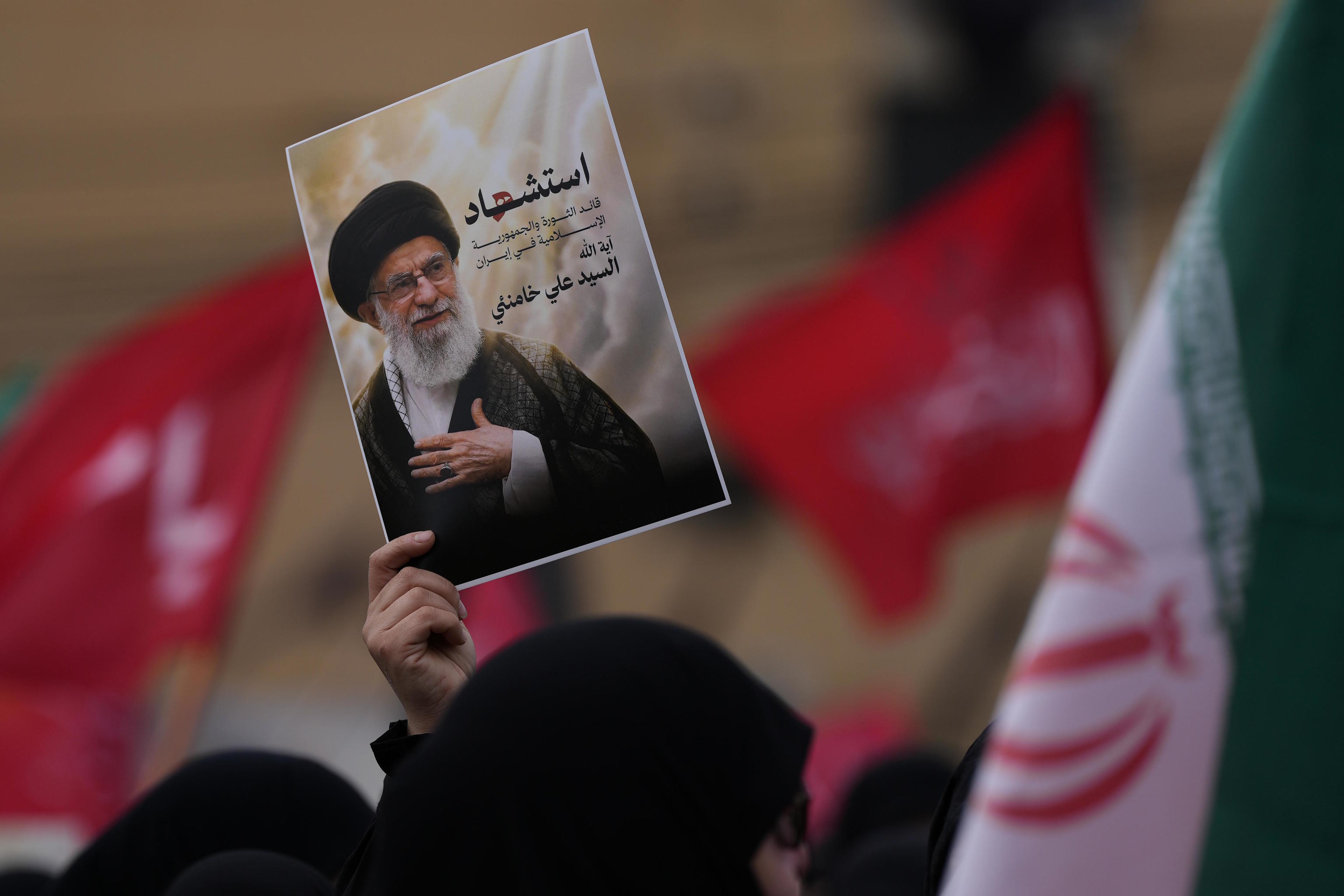
The Party of God had warned that it considered the figure of Ayatollah Ali Khamenei as a "red line" since the Iranian cleric was not only their main political support but also their spiritual guide, a key element in the ideology of a group where religion plays a crucial role.
Thousands of Hezbollah supporters had gathered hours earlier in the southern neighborhoods of Beirut and in many other towns in the nation to commemorate the death of Khamenei with chants demanding "revenge."
"It's as if they had killed the Pope (Catholic). Khamenei was our Pope. The US and Israel have chosen war. They wanted it, and they will have it for years. We only seek revenge," declared Ahmad Hannan, a 36-year-old Lebanese, to this newspaper during the Beirut gathering.
The newspaper L'Orient Le Jour reported that at least 7 people died in Israeli attacks on a population in the south of the Lebanese state, near the city of Nabatiyeh.
The Israelis responded with artillery fire, helicopters, and planes.
The Lebanese government is scheduled to meet urgently this morning to try to contain a crisis with enormous repercussions, as the Prime Minister, Nawaf Salam, criticized the missile launches against Israel.
"Regardless of who is behind it, the rocket launch from southern Lebanon is an irresponsible and suspicious act that endangers Lebanon's security and gives Israel pretexts to continue its attacks," he stated on social media.
Tensions between the government and Hezbollah forces have been escalating over the past few months as the central authority demanded that the paramilitary group surrender its weapons, a demand that its leaders have refused.
Salam added in his statement that he intended to "apprehend the perpetrators and protect the Lebanese population."
The escalation has led several experts to warn that the political clash could lead to a new fratricidal conflict like the one the country experienced in the last century.
Israel demanded that the population of over fifty villages and towns in southern Lebanon evacuate the area, stating that they planned to systematically bomb it.
"Hezbollah's actions force the Israel Defense Forces to act against them. For your safety, evacuate your homes immediately and move at least 1,000 meters (0.6 miles) away from your village towards open areas," a spokesperson for the Tel Aviv forces stated on social media.
According to Israeli General Eyal Zamir, Chief of the General Staff of the nation's forces, "Hezbollah launched a campaign against Israel on Wednesday night and is fully responsible for any escalation. Any enemy threatening our security will pay a high price."
Other Israeli leaders have already indicated that their forces plan to "intensify" the bombings in the coming hours.