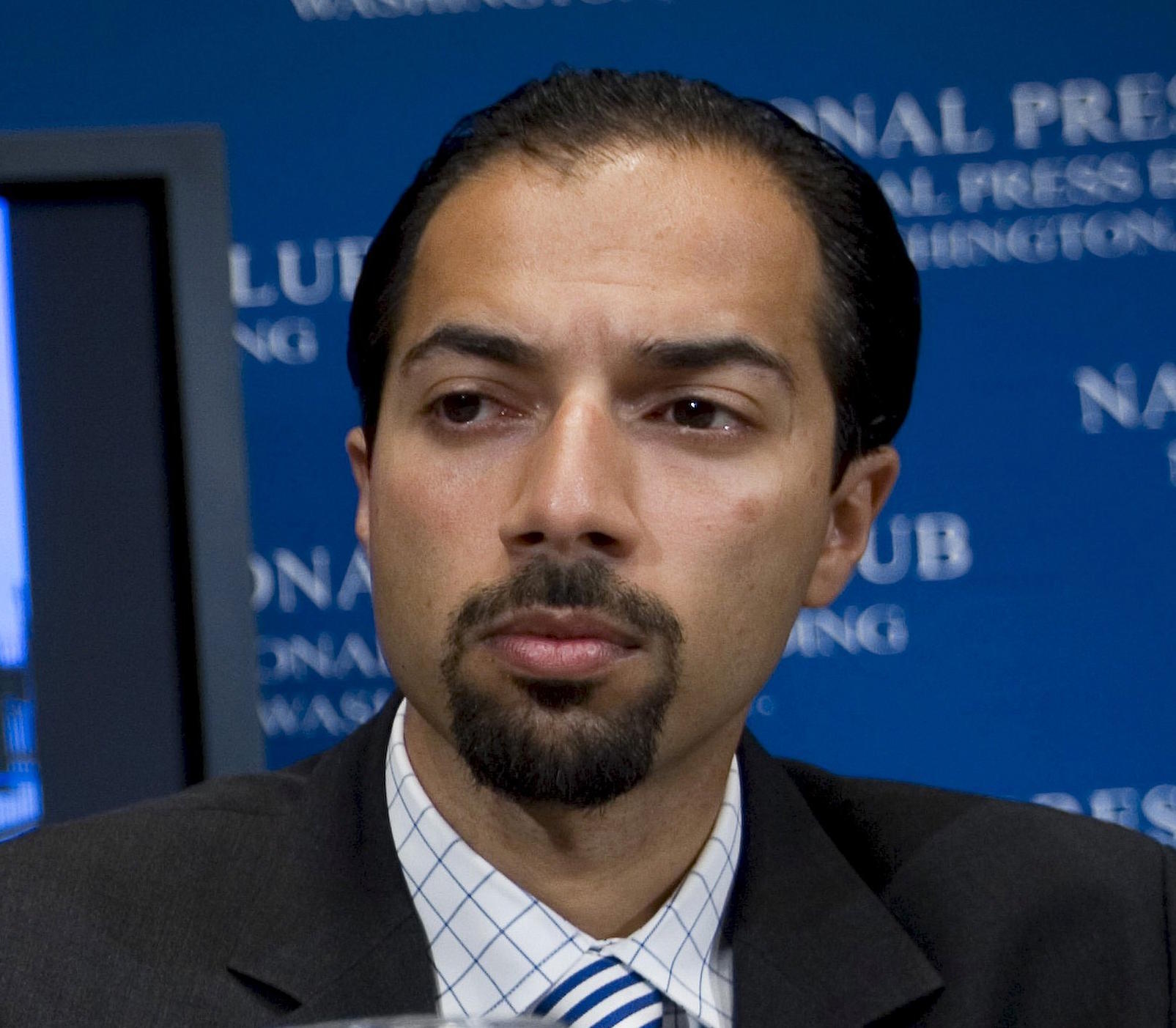
Born in Iran, into a family of Mazdeist tradition (followers of Zoroaster) who fled the Islamic Republic and raised in Sweden, Trita Parsi has been professionally active in the United States for the past two and a half decades, where he is perhaps the strongest advocate for dialogue with the Islamic Republic. Parsi is the founder and former president of the Iranian-American National Council (NIAC) and the founder and CEO of the left-leaning Quincy Institute think tank.
Could this war have been avoided?
Iran offered a tremendously favorable economic agreement to the United States. However, Trump, who always claims to prioritize business above all else, rejected it. This suggests that he always considered war as the first option.
Additionally, Donald Trump imposed conditions on Iran that made reaching an agreement very difficult. It was not just about abandoning the nuclear program, but also about missiles and support for Shiite groups in the region.
Is the objective of this bombing campaign to leave Iran in a state of weakness similar to Iraq after the 1991 invasion of Kuwait, so that its regime can be overthrown or at least unable to control regions like Azerbaijan, Kurdistan, or Baluchistan?
In 1991, the objective of the international coalition led by the United States was by no means regime change. Now it is.
What is Iran's strategy in the conflict?
To resist, inflicting as much damage as possible on the United States. Tehran is aware that the U.S. grows weary of prolonged wars and is sensitive to its own human losses. It also knows that this is not a popular war among Americans. Donald Trump's base voted for him because he was seen as the candidate for peace and has no interest in further wars in the Middle East.
If this is a war of attrition, Israel and the United States will eventually prevail. Iran cannot rely on the support of Russia and China, while the U.S. can continue producing weapons.
The June war ended because Israel was running out of missile defense systems. Additionally, although some of Iran's missile technology is of Russian and Chinese origin, they are entirely manufactured in Iran. At the moment, it is not clear who might run out of missiles first. The U.S. was also starting to face issues with its stock of THAAD anti-missile missiles when it enforced the ceasefire in June.
Hasn't the U.S. replenished its arsenals since June, especially the THAAD anti-missile missiles?
Yes. However, they believed they had a sufficient number of them in June, which turned out not to be the case. Iran has also accelerated its missile production.
Will this war accelerate the crisis of the Islamic Republic and the protests to the point of forcing a regime change, as Trump now claims he wants? Or will it generate a nationalist reaction in support of the ayatollahs?
A bombing campaign has never in history led to a change in a country's political regime. Instead, it fosters patriotism and leads people to rally around the national flag. I believe that is the most likely outcome. However, it is important to consider that the Iranian regime is extremely unpopular among the population, so it is not impossible. The question, of course, is what would follow and whether there would be stability or chaos.
What is the position of the Arab countries?
They are in a very complicated position. They do not want this war. For them, the current situation is satisfactory, with a weakened Iran after its defeats against Israel, the U.S., and its allies Hamas and Hezbollah.
They do not want a regime change.
Furthermore, all of this is presenting them with a long-term strategic problem: if the U.S. is the guarantor of stability in the region, why have they launched a war with Israel where they suddenly become targets?
This is a situation similar to what Qatar experienced in September when Israel attacked the Hamas headquarters in that country. Exactly. The largest U.S. airbase in the Gulf is in Qatar, which has hosted negotiations between Israel, the U.S., and Hamas, and then they are bombed?
This is leading to consequences in the region towards diversifying their alliances and their purchases of military equipment to reduce dependence on the U.S. China is one of the beneficiaries of this situation.
So, do the Gulf countries not want a regime change in Iran?
That possibility terrifies them. Iran is a country of nearly one hundred million inhabitants, and the consequences of a regime change could be very negative. Fragmentation of Iran, disintegration of its state, or a civil war could destabilize the entire region and its effects could easily reach Europe. It could lead to millions of displaced people, economic disruption, and proliferation of armed groups. The example of Iraq after the U.S. invasion is very present.
What about the position of the Europeans?
The responses I have seen, such as those from French President Emmanuel Macron and European Commission President Ursula von der Leyen, seem laughable. They do not condemn this act of aggression [by the U.S. and Israel], but they do condemn Iran's response. When comparing this stance to the opposition to the invasion of Iraq 23 years ago, it is sad to see how little remains of European credibility and moral integrity.
What do you think of the response from the Democratic Party of the United States?
The key is that Congress is expected to vote on Tuesday on the War Powers Act [which requires the president to seek authorization from Congress to launch a military operation, and that permission must be renewed every 90 days]. It is possible that what prompted Trump to act now is the fear that this Act would not be approved, leaving him without the legal basis to bomb. This situation is similar to that of 2003. The progressive wing of the Democratic Party opposed the invasion of Iraq back then, while the centrist wing voted in favor. It seems that the same scenario will unfold this time.