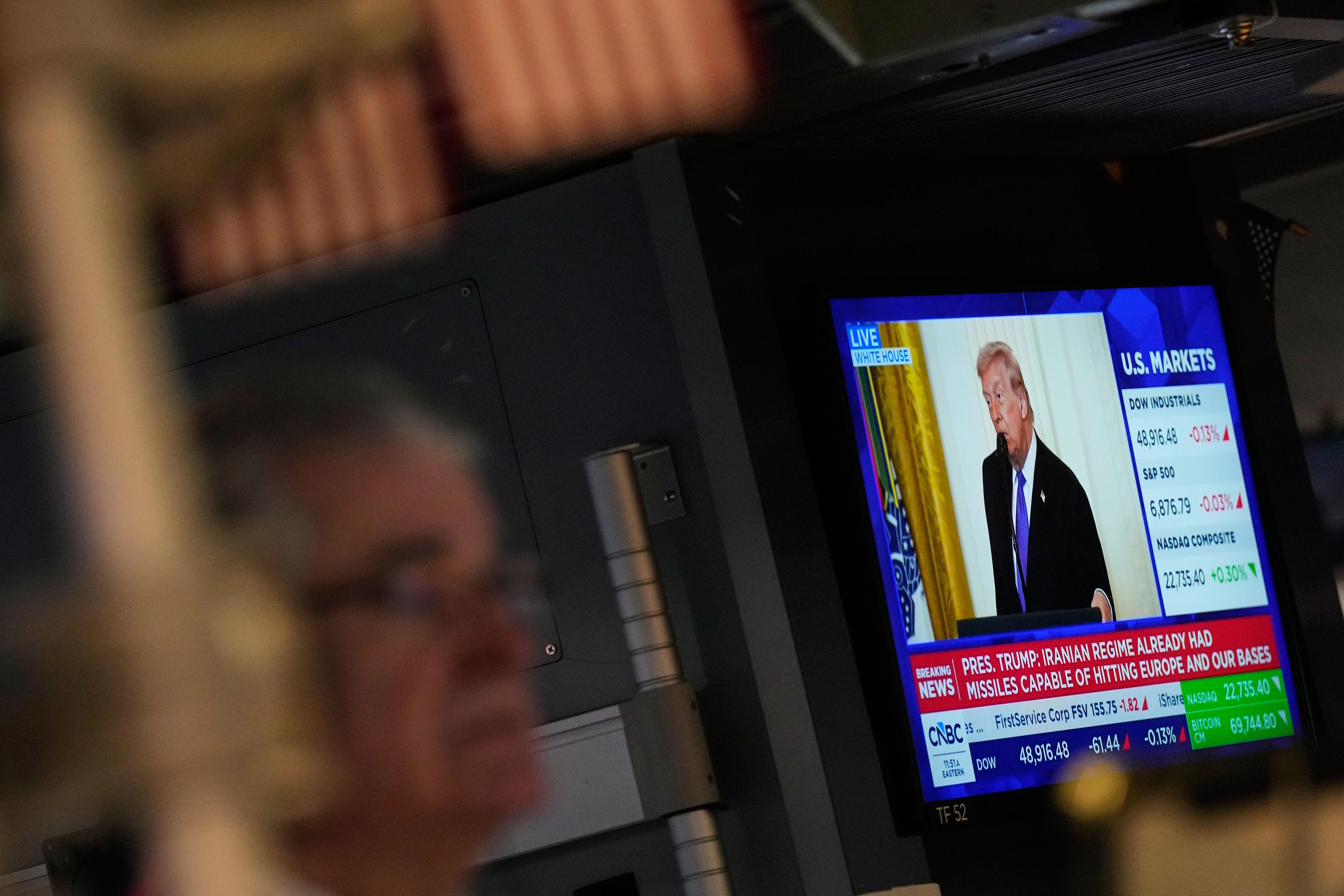
The US and Israel's attack on Iran and the potential response and retaliation by Tehran add a new level of tension to markets worldwide. In the coming hours, their definitive reaction will be known, as the markets remained closed at the beginning of the conflict. Despite the ongoing instability in the Middle East in energy and fuel markets before last Saturday, the world is navigating in uncertainty. Late yesterday, it was reported that United Arab Emirates will keep the Abu Dhabi Securities Exchange (ADX) and the Dubai Financial Market (DFM) closed today and tomorrow, the first sessions after Iran's attack.
In other markets, hours before the European and American openings, a moderate decline in index values was expected. At the time of this edition's closing, futures of one of the most representative in the US, the Dow Jones Industrial Average, indicated a drop of over 1% for Monday; for Europe's Euro Stoxx 50, comprising the 50 largest companies in the Old Continent, a decrease of less than 0.3% is expected.
Apart from the stock market reactions, attention will turn to commodity markets. Specifically, oil and gas, and even the evolution of gold (as a safe-haven asset) on a day like today.
In this context, yesterday the price of the Brent crude oil barrel, a global benchmark, rose by 10% to around $80 per barrel in after-hours trading, as reported by Reuters from oil traders. The debate now centers on whether crude oil prices will climb to $100 this Monday, the first session after Saturday's attack. On Friday, in the hours leading up to the attack, it closed at $73, its highest level since July.
Forecasts, such as those from Renta 4 analysts, hours before the attack, warned that amid rising tensions, the geopolitical premium would increase, pushing prices higher. They noted that this would happen even with an OPEC+ intervention, which also occurred yesterday: the oil-producing countries' alliance led by Saudi Arabia and Russia confirmed, after a brief meeting following the Middle East attacks, that they will increase crude oil production by 206,000 barrels per day in April, "in light of stable prospects and low oil reserves." There was no mention of Iran's war, which jeopardizes 1.6 million barrels of daily oil exports.
Behind the fluctuations in oil prices, whether significant or not, there are various causes. It is worth noting that Iran accounts for 10% of global oil production, ranking fourth in the OPEC (Organization of the Petroleum Exporting Countries); however, 90% of its exports are sent to China. The question remains about the measures the Asian giant will take in the face of a decline in its fuel reserves.
Furthermore, following the resolution of US tensions with another oil-producing country, Venezuela, and the subsequent control of its production, the rest of the world took note and stockpiled reserves. According to the International Energy Agency data, there is enough oil for everyone, with the increase in oil supply surpassing demand. There is an oversupplied market and, moreover, cautious: in February, other Gulf producers (such as Saudi Arabia or Iraq) increased their shipments to other countries, as reported by outlets like Bloomberg.
Additionally, at the time of this edition's closing, there have been no reported attacks on critical energy or fuel infrastructure, which could significantly disrupt markets by directly reducing crude oil production.
The key to economic tensions now lies in the passage through the Strait of Hormuz, which has not officially been closed by Iran -yet. The net impact of its closure would result in a loss of between eight and ten million barrels per day of crude supply, even if alternative routes were used, as stated by analysts from the specialized firm Rystad Energy. In anticipation, they expect prices to rise by $20 to around $92 per barrel in today's reopening.
Even without a closure, an increase in logistics prices is already anticipated. Yesterday, after several attacks on ships passing through the canal were reported, oil companies, shipping companies, and trading houses suspended shipments of crude oil, fuels, and liquefied natural gas through the Strait of Hormuz, according to sector sources cited by Reuters. Major shipping companies MSC and Maersk instructed their vessels to seek safety and cease any activities in the Gulf region.
The halt in trade in the region will result in delays, itinerary changes, or schedule adjustments in transportation. Therefore, it is also inferred that there will be an increase in prices in this sector, as seen during the crisis in the Red Sea and the Suez Canal.