The Prime Minister of the United Kingdom, Keir Starmer, has authorized the United States to use the bases of his country to launch attacks on Iran. He is the first European leader to do so. And his decision is a tremendous help to U.S. forces because it could open the door to the use of the most destructive aircraft of the U.S. Air Force: the B-1, B-2, and B-52.
The key lies in two bases: Fairford, 120 kilometers north of London, and Diego Garcia, in the Chagos Archipelago in the Indian Ocean. These are two of the only four military installations in the world adapted for continuous use by the B-2 bomber. The other two are Whiteman in Missouri, where they are based, and Guam in the Mariana Islands in the Pacific.
The reason is that this aircraft is incredibly delicate. The B-2s, for example, need special hangars with a temperature between 18 and 24 degrees Celsius and a humidity level between 40% and 50% to prevent the deterioration of the radar-invisible coating and electronic systems they carry.
B-2s can fly from Whiteman to Iran, drop their bombs, and return, as they did on June 22 when seven of them attacked two Iranian nuclear facilities, and again on the night from Saturday to Sunday when four of them bombed underground missile bases. But that is a very long journey. The straight-line distance from Whiteman to Tehran is 10,500 kilometers, which means missions of 21,000 kilometers. From Diego Garcia, it is exactly half that: 5,250 kilometers. And from Fairford, even less: 4,425 kilometers.
This allows the U.S. military's mission tempo to accelerate. It reduces fuel consumption, making it easier to release tanker aircraft, which can then refuel Israeli and U.S. fighter-bombers, and also limits the wear and tear on the bombers.
It's not that the B-2s cannot carry out missions from other bases. But they cannot do as many as if they were at one of these four installations. And these bombers are the only ones capable of launching Massive Ordnance Penetrator (MOP) bombs, designed to attack hardened underground targets, such as those believed to be part of the Iranian nuclear program - which the U.S. and Israel have not mentioned in this war, even though they say it is the main reason for it - and missile sites. If the campaign lasts, as Trump has said, four or five weeks, maintaining the pace of the attacks is crucial.
Having the B-2s near the theater of operations is crucial for the United States because they have only 19 units of that aircraft. This is logical because, in today's dollars, each of these planes is literally worth its weight in gold, despite the significant appreciation of that precious metal in the last year: $4.5 billion each. Of the 19, usually only half - that is, 10 - are in service. This makes unit rotation very complicated.
The opening of British bases also allows the U.S. to more easily employ its other two strategic bombers: the B-1 and B-52. The former can perform multiple functions: being a flying warehouse with 36 radar-invisible cruise missiles, conducting precision bombing, and also carrying out anti-ship missions, which is especially important given the increasing significance of the Strait of Hormuz.
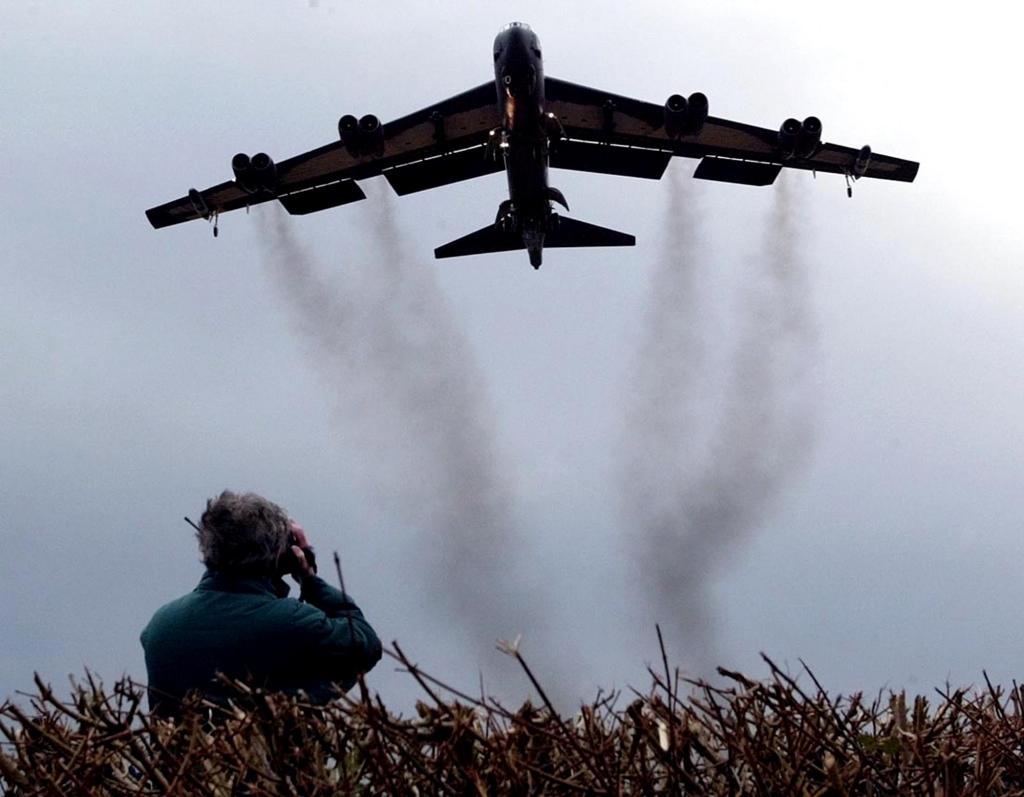
The B-52s are missile trucks. Each one can carry up to 20 cruise missiles and remain in the air for hours, for example, near Iran, launching their projectiles as targets emerge. This can facilitate the destruction of Iranian missile launchers. Paradoxically, they are very old aircraft. The 76 units in the U.S. fleet are between 63 and 85 years old. However, these aircraft have demonstrated extraordinary adaptability and design robustness that have always kept them at the forefront of U.S. defense.