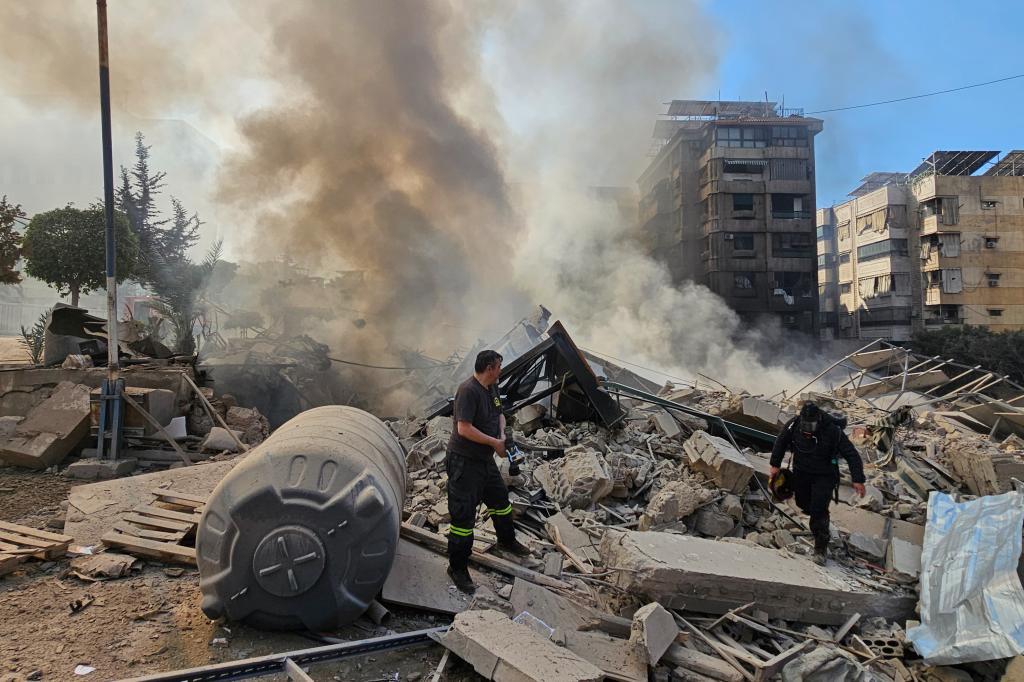
According to the latest data from the Iranian Red Crescent, the death toll in the country has now risen to 550 people since last Saturday, in what is shaping up to be the most serious regional conflict of the decade. Violence has reached healthcare facilities, causing chaos at Gandhi Hospital in the north of the capital, where a projectile impact forced a panic evacuation.
The Iranian President, Masoud Pezeshkian, has denounced these bombings as "an attack on life itself." In an institutional statement, Pezeshkian was clear: "Attacking patients and children blatantly violates humanitarian principles. The world must condemn it. Iran will not remain silent or yield to these crimes." The offensive has not been limited to the capital; cities like Sanandaj and Kermanshah have also seen civilian casualties following the bombing of residential buildings. Meanwhile, the Israeli military has claimed responsibility for attacks on command centers, reporting that "The (Israeli military) targeted 10 facilities belonging to the Iranian Ministry of Intelligence, the main intelligence body of the regime, as well as many Quds Force installations."
The controversy over Iran's nuclear potential is once again at the center of attention. While the Iranian ambassador to the UN, Reza Najafi, asserts that "Their justification that Iran wants to develop nuclear weapons is simply a big lie" and describes their program as "peaceful," the joint forces of Washington and Tel Aviv have resumed attacks on previously damaged facilities. However, the International Atomic Energy Agency (IAEA) has clarified that it has no evidence of recent attacks on these types of plants. Politically, dialogue seems completely broken.
Following the failure of meetings in Geneva, the Iranian regime has ruled out returning to the negotiating table. Ali Larijani, a senior security official, has warned that "unlike the United States, we are prepared for a long war," stating that "We will not negotiate with the United States." Tehran's retaliations have severely hit the energy interests of Gulf countries.
The drone attack on the Ras Tanura refinery, owned by Saudi Aramco, and the halt in gas production in Qatar have shaken global markets. From Doha, they have warned that the country "reserves the right" to respond to aggressions that "cannot go unanswered." This instability has caused an 80% drop in maritime traffic through the Strait of Hormuz, a vital route for 20% of the world's oil. With air transport interrupted and neighboring countries like Turkey and Azerbaijan receiving refugees, the region faces unpredictable consequences for the global economy.