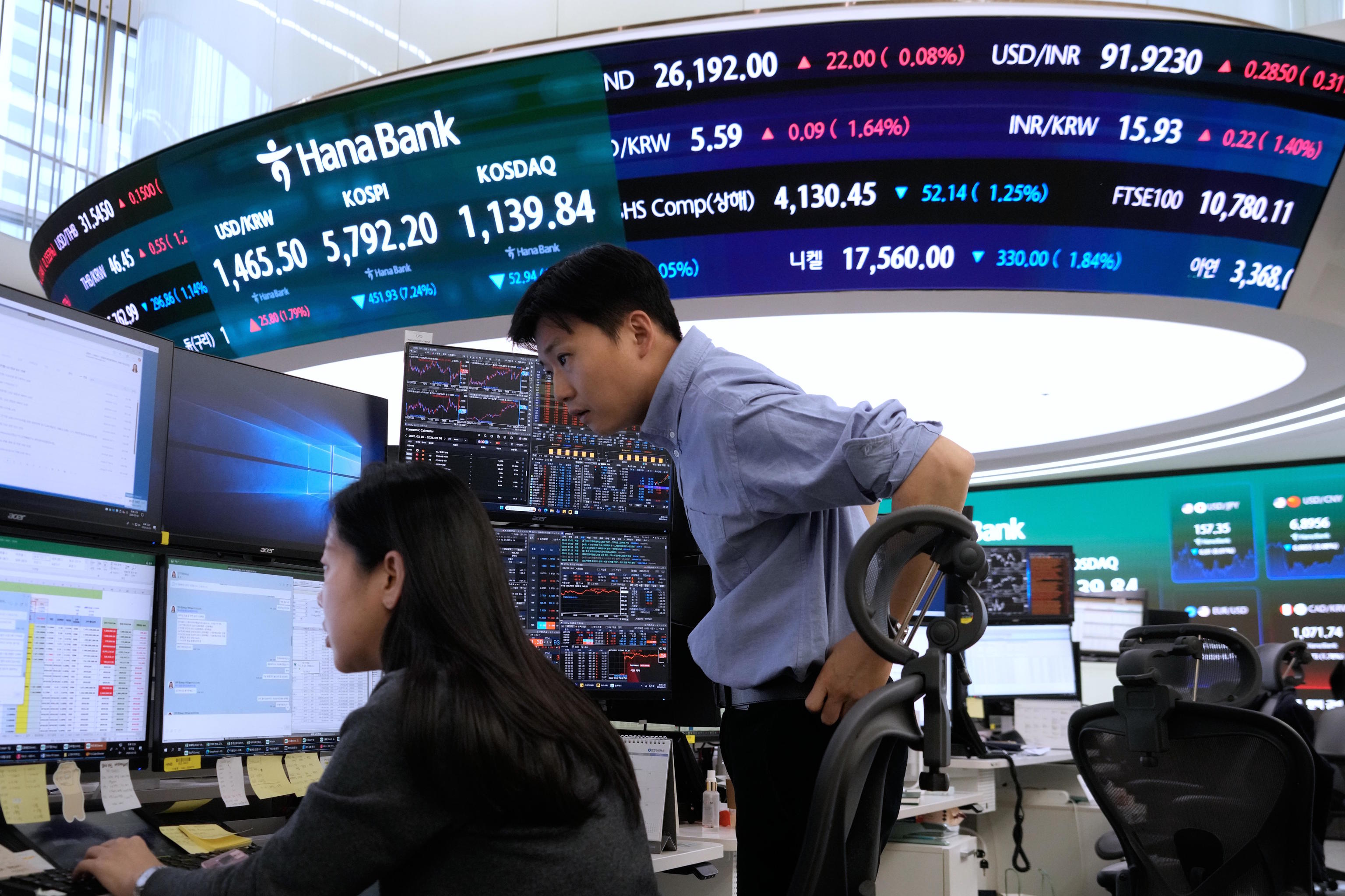
After yesterday's session, it is clear that no sector escapes the uncertainty that is putting pressure on the markets following the US and Israel's attack on Iran last Saturday. What affects a price in one sector impacts - for better or for worse - another.
Broadly speaking, market forecasts regarding the impact on the price of oil and gas were confirmed: the value of the former soared to nearly $80 per barrel of Brent, and the price of the latter was fueled by the decision of one of Qatar's largest oil companies to halt production, causing its cost to increase by almost 50%.
In terms of sectors, the impact on companies within the war conflict began to materialize. In an initial analysis, Goldman Sachs analysts identified three types of companies clearly affected by the situation in the Middle East: airlines, airports, and transportation companies. The three share a common element: they are highly sensitive to increases in oil prices.
In the case of airlines and airports, they suffer from fluctuations in travel demand due to geopolitical risks. With a significant portion of critical airspace between Europe and Asia effectively closed, at the time of the analysis, only a narrow corridor between Oman and Saudi Arabia remained open, significantly reducing travel capacity and demand in the short term. The damage will be more severe for those with high exposure to Asia. In this situation, airports are affected by the reduction in passengers. Everything will evolve based on the severity and duration of the conflict.
This analysis was reflected in the stock prices of some companies in the sector, such as IAG which saw a 4.72% drop in value in yesterday's session. Similarly, within the Ibex 35, Amadeus experienced a 2.58% decline, and Aena a 1.12% decrease. In the case of the latter, the airport network had a total of 32 scheduled flights to the Middle East as of yesterday morning, affecting routes to Saudi Arabia, the United Arab Emirates, Israel, Jordan, and Qatar. Globally, more than 3,400 flights with origins or destinations at the seven main airports in the Middle East have been canceled.
Airspace is also shared with logistics. Between airspace restrictions and cargo capacity, it is likely that air transport rates will increase, at least in the short term, according to analysts. "The overall complexity of the supply chain is also likely to drive increased demand for services from asset-light logistics companies," noted Goldman Sachs. "The closure of airspace in eight countries will result in longer flights with higher fuel costs and higher airfreight rates," added the Spanish Shippers' Association.
Thus, Ibex 35 companies most exposed to trade in the Middle East, such as Inditex and Puig, were the most affected with respective share price cuts of 4.86% and 4.34% in yesterday's session.
Not to be overlooked is maritime transport (for containers). Goldman Sachs analysts warn that, although the Strait of Hormuz "is not a major artery for regular liner networks and therefore unlikely to affect the supply side as the Red Sea crisis did [when companies covered costs by increasing freight rates], depending on the duration of the conflict and its impact on oil markets, it could be negative for demand." Meanwhile, an increase in transport volume through the Red Sea requires additional security measures for vessels due to the region's instability.
In this regard, the Spanish Shippers' Association points out that "beyond the impact on the oil market, other goods such as fashion, technology, or industrial spare parts are being greatly affected by the situation in the Strait of Hormuz." They highlight the role of Jebel Ali Port in Dubai, the "logistical brain of the Middle East" as one of the few ports in the world capable of simultaneously receiving several Ultra Large Container Vessels, which are ships with a volume of over 18,000 or 20,000 TEU (twenty-foot equivalent units). "The world's largest shipping lines have Jebel Ali on their main routes," they add.
Another option is road transport. This is where financial analysts see an opportunity for companies that handle a higher volume of traffic. They point to companies like Ferrovial, although it experienced a 1.46% drop in the value of its shares yesterday due to its exposure to the Middle East. However, not everything is smooth sailing in the land logistics world: based on data from the oil sector, the National Federation of Spanish Transport Associations (Fenadismer) warned transporters that diesel prices could increase by 20 cents per liter in the coming days. This "devastates companies" whose operating costs are 40% fuel, they explained, but it will also impact prices as it is a value that is updated weekly.
On a more positive note, but still within the conflict's impact (due to the escalation of war and fuel prices), energy and defense companies were highlighted in yesterday's forecasts by Renta 4 analysts. It is not surprising, then, that in the Ibex 35, Repsol and Naturgy were boosted with increases of 5.6% and 1.37%, respectively, fueled by the rise in oil and gas prices. They were followed by Enagás with a 0.36% increase in its share price, in contrast to Solaria, which saw a 4.01% decrease in its stock price, or Endesa, with a more modest 0.72% drop associated with its exposure to the Middle East. On a more international scale, the British company Shell increased its share value by 2.90%, while the French TotalEnergies did the same with a 3.09% rise.
In the defense sector (Spanish), Indra started the day strong (rising 3.5% at the opening) but ended its trading session with a 0.48% drop in the value of its shares as logistics problems unfolded, strategic changes in US military bases, and attacks on UK bases. At the European level, companies like Rheinmetall closed the day with a 2.16% decrease in their stock price, while Leonardo stood out from the declines, driven by a 2.50% increase in its share price.