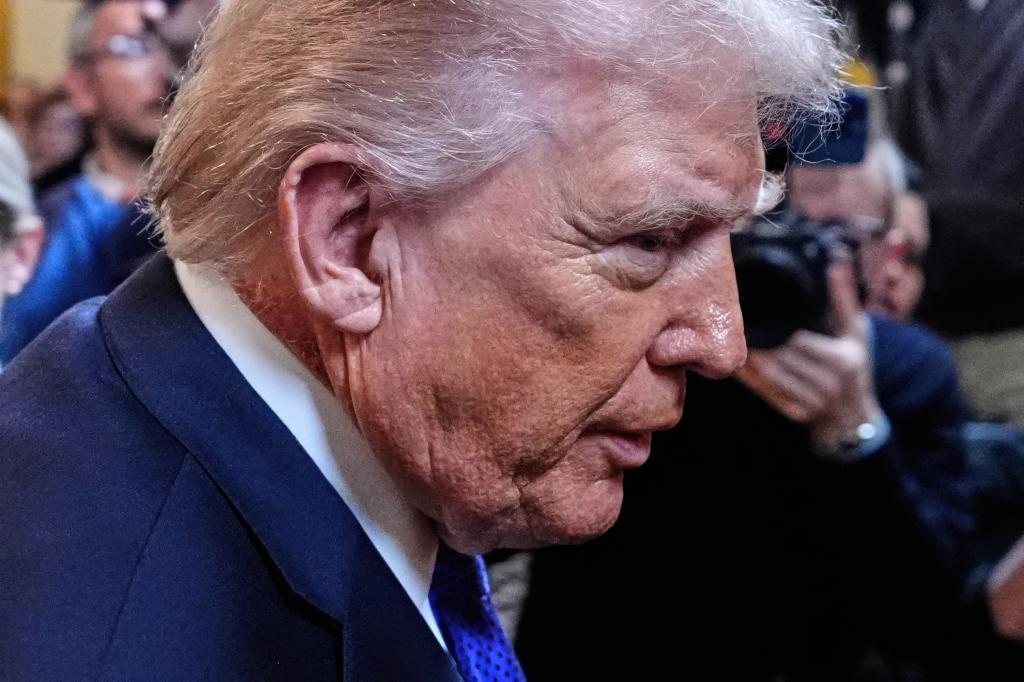
It was inevitable. The President of the United States, Donald Trump, has lashed out against Spain and the Government of Pedro Sánchez on Tuesday, threatening the possibility of imposing an "embargo" and breaking "all agreements" due to Moncloa's decision not to allow the use of U.S. bases in our country for military operations against Iran. He did so from the Oval Office during a joint appearance with the German Chancellor, Friedrich Merz. Without being asked about it, simply when addressing the assistance of Germany and other countries and NATO support.
"Some countries have been very good, great. The head of NATO, Mark Rutte, is fantastic. But some European countries, like Spain, have been terrible. In fact, I told Scott to cut all agreements with Spain," he said referring to his Treasury Secretary, Scott Bessent. Initially, it may have seemed like he was talking about the past, about the clashes after the NATO summit in The Hague and the push to increase spending to 5%. But then the President returned to the subject explicitly discussing how laws give him the option to use "embargoes" as punishment. And "better today than tomorrow," Trump said.
The President recalled how the disagreement dates back to defense spending but has worsened. "To begin with, it started when all European countries, at my request, agreed to pay 5% [of GDP on defense spending], which they should be doing, everyone was enthusiastic: Germany, everyone, but Spain did not. And now Spain has said we cannot use their bases," the President pointed out.
"We could use the bases if we wanted to. We could simply fly and use them. No one is going to tell us not to use them, but we don't have to. They were hostile, so I said, 'We don't want to.' Spain has absolutely nothing that we need, apart from great people. They have great people, but they don't have great leadership," Trump said referring to the Prime Minister.
"As you know, they were the only NATO country that did not agree to increase spending to 5%. I don't think they would have agreed to increase anything. They wanted to keep it at 2% and they don't even pay that 2%, so we were going to cut all trade with Spain. We don't want anything to do with Spain. And by the way, I'm not happy with the United Kingdom either," Trump concluded, without explaining if it is a figure of speech or if there are serious economic retaliation instructions in place. In the past, he played with the hypothesis of expelling our country from NATO or imposing specific tariffs, but then it came to nothing.
Minutes later, however, Trump returned to the subject, showing his deep displeasure with our country. In response to a question about tariffs, after the Supreme Court ruling that declared them illegal, Trump brought up the case of our country again. "We have to take care of the nations that have been good and fair to us, and we will take care of the other nations (...) but we have the right... for example, we talk about Spain. I could stop trade tomorrow or today. Even better, stop everything related to Spain. All businesses related to Spain have the right to stop. An embargo. I could do whatever I want with them, and we could do it with Spain," he hypothesized, before handing over to his Treasury Secretary, Bessent.
He spoke in general terms about what that Supreme Court ruling allows or does not allow, which decreed that the special powers law does not allow the President to impose tariffs. However, that law gives him other powers, such as hypothetically severing ties or declaring an embargo under certain circumstances to other countries.
Trump then put Merz in a more than uncomfortable position by having him answer a question from journalists about how Germany views the U.S. threats to a NATO country, but also a partner of the EU. "We are trying to convince Spain to reach the 3% or 3.5% that we agreed on in NATO. And, as the President said, it is true, Spain is the only one not willing to accept it. And we are trying to convince them that this is part of our common security, that we all must meet these figures. And this involves 3.5% for the military and another 1.5% for our military infrastructure. So Spain has to comply," Merz said. Nothing out of the script, but no olive branch either.