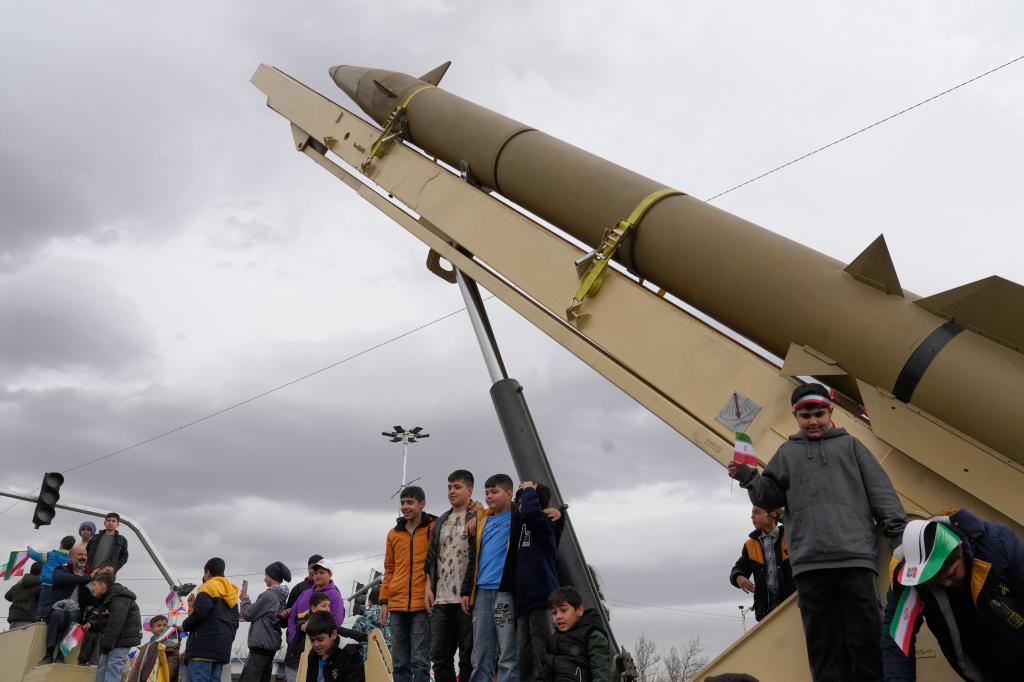
A ballistic missile launched from Iranian soil was intercepted on Wednesday in Turkish airspace, very close to the military base where Spanish contingents and anti-aircraft defense systems are deployed.
The projectile, which previously flew over the skies of Iraq and Syria, was detected upon entering the border province of Hatay, in the southern tip of Turkey. As confirmed by Burhanettin Duran, head of communication for the Turkish government, the missile was "intercepted and destroyed by NATO's air defense systems stationed in the Eastern Mediterranean." Although the interception caused fragments to fall in the municipality of Dörtyol, authorities have confirmed that there were no fatalities or injuries.
The Turkish Ministry of Defense detailed that the neutralization was carried out using "NATO's air defense and missile systems in the Eastern Mediterranean," without providing further technical details on the interceptor model used. The gravity of the incident holds special significance for Spain, as the missile was intercepted just 80 kilometers from the Incirlik air base.
This installation is strategic for the Atlantic Alliance and currently houses the Spanish Patriot anti-aircraft missile battery, as well as a detachment of troops from Spain that are part of the mission to defend NATO's southern flank. Despite the missile's trajectory being consistent with an attack on Incirlik, some officials suggest that the projectile "deviated from its course" and that its real target could have been Cyprus, where an Iranian drone recently struck a British base.
However, Ankara has issued a stern warning: "All measures will be taken decisively to defend our territory and airspace." Following the incident, Turkish diplomacy has initiated an urgent round of contacts. The Minister of Foreign Affairs, Hakan Fidan, urged his Iranian counterpart, Abás Araqchi, to avoid "any steps that could lead to the escalation of the conflict."
Turkey, like Spain, has denied the United States the use of its bases to attack Iran, insisting that it will not allow "any of its aerial, land, or maritime elements, including its airspace, to be used for operational purposes in favor of the parties."
However, the Turkish government has made it clear that its neutrality does not imply passivity in the face of threats to its sovereignty. Burhanettin Duran emphasized that the country "will not hesitate to defend its territory and airspace" and will "respond to hostile actions within the framework of international law." In the same vein, the official Defense statement concludes with a message of restraint directed at all regional actors: "We warn all parties to refrain from actions that could lead to further escalation of the conflict in the region. In this context, we will continue to consult with NATO and our other allies."